
Last updated September 23, 2026
Free visual inspection and a written scope of work before any mitigation begins - photos, moisture readings, and drying logs go in your claim file
The scope we write is the scope we bill. Anything new gets shown to you, in writing, before we touch it.
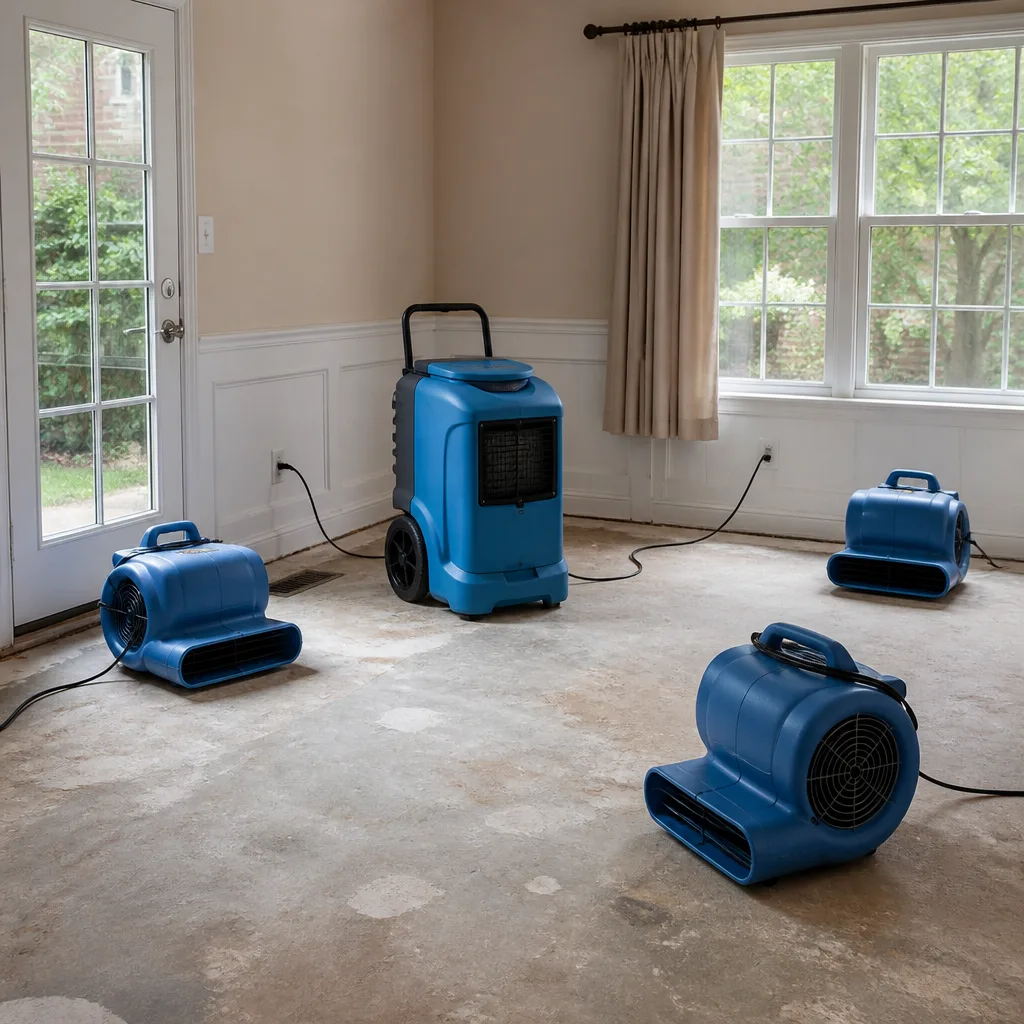
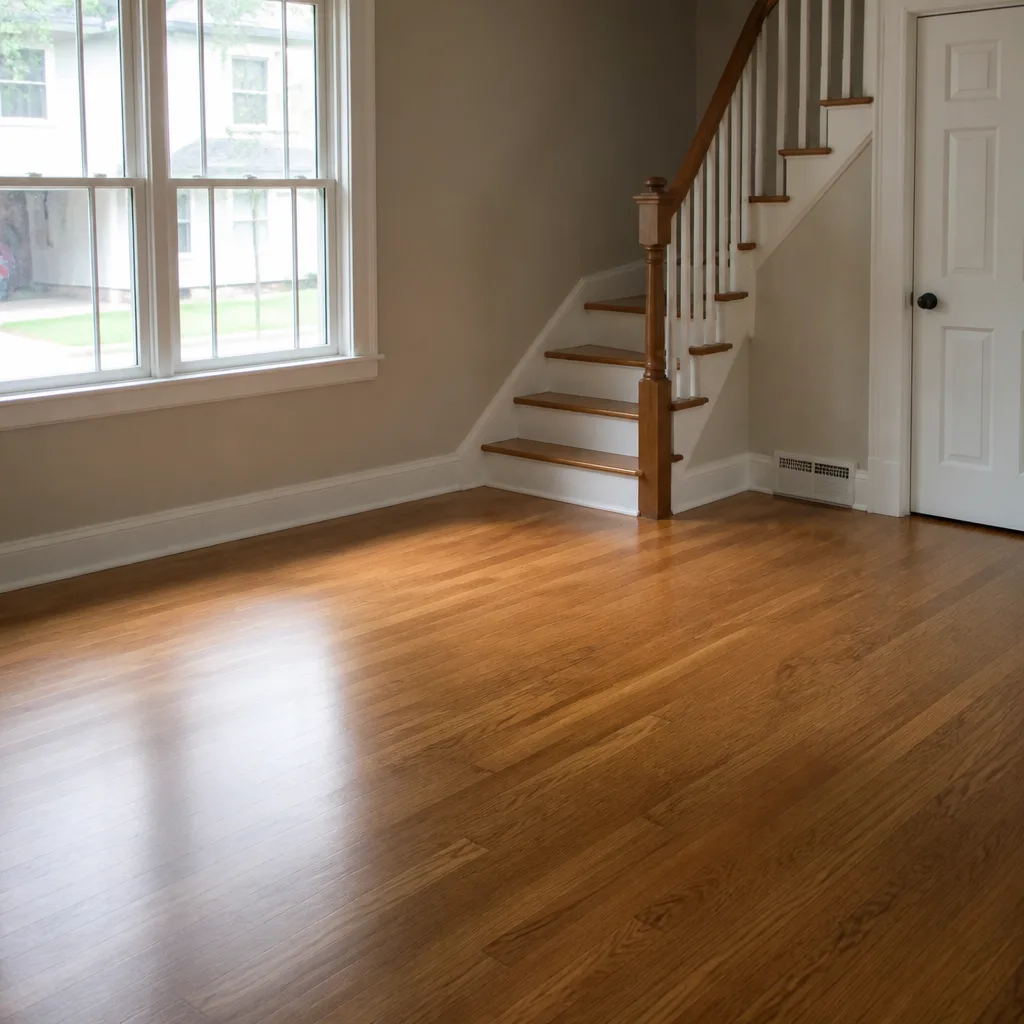
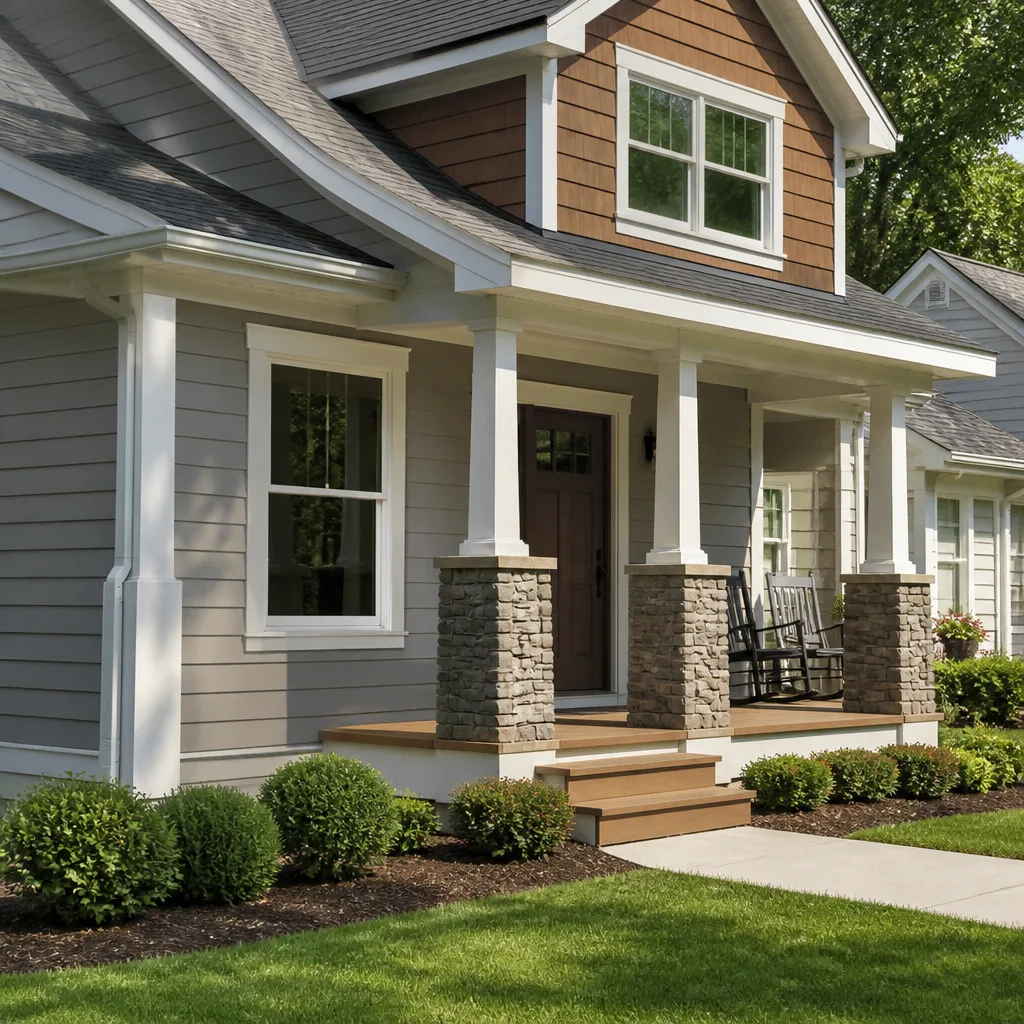
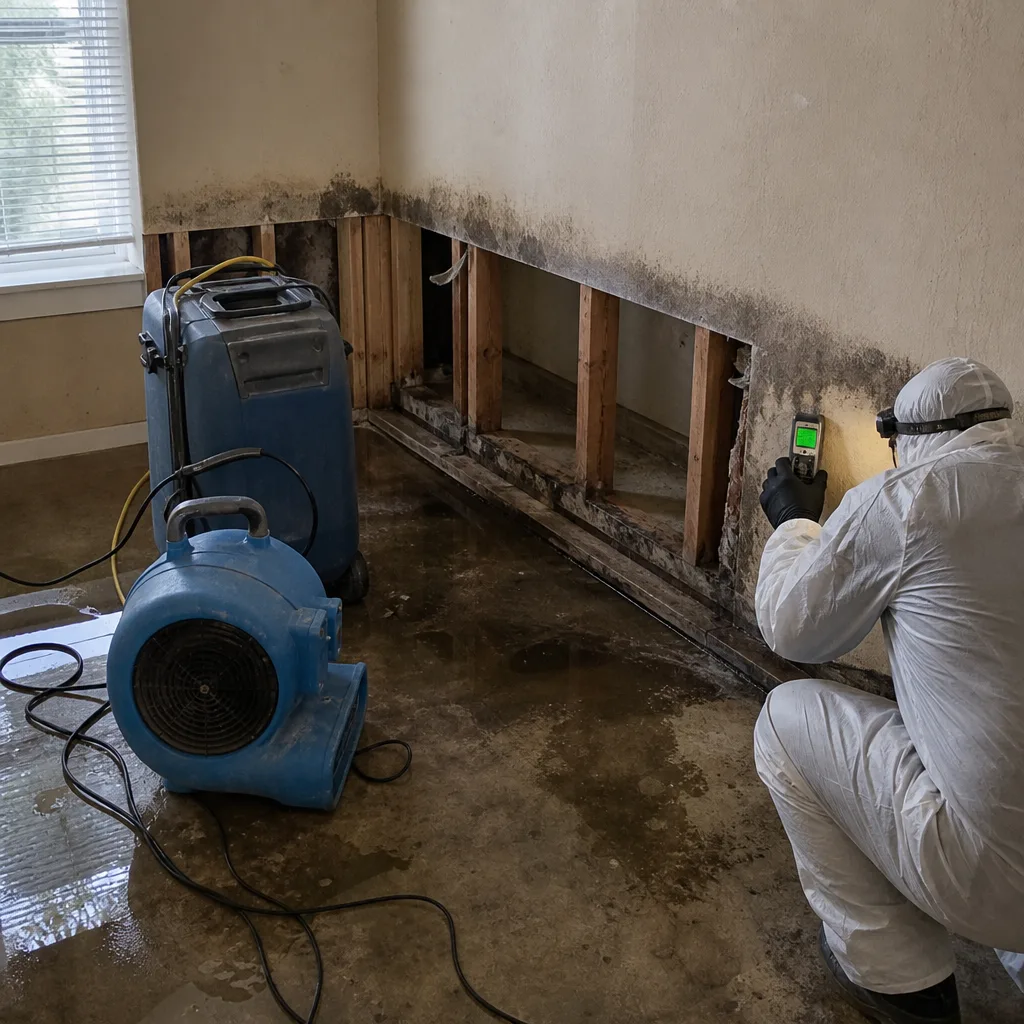 Before
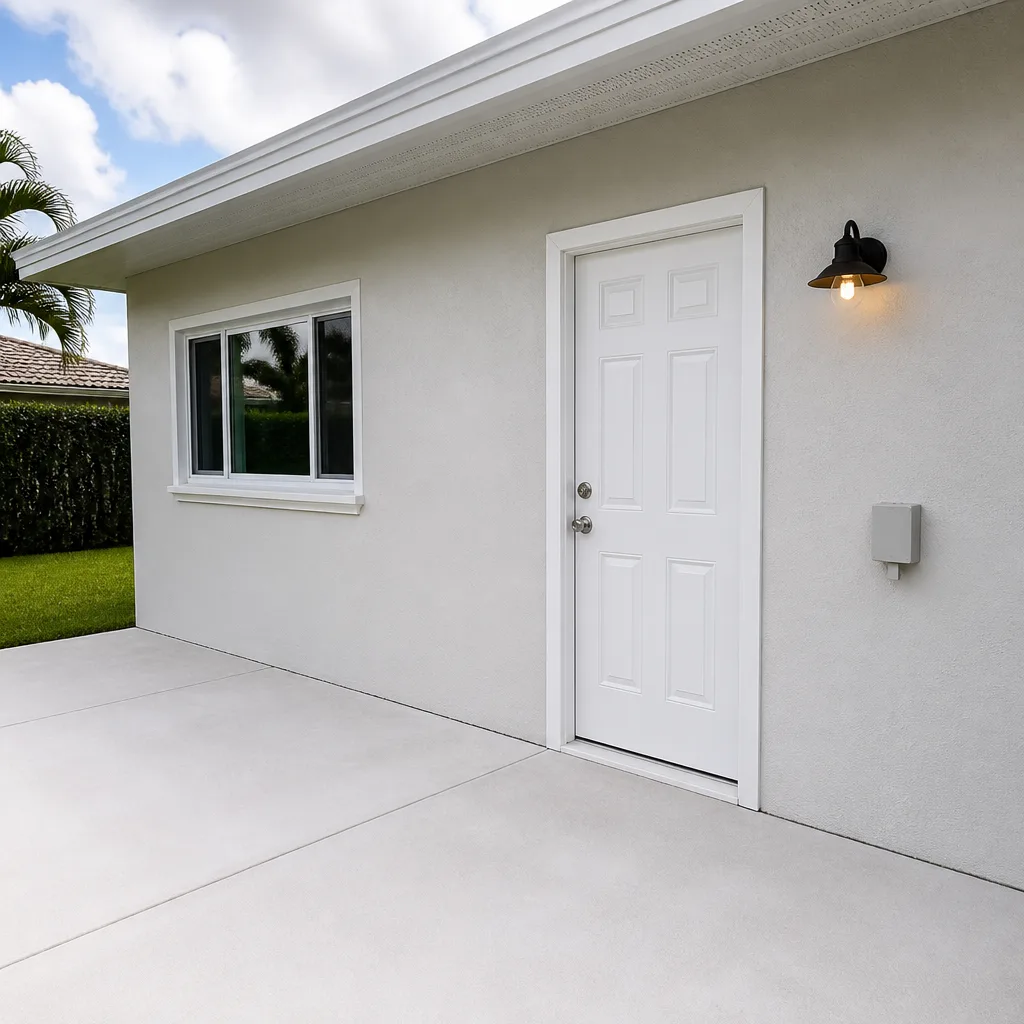 After
After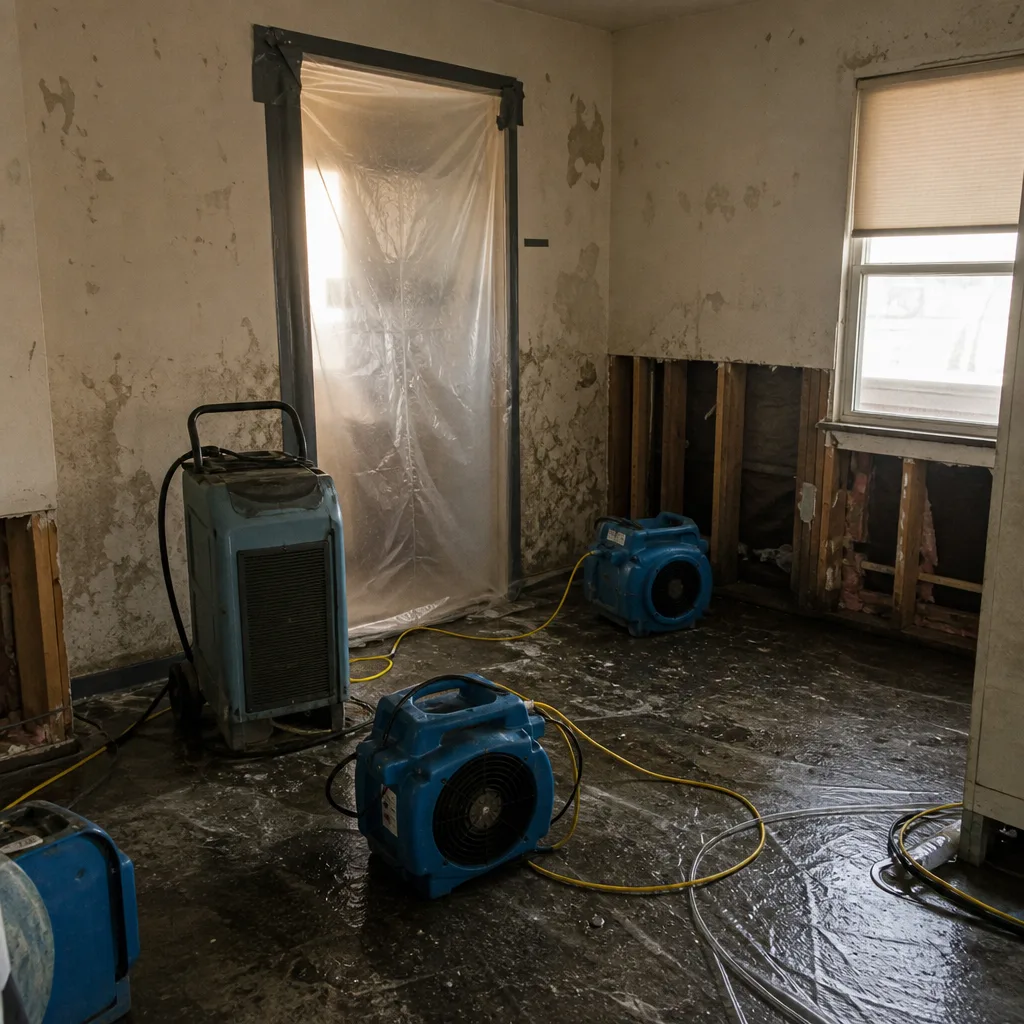 Before
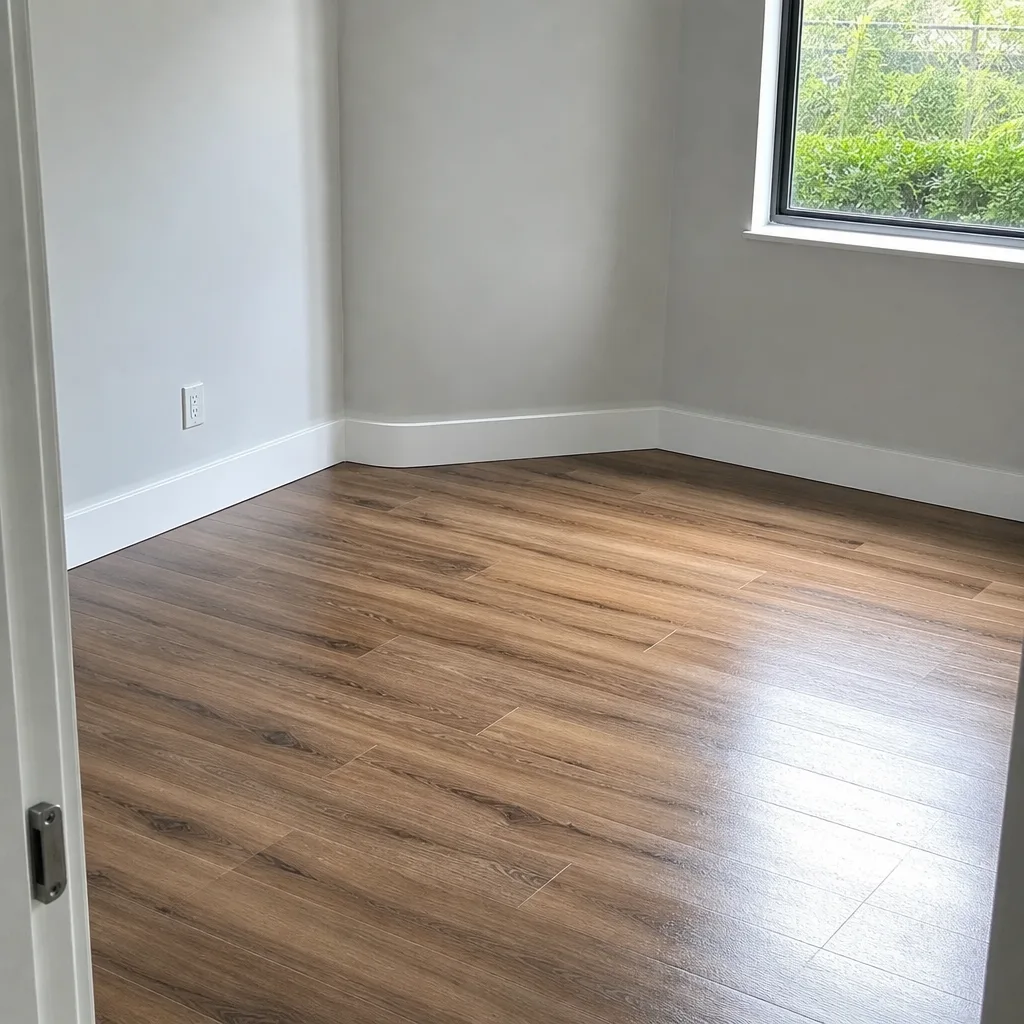 After
After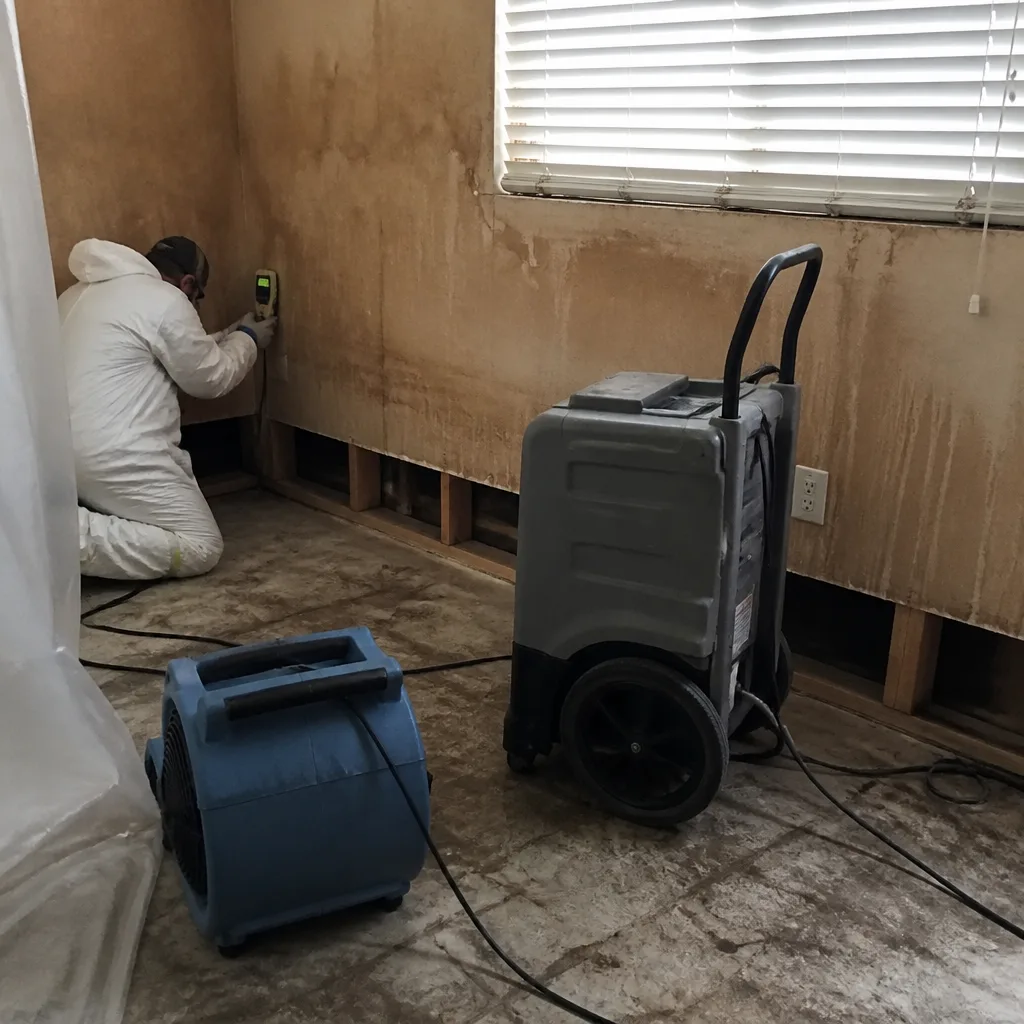 Before
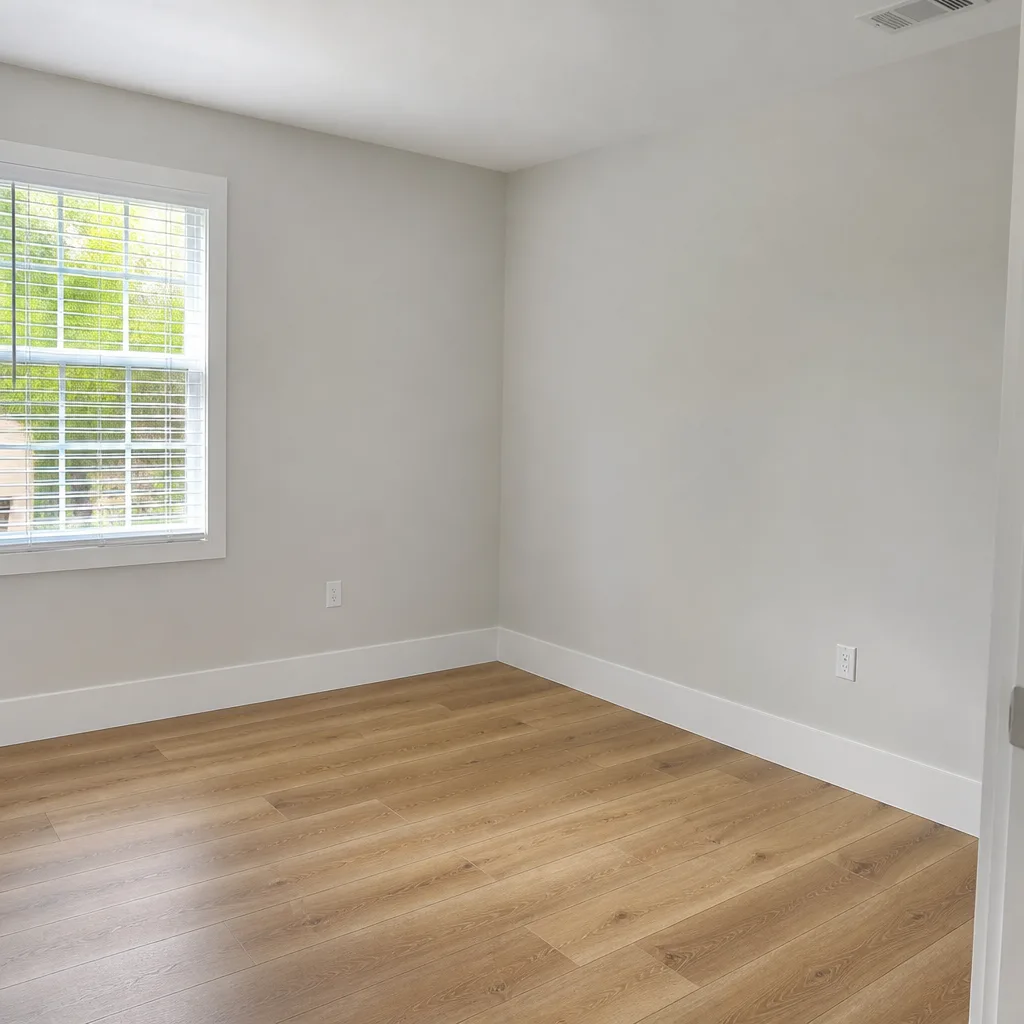 After
AfterDamage Restoration Warning Signs: A West Palm Beach Homeowner’s Reference Guide
By the time you smell mildew in a West Palm Beach home, the spore count has already crossed EPA guidance thresholds. In our experience restoring more than 12,000 homes since 2011, the visible warning signs most homeowners recognize - discolored drywall, warped flooring, surface mold - arrive 60 to 90 days after the actual moisture intrusion began. During that window, water moves through concrete block cavities, wicks up framing, and creates the conditions for secondary damage that multiplies repair scope. This guide teaches you to read the earlier, measurable signals: the humidity percentage on a $15 hygrometer, the moisture meter reading at your baseboards, the mineral deposits on your foundation walls. These are the numbers that appear in our drying logs, the same data that determines whether an insurer pays a claim without dispute.
Quick Answer
Active moisture intrusion in a West Palm Beach home typically announces itself first through elevated interior relative humidity (above 60% RH), localized moisture meter readings above 16% in wood framing, and efflorescence on concrete block walls - not through visible mold or water stains. A homeowner who checks these three indicators monthly can identify problems 30-60 days before they become structural damage, when mitigation still costs hundreds rather than tens of thousands - the same early-detection principle we cover in our DIY vs Professional Damage Restoration: The West Palm Beach Homeowner’s Decision Guide.
Table of Contents
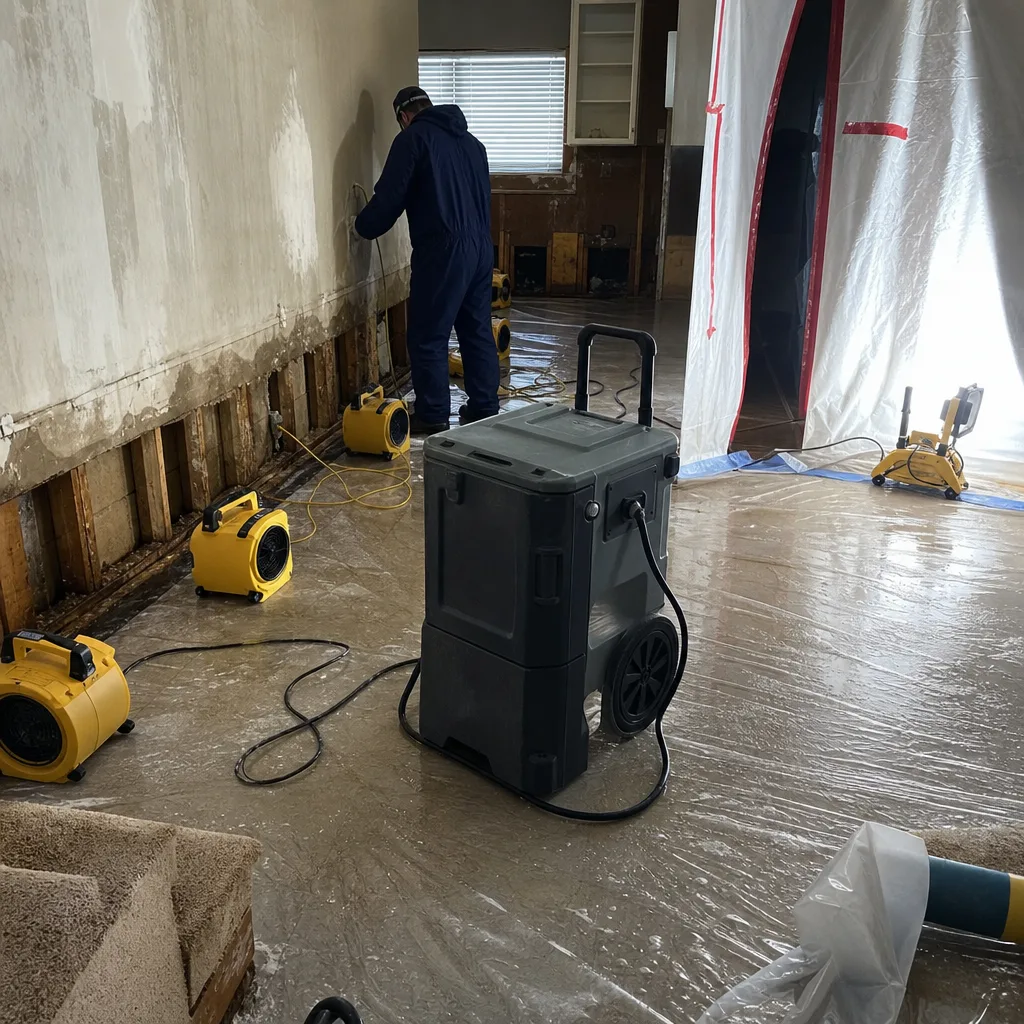
- The Humidity Reading That Signals Trouble Before You See It
- How West Palm Beach CBS Construction Hides Moisture Differently Than Wood Frame
- Paint and Baseboard Signals That Indicate Cavity Moisture
- Efflorescence: A Time-Stamped Warning on Concrete Block Walls
- The 10-Minute Monthly Moisture Check Every Homeowner Can Perform
- Room-by-Room Warning Signs: Kitchen, Bathroom, Garage, and Exterior Walls
- When Musty Smells Cross Into Measurable Mold Problems
- The Documentation Gap That Costs Homeowners Their Claims
 Before
 After
AfterThe Humidity Reading That Signals Trouble Before You See It
Interior relative humidity in a well-conditioned Florida home should sit between 45% and 55% RH. At 60% RH, the dew point rises to within 3-4 degrees of typical thermostat settings, and surfaces in cooler microclimates - inside exterior walls, behind furniture, in closets - begin to support mold growth. At 70% RH, that growth accelerates exponentially. These aren’t abstract thresholds; they appear in every psychrometric chart we reference when setting drying targets for our Dri-Eaz and Phoenix dehumidification systems.
West Palm Beach’s outdoor humidity averages 74% annually. Air conditioning manages this load when systems are sized correctly and run consistently, but several local conditions push interiors past safe ranges:
- Oversized AC units that cycle off before sufficient moisture removal - common in homes built 2015-2020 with 3-ton units cooling 1,200 square feet
- Thermostat setbacks above 78°F during daytime absences, which raises the dew point of all interior surfaces
- Exhaust fans vented into attics rather than through the roof, a code violation still present in many El Cid and Flamingo Park renovations
- Whole-house humidifiers left active during summer months
A $15 digital hygrometer placed in the living area, the master bedroom, and any room with an exterior wall on the north or east side of the home provides a three-point measurement. Log these readings monthly. A sustained 5% increase at any single location, without corresponding weather changes, indicates localized moisture introduction - a small roof leak, a window seal failure, a plumbing line weeping inside a wall. We document these same readings on our initial moisture surveys, and the trend data often reveals how long a problem has been developing.
The distinction matters for repair scope. Surface condensation from high ambient humidity requires ventilation correction. Active moisture intrusion from a leak requires source repair, cavity drying with Injectidry or similar systems, and material replacement. Misidentifying the former as the latter wastes money; misidentifying the latter as the former guarantees mold return.
How West Palm Beach CBS Construction Hides Moisture Differently Than Wood Frame
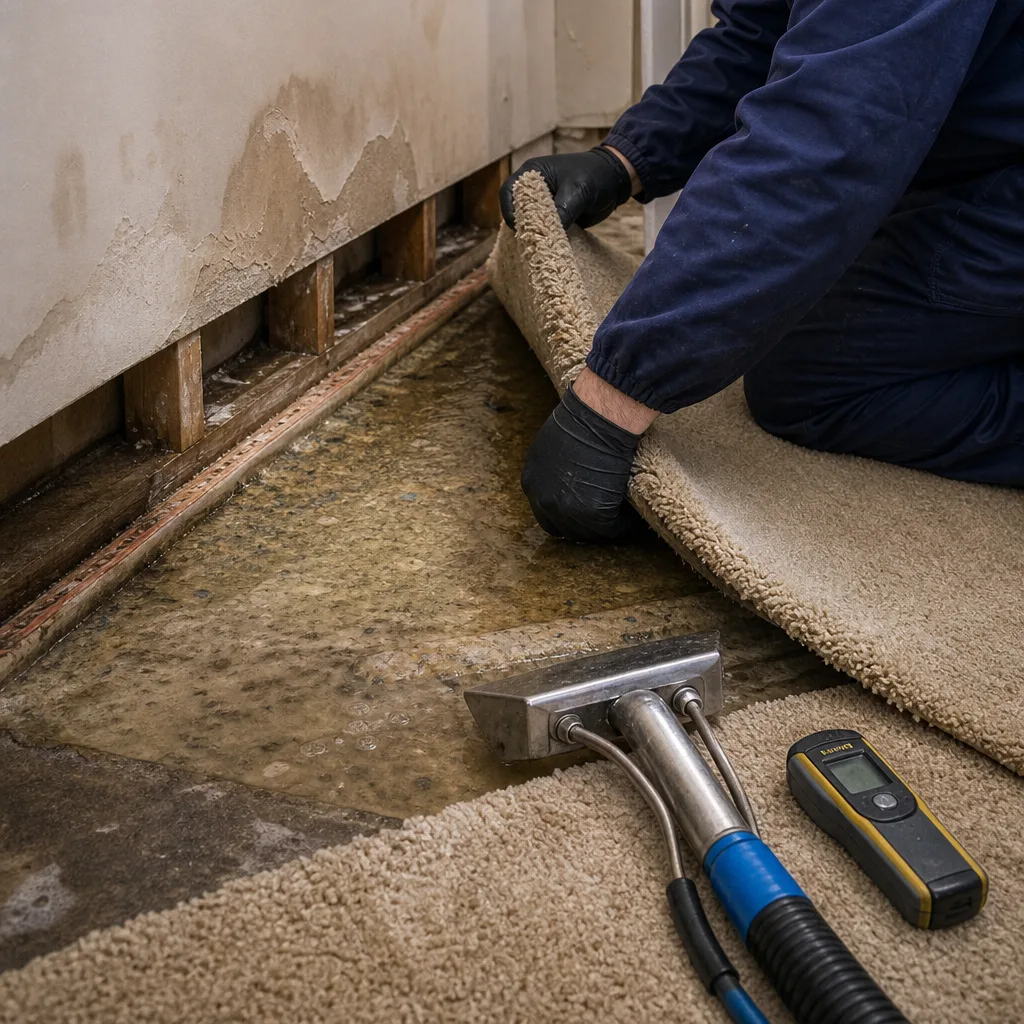
Concrete block and stucco construction, dominant in West Palm Beach from the 1950s through present-day builds, behaves unlike wood frame when water intrudes. Understanding this difference prevents the most common misdiagnosis we encounter on initial surveys.
In wood frame construction, water moves through the path of least resistance - typically downward through gravity and outward through vapor diffusion. Drywall wicks moisture visibly and quickly. Stains appear within days. Homeowners notice problems early because the materials telegraph distress.
CBS construction inverts this pattern. The concrete block itself is porous and hygroscopic, absorbing water like a sponge without visible surface change. A block wall can hold 15-20% moisture content by weight before any interior finish shows damage. The stucco exterior, properly applied, masks exterior wetting from rain or irrigation overspray. The result: water moves laterally through block cavities, accumulates at base plates, and wicks upward into wood framing through capillary action - all while interior paint remains unblemished.
We’ve removed drywall in Northwood and Grandview Heights homes where the block cavity behind contained standing water, the base plate registered 28% moisture content on our Protimeter meters, and the interior surface showed only a slight coolness to touch. The homeowners called us for “a musty smell in the guest room.” The actual condition required full cavity drying, base plate replacement, and antimicrobial treatment to IICRC S520 standards.
Three CBS-specific warning signs merit particular attention:
- Interior paint that remains cool to touch in summer months. Properly insulated and dry block walls should approximate room temperature. Persistent coolness indicates evaporative cooling from moisture migration through the block.
- Baseboards that separate slightly from walls, then re-adhere seasonally. Wood base plates expand with moisture and contract with drying; this cyclical movement loosens fasteners without creating the permanent warping seen in flood damage.
- Window sills that deteriorate from the bottom up. Water migrating down block cavities exits at rough openings, attacking sill framing before any wall damage appears.
Homes in neighborhoods like El Cid and Flamingo Park, with original 1920s-1950s construction often retrofitted with CBS additions, present compound risk: the original wood frame sections telegraph damage early, while the newer CBS sections conceal it. We’ve documented cases where homeowners addressed visible damage in the original structure while missing extensive concealed damage in the addition.
Paint and Baseboard Signals That Indicate Cavity Moisture
Surface condensation and cavity moisture produce visually similar effects on paint and baseboards, but the underlying conditions differ by an order of magnitude in repair scope. Learning to distinguish them saves thousands in unnecessary work, or prevents incomplete remediation that guarantees return damage.
Surface condensation occurs when humid interior air contacts a surface below dew point. On paint, it produces uniform, faint discoloration - a general darkening rather than distinct staining. On baseboards, it causes swelling at the bottom edge where air circulation is poorest, but the swelling is symmetrical and the wood fibers remain intact. The back of the baseboard, if removed, shows moisture only on the interior-facing surface.
Cavity moisture produces asymmetric, localized patterns. Paint develops “blister lines” - raised ridges following drywall tape seams where moisture vapor pushes through the mud joint. The discoloration is sharper at corners and electrical outlets, which are penetration points into the cavity. Baseboards swell from the wall side outward, often with nail pops or fastener corrosion, because moisture is entering from the cavity behind rather than condensing on the surface. Remove the baseboard and the stud bay behind shows moisture staining on the drywall edge and, frequently, mold growth on the stud face.
In West Palm Beach’s climate, we see a seasonal pattern - detailed more fully in our Seasonal Damage Restoration Care for West Palm Beach: Year-Round Homeowner’s Guide - where surface condensation complaints peak in October-November when AC use decreases but outdoor humidity remains high; cavity moisture calls peak in January-February, when the accumulated summer and fall intrusion has finally produced visible symptoms. A homeowner who checks baseboard edges with a moisture meter in September can identify cavity problems before they become visible, during the optimal drying season when ambient humidity supports natural evaporation.
The repair scope distinction is stark. Surface condensation requires ventilation improvement - typically $200-$800 in exhaust fan upgrades or minor duct modifications. Cavity moisture requires source repair, cavity drying with controlled demolition, and material replacement - typically $3,000-$15,000 depending on affected linear footage. Our written scopes specify which condition we’re treating before any work begins, per Haven Standard, Clause 1.
Efflorescence: A Time-Stamped Warning on Concrete Block Walls
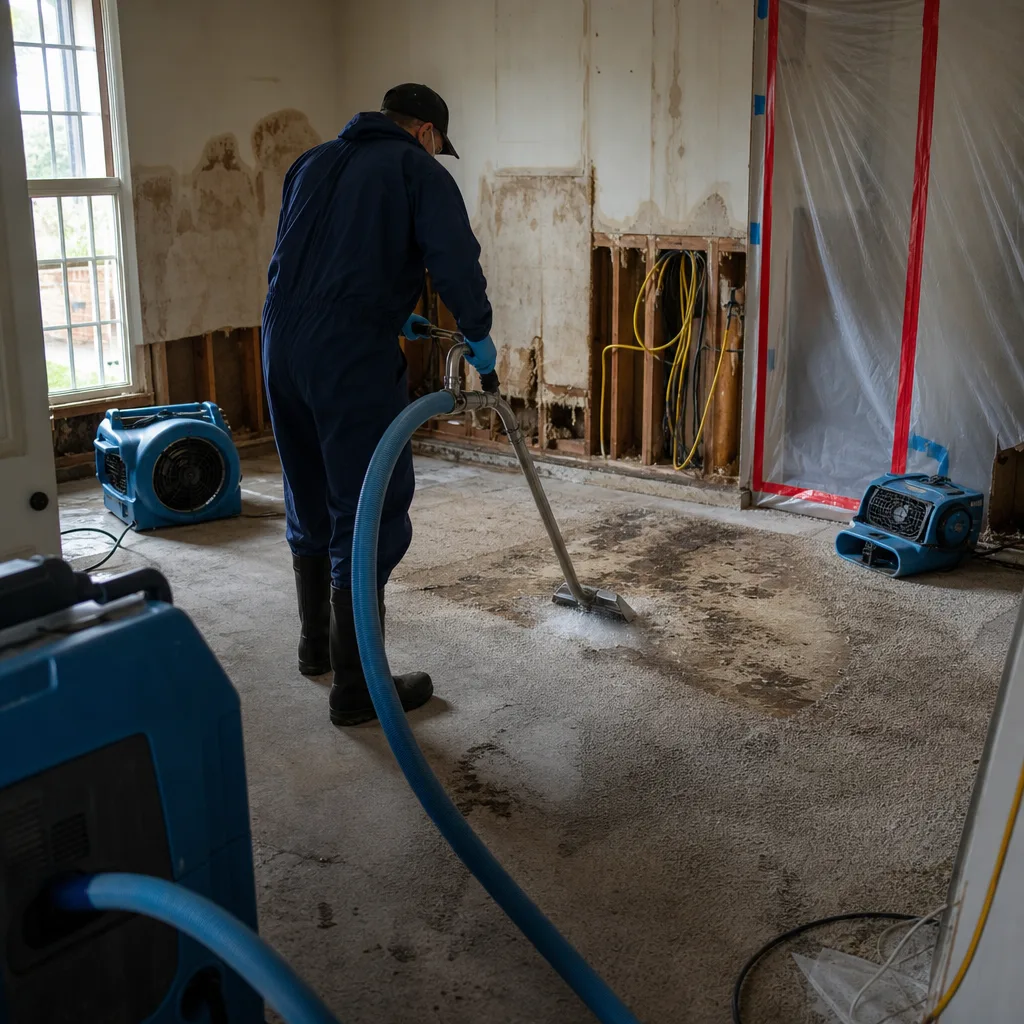
White, powdery deposits on concrete block or stucco surfaces are not cosmetic blemishes. They are mineral residue - primarily calcium carbonate and calcium sulfate - left when water has repeatedly passed through the masonry, dissolved soluble salts, and evaporated at the surface. Each efflorescence cycle represents a complete moisture intrusion event: water entry, migration through the material, and evaporation.
The time-stamped nature of efflorescence makes it uniquely valuable for damage assessment. Fresh deposits are fluffy and easily brushed off with a finger. Older deposits harden into a crust that requires scraping. Multiple cycles produce layered deposits with color variation - grayish near the base from dirt entrainment, whiter above. In garages and exterior walls throughout West Palm Beach, we use efflorescence morphology to estimate how long a moisture problem has been active and whether it’s intermittent (seasonal, irrigation-related) or continuous (groundwater, plumbing leak).
Common locations and their typical sources:
- Garage floor-to-wall joints: Capillary rise from high water table or inadequate foundation drainage - prevalent in homes near the Intracoastal Waterway and in neighborhoods with seasonal flooding history
- Exterior walls below grade: Failed or missing foundation waterproofing, common in 1960s-1980s construction with asphaltic dampproofing that has degraded
- Stucco at window and door heads: Flashing failures allowing bulk water entry during wind-driven rain events
- Interior block walls in bathrooms: Recurring shower pan or valve leaks wicking through shared plumbing walls
Efflorescence indicates that water has found a pathway and will continue using it. The deposit itself is not damage, but it marks the location where damage is developing inside the wall. We’ve documented cases in South End homes where efflorescence on a garage wall corresponded to 34% moisture content in the shared interior wall’s base plate - a condition that would have required full gutting if left another season.
Cleaning efflorescence without addressing the moisture source accelerates deterioration. The salts are hygroscopic, attracting moisture from air even when the original liquid source is inactive. A wall that showed seasonal efflorescence can develop continuous moisture problems as salt concentration increases surface absorption capacity.
The 10-Minute Monthly Moisture Check Every Homeowner Can Perform
Professional moisture surveys use calibrated equipment and trained interpretation, but a homeowner with basic tools can establish a trend record that identifies problems weeks before visible damage - a first step before deciding how to hire a damage restoration contractor in West Palm Beach if trends indicate professional intervention. The key is consistency: same locations, same technique, same environmental conditions, logged with dates.
Required tools: Digital hygrometer ($15-$30), pinless moisture meter with wood scale ($40-$80), notebook or spreadsheet.
- Record ambient conditions. Place the hygrometer in the center of the living area, away from kitchens and bathrooms, for 30 minutes. Note the RH reading and the outdoor temperature from any weather source. Conditions should be stable - AC running normally, no unusual weather.
- Check the reference wall. Choose one interior wall that has no plumbing, no exterior exposure, and no history of problems. Take a moisture meter reading at 12 inches above floor level, mid-stud. This is your baseline - typically 8-12% in wood framing, 0-5% in drywall. Log it.
- Check high-risk locations. At each location below, hold the meter against the surface for the manufacturer’s recommended time (usually 2-3 seconds), log the reading, and note any variation from your reference wall:
- Baseboards on all exterior walls, particularly north and east exposures
- Window frames at the sill and jambs, especially ground-floor units
- Drywall behind toilets and under sinks (access through adjacent cabinets if possible)
- Garage walls at the floor joint, particularly corners
- Any wall with known past repairs or insurance claims
- Photograph and date. A phone photo of the meter display at each location creates a visual record that supplements your numbers. We do the same on every visit - it’s standard in our documentation package, not an upsell.
- Review trends quarterly. A single elevated reading requires rechecking in 48 hours - it may reflect recent cleaning, cooking, or weather. A sustained 4% increase above your reference wall, or any reading above 16% in wood materials, indicates active moisture that warrants professional evaluation.
In West Palm Beach’s climate, we recommend this check year-round, not seasonally. Summer’s afternoon thunderstorms and fall’s tropical systems create moisture loads that winter’s drier conditions never fully reverse in CBS construction. A homeowner who began logging in March 2024 and finds a 6% increase by September 2024 has documented a developing problem that predates any visible symptom - documentation that supports both timely repair and potential insurance coverage.
The moisture meter readings we collect on initial surveys use the same principle, with calibrated equipment traceable to manufacturer standards and documented to IICRC S500 protocols. Your monthly log won’t replace professional assessment, but it will accelerate the timeline to that assessment by 30-60 days - often the difference between mitigation and reconstruction.
Room-by-Room Warning Signs: Kitchen, Bathroom, Garage, and Exterior Walls
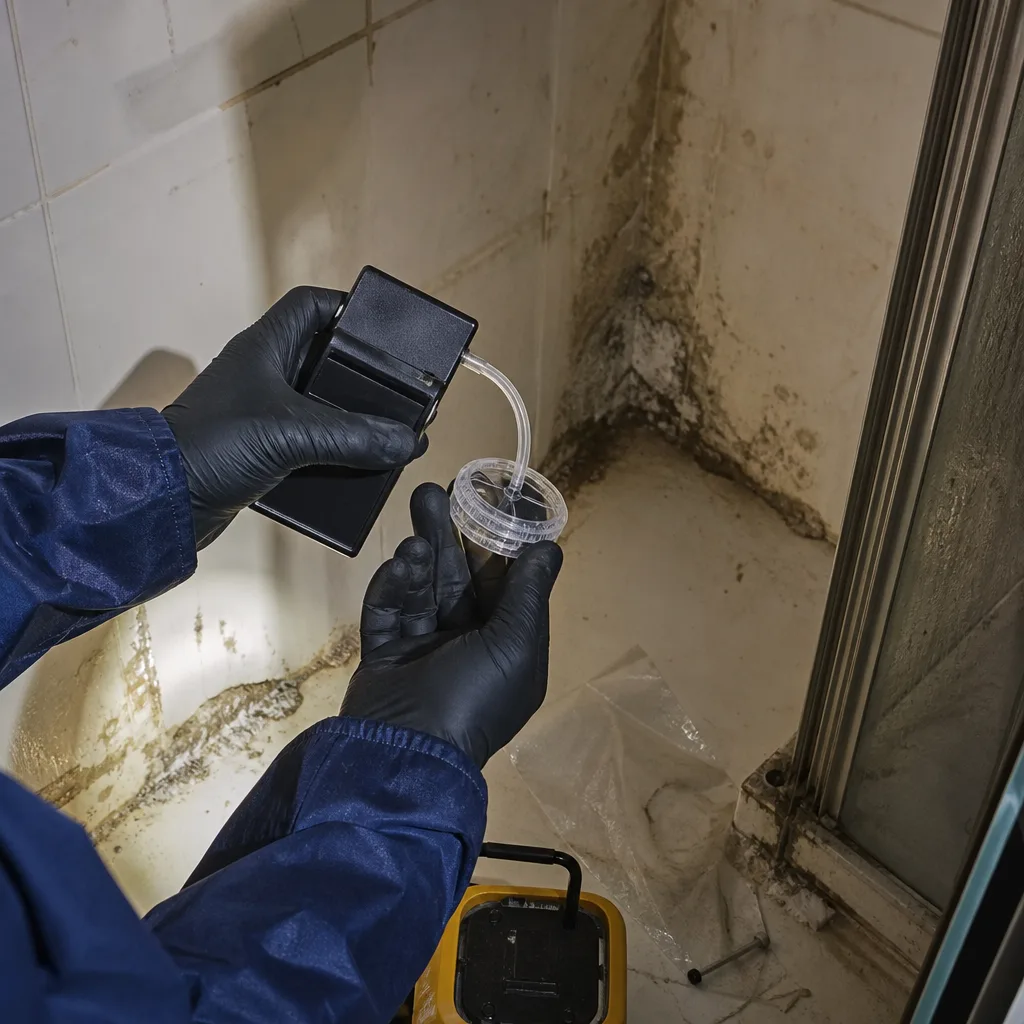
Different rooms present different failure modes in West Palm Beach’s climate and construction. Knowing the room-specific patterns prevents the common error of attributing all moisture signs to “Florida humidity” rather than identifying the actual source.
Kitchen
Refrigerator ice maker lines fail at the saddle valve or the plastic tubing transition - typically within 18 inches of the supply connection. The leak is small, continuous, and hidden behind the refrigerator. Warning signs: vinyl flooring that lifts at the refrigerator edge before any other location; baseboard swelling that stops abruptly at the cabinet side panel (indicating water is contained within the cabinet footprint, not migrating freely); and, in CBS homes, efflorescence on the garage wall shared with the refrigerator location.
Dishwasher leaks usually announce at the sink cabinet base, where the drain hose connects to the disposal. But the more expensive failure is the slow seep at the dishwasher’s front seal, which wicks under flooring and travels toward the nearest exterior wall. We’ve removed hardwood in Northwood Shores kitchens where the visible damage was 8 feet from the dishwasher, with a continuous moisture gradient documented in our drying logs.
Bathroom
Shower pan failures in West Palm Beach’s older homes - particularly 1950s-1970s construction with mortar beds - typically show first at the baseboard outside the shower wall, not inside the shower. The water tracks along the pan’s waterproofing failure, exits at the framing base, and wicks into the hallway or bedroom drywall. Tile grout discoloration inside the shower is often secondary, a symptom of the same pan failure rather than an independent maintenance issue.
Toilet flange leaks are identifiable by the moisture meter pattern: elevated readings at the baseboard behind the toilet, normal readings at the side baseboards. The wax ring failure allows water to escape between the flange and the floor, traveling along the pipe penetration rather than spreading across the floor.
Garage
Garages in West Palm Beach function as semi-conditioned spaces - attached to the home’s thermal envelope but rarely cooled to interior standards. This temperature differential makes them early indicators of whole-house moisture problems. Condensation on the garage door track in summer mornings is normal; condensation on the interior door frame into the home is not - it indicates humid garage air migrating into conditioned space, often because the door’s weatherstripping has failed or the garage’s own moisture load exceeds what the home’s AC can manage.
Floor-to-wall joint efflorescence, as noted earlier, is the critical garage-specific warning. In homes with converted garage spaces - increasingly common in Grandview Heights and El Cid - this efflorescence may appear on interior finished walls where the original exterior block was simply covered with furring and drywall. The finish conceals the symptom until the moisture meter reveals 20%+ readings in the furring strips.
Exterior Walls
North and east exposures in West Palm Beach receive less solar drying and more wind-driven rain during typical storm patterns. These walls should show the lowest moisture meter readings in dry conditions; if they match or exceed south and west walls, it indicates active intrusion rather than residual construction moisture.
Window leaks in CBS construction rarely show at the window itself. Water enters at the head flashing, travels down the block cavity, and exits at the sill rough opening - attacking the window frame from the interior while the exterior caulking appears intact. The warning sign: sill paint that deteriorates from the bottom up, or trim that swells on the interior face while the exterior face remains sound.
When Musty Smells Cross Into Measurable Mold Problems
A musty smell is not subjective. At the point of human detection, the concentration of microbial volatile organic compounds (MVOCs) indicates active mold metabolism, and the underlying spore count has typically exceeded 500-1,000 spores per cubic meter for culturable samples - above EPA background guidance for occupied spaces. What homeowners describe as “a little musty” is, in our documentation, a signal to deploy air sampling and cavity inspection.
The critical distinction in West Palm Beach’s climate is between surface mold and cavity colonization. Surface mold on bathroom grout or window sills - the visible patches that prompt most homeowner concern - typically represents less than 10% of total mold burden in an affected home. The remaining 90% grows on the backside of drywall, on stud faces, in insulation batts, and on the interior surfaces of block cavities where air circulation is minimal and moisture remains elevated for weeks after surface conditions appear dry.
We document this distribution with photo records on every visit - included as standard, never an upsell. A typical mold remediation scope in West Palm Beach includes:
- Air sampling with spore trap cassettes, analyzed by independent laboratories, establishing pre-remediation baseline
- Moisture mapping with thermal imaging and pinless meters to identify all wet materials, not just visibly damaged areas
- Containment and negative air pressure establishment per IICRC S520
- Controlled demolition of non-salvageable materials, with photo documentation of each stud bay’s condition
- HEPA vacuuming and antimicrobial treatment of remaining structural materials
- Drying to specified moisture content with daily logging, using Dri-Eaz and Phoenix dehumidification systems
- Post-remediation verification sampling before containment removal
The “can we just clean it?” question arises on nearly every mold call. For surface-only growth on non-porous materials, cleaning with appropriate antimicrobials is sufficient. For cavity colonization, or for any growth on porous materials like drywall and insulation, removal is required - cleaning does not penetrate deeply enough to address root structures, and residual viability guarantees recurrence.
Our Free Second Opinion on any competitor’s written estimate includes review of their sampling methodology and scope boundaries. We’ve reviewed estimates that proposed surface cleaning for conditions that required full remediation, and estimates that proposed full gutting for conditions that surface cleaning would address. The difference is measurable: moisture readings, spore counts, and material classifications, not professional judgment alone.
The Documentation Gap That Costs Homeowners Their Claims
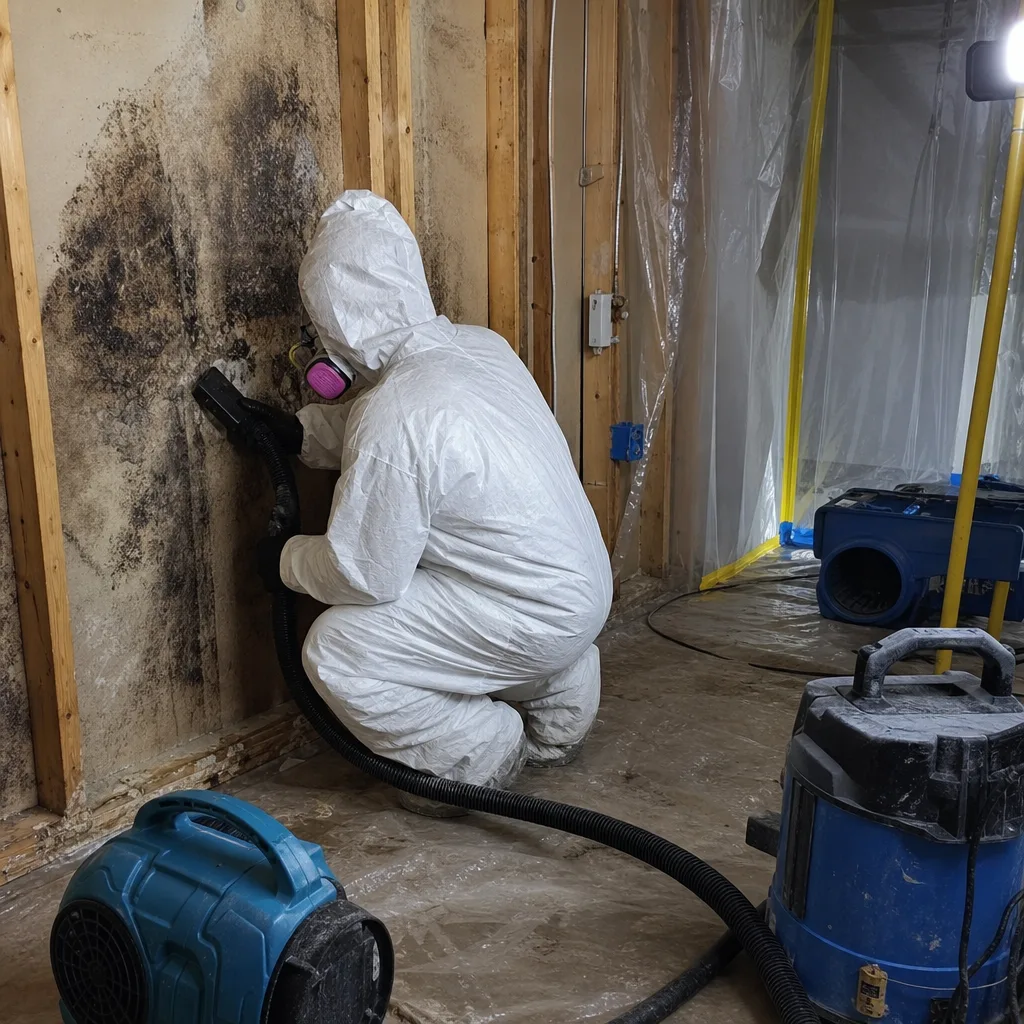
Every restoration company promises to work with insurance. Few produce the documentation that makes that promise meaningful. For more guides & resources on navigating restoration and insurance, see our blog. The gap between “we’ll bill your insurance” and “your insurer will pay this invoice without dispute” is where homeowners lose thousands - and where Back to Dry’s founding purpose sits.
Alicia Brennan built this company in 2011 after years as a claims adjuster watching restoration invoices denied for documentation failures: drying logs that didn’t correlate with equipment placement, moisture readings taken with uncalibrated meters, scopes that described “water damage to living room” without specifying square footage, material classification, or drying standard reference. The homeowner paid the difference, or the contractor ate the loss and cut corners on the next job.
The Haven Standard was designed to close that gap. Every job receives:
- A written price before work begins, with line-item breakdown - Haven Standard, Clause 1
- Dated photo record on every visit, with moisture readings visible on meter displays
- Daily drying logs showing equipment type, serial number, placement location, and psychrometric readings
- Room-by-room moisture content tables, with target thresholds referenced to IICRC S500
- Final documentation package formatted for direct adjuster submission
This documentation turns restoration invoices into payable claims because it answers the questions adjusters are trained to ask: How do you know this was wet? How do you know it’s dry now? Why this equipment, in this location, for this duration? What standard defines “done”?
Homeowners can apply the same rigor to their own early detection. The monthly moisture log described earlier, the dated photos of efflorescence, the hygrometer readings with outdoor conditions noted - this is the same data structure that supports insurance claims. A homeowner who calls us with three months of logged readings has already demonstrated the documentation habit that makes claims successful. We extend that habit with professional-grade records from equipment traceable to manufacturer calibration standards, documented to RIA and IFA protocols.
The 365-Day Done Right Promise, backed by The Haven Standard, applies to documentation as much as to workmanship. If an adjuster questions our records, we provide additional documentation - thermal images, extended drying logs, third-party verification - at no charge. The guarantee is written and signed, not verbal.
Common Mistakes to Avoid
- Attributing all moisture signs to “Florida humidity.” West Palm Beach’s ambient humidity is constant; localized elevation at specific walls or rooms indicates an active source, not general climate. Treating source problems with dehumidifiers alone moves moisture around rather than removing it.
- Waiting for visible mold before acting. By the time mold is visible, cavity colonization is typically extensive. The EPA’s “visible mold” threshold for professional remediation is conservative; our experience supports earlier intervention based on moisture readings and spore counts.
- Using bleach on mold-affected porous materials. Bleach penetrates poorly into drywall and wood, leaves moisture that supports regrowth, and can damage structural fibers. Proper remediation requires removal of affected porous materials and treatment of remaining structural elements with appropriate antimicrobials.
- Accepting “mold-resistant” product claims without moisture control. Mold-resistant drywall and paint delay colonization but do not prevent it in sustained moisture conditions. We’ve remediated homes where these products were installed over active leaks, concealing damage for additional months.
- Failing to verify post-repair dryness before reconstruction. Rebuilding over materials that read below surface dry but above structural dry guarantees future damage. Our drying logs specify target moisture content by material type, verified with pin meters before reconstruction authorization.
- Neglecting to document pre-existing conditions for insurance. Photos of normal conditions, logged moisture readings, and maintenance records establish baseline that supports claims when damage occurs. We recommend annual documentation updates, which we provide as a standalone service.
- Hiring based on speed of response alone. Emergency mitigation requires prompt response, but reconstruction and mold remediation require scoped, scheduled work with written pricing. A company that emphasizes same-day completion for complex repairs is likely under-documenting and under-scoping.
When to Call a Professional
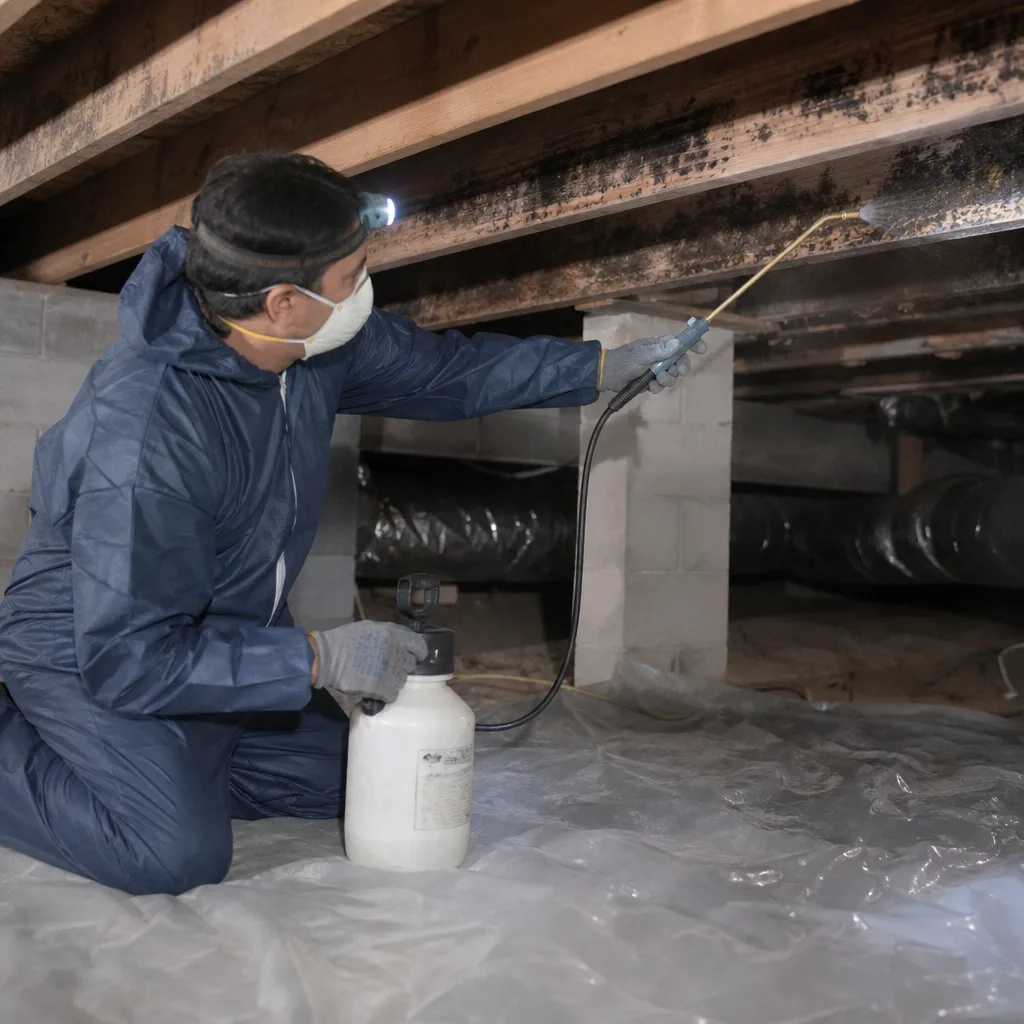
Call for professional assessment when any moisture meter reading exceeds 16% in wood materials, when relative humidity sustains above 60% RH at multiple locations despite normal AC operation, when efflorescence appears on any interior or garage wall, or when musty odors persist after cleaning and ventilation improvement. These thresholds indicate conditions that DIY management cannot address - active intrusion, cavity colonization, or systemic moisture accumulation requiring source identification and controlled drying.
Specific scenarios that warrant immediate call: water staining that expands over 24 hours (active leak, not residual moisture); visible mold growth exceeding 10 square feet (EPA threshold for professional remediation); any moisture reading above 20% in structural wood (approaching decay threshold); or efflorescence accompanied by interior paint blistering (indicates ongoing, not historical, moisture movement).
Water Damage Restoration in West Palm Beach from DryMark Restoration West Palm Beach includes emergency mitigation, structural drying, and full documentation for insurance submission. Mold Remediation in West Palm Beach follows IICRC S520 protocols with independent laboratory verification. Fire & Smoke Damage Restoration in West Palm Beach addresses the secondary water damage that accompanies suppression efforts. Every service includes a written price before work begins, a photo record on every visit, and the 365-Day Done Right Promise under The Haven Standard.
DryMark Restoration West Palm Beach offers free estimates in West Palm Beach - call (561) 290-5060.
Frequently Asked Questions
Professional moisture surveys typically range $150-$350 for residential properties, with the cost often credited toward subsequent remediation if work proceeds. DryMark Restoration West Palm Beach provides free estimates that include initial moisture mapping - call (561) 290-5060 to schedule.
Most homeowner policies cover sudden and accidental water damage, with coverage depending on documentation that establishes when the damage began and that it was not long-term neglect. Your monthly moisture log, dated photos of early warning signs, and professional moisture survey with dated readings strengthen coverage arguments. We coordinate directly with adjusters and provide documentation formatted for claim submission.
Live person answers every call, 24 hours a day, 7 days a week - no voicemail trees. Emergency mitigation for active water intrusion dispatches immediately; reconstruction and mold remediation are scoped and scheduled with written pricing before work begins, per Haven Standard, Clause 1.
Surface-only mold on non-porous materials can be cleaned. Growth on porous materials like drywall and insulation, or any growth accompanied by moisture meter readings above 16% in surrounding structure, requires removal and controlled drying. We determine which condition exists through moisture mapping and, when indicated, air sampling - then specify the appropriate scope in writing before work begins.
We deal with your adjuster directly, providing the documentation package - photo records, drying logs, moisture content tables, equipment placement records - that supports claim payment. You remain the policyholder and must authorize work and payment direction, but the documentation burden is ours.
Drying is complete when moisture content readings meet or fall below IICRC S500 specified thresholds for each material type: typically 12-15% for wood framing, 0.5% or below for drywall by weight, and equilibrium with unaffected reference areas. We provide daily drying logs showing progress toward these targets and verify final readings with pin meters before reconstruction authorization. The 365-Day Done Right Promise covers any recurrence due to incomplete drying.
The Bottom Line
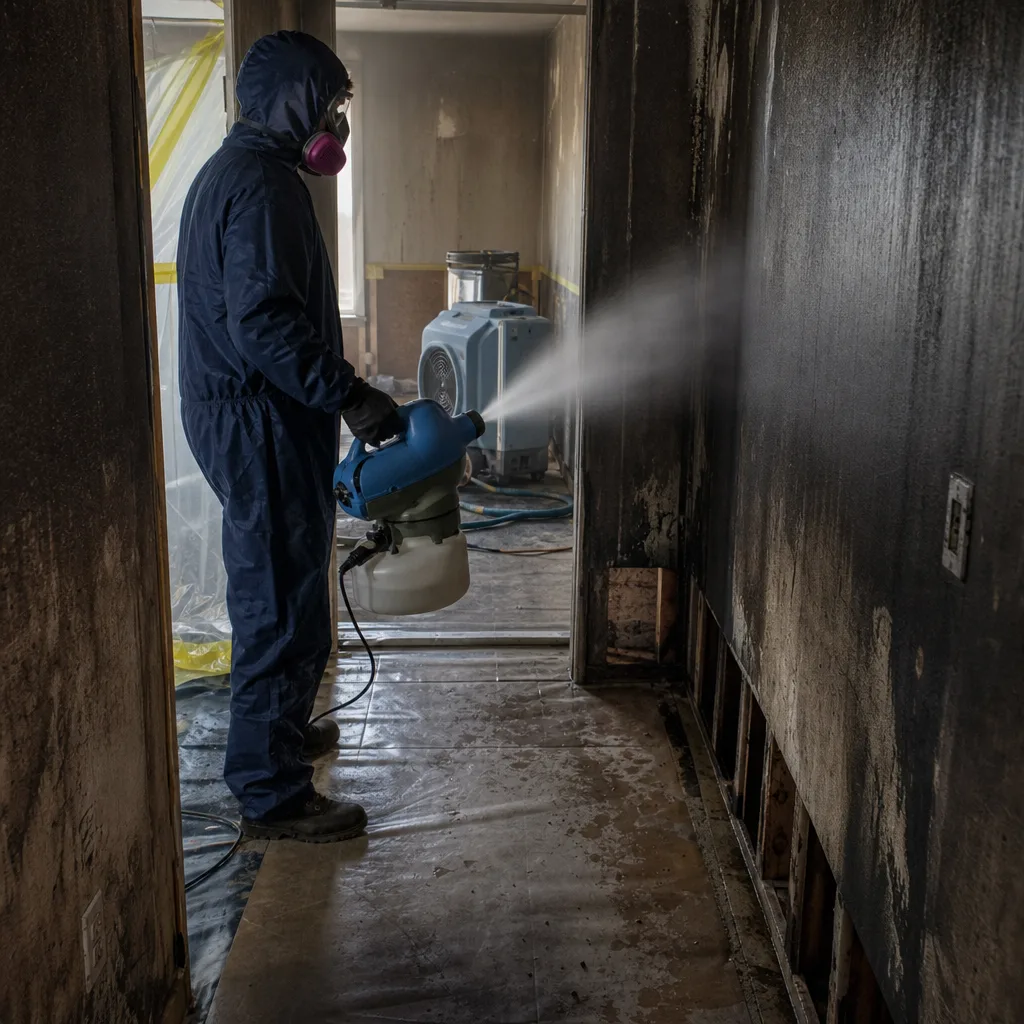
West Palm Beach’s climate and construction create a 60-90 day window between moisture intrusion and visible damage - a window that homeowners can exploit with simple, consistent measurement. A $15 hygrometer, a $60 moisture meter, and ten minutes monthly produce the trend data that identifies problems while they’re still mitigation scope, not reconstruction. The specific warning signs matter: 60% RH sustained, 16% moisture content in wood, efflorescence on block walls, asymmetric baseboard swelling. Each indicates a condition with a specific repair scope and a specific documentation requirement for insurance coverage. The homeowners who fare best are those who measure before they smell, document before they claim, and choose restoration partners who extend that documentation discipline with professional-grade records and written guarantees.
Written by Alicia Brennan, Owner at DryMark Restoration West Palm Beach, serving West Palm Beach since 2011.