
Last updated September 23, 2026
Free visual inspection and a written scope of work before any mitigation begins - photos, moisture readings, and drying logs go in your claim file
The scope we write is the scope we bill. Anything new gets shown to you, in writing, before we touch it.
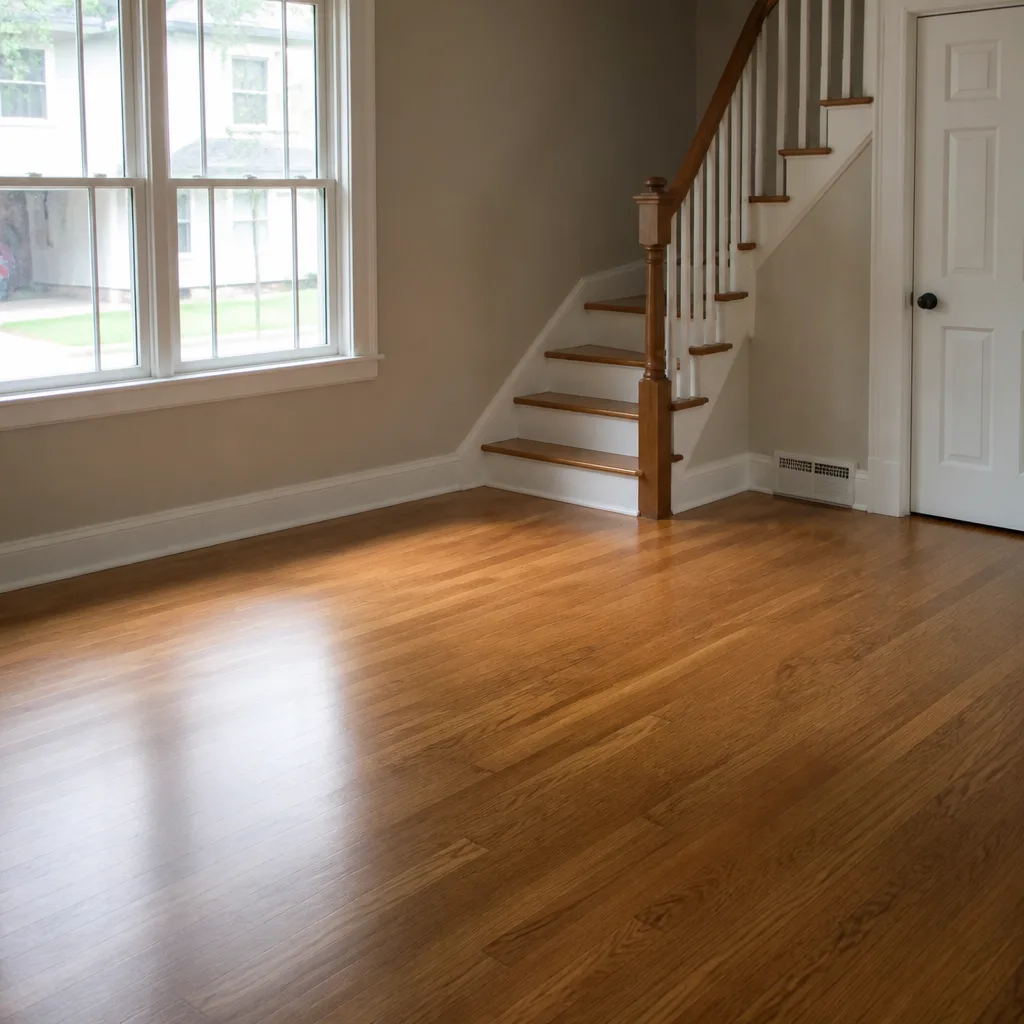
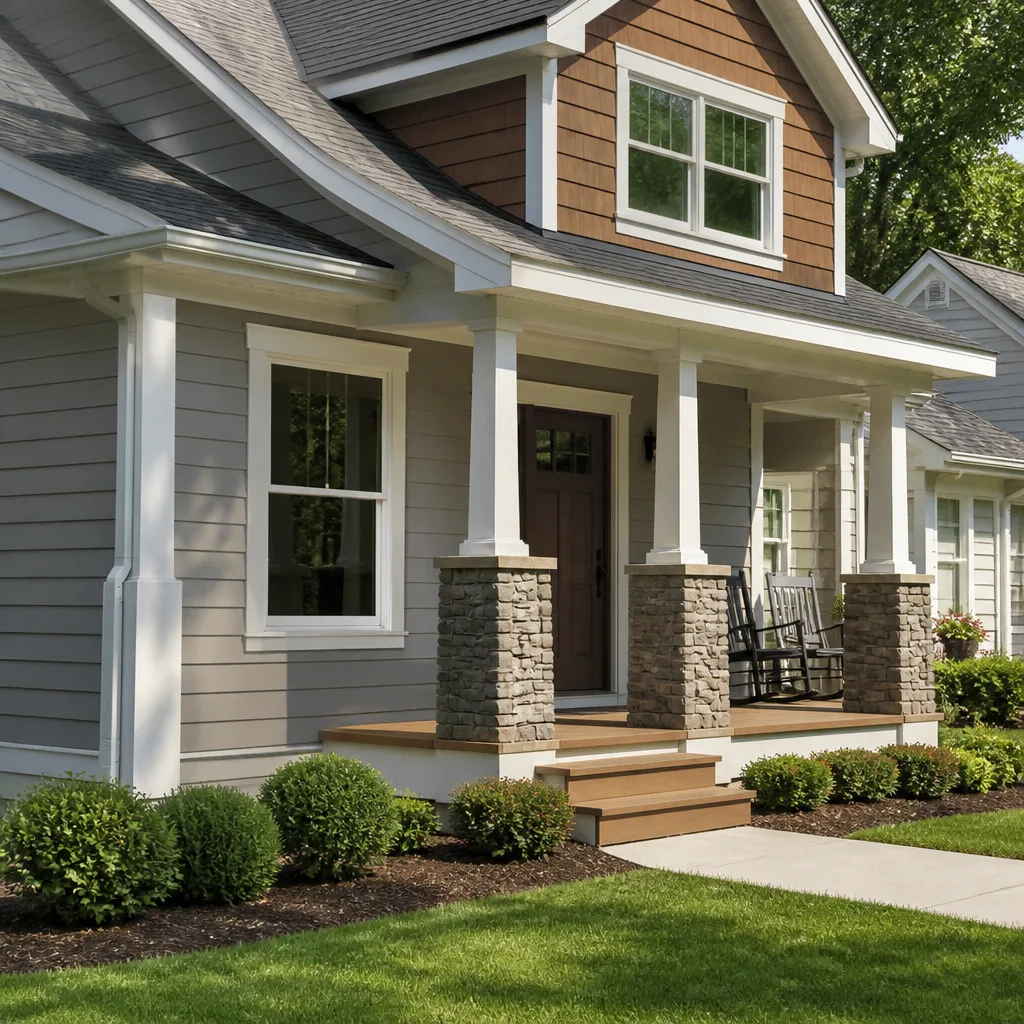
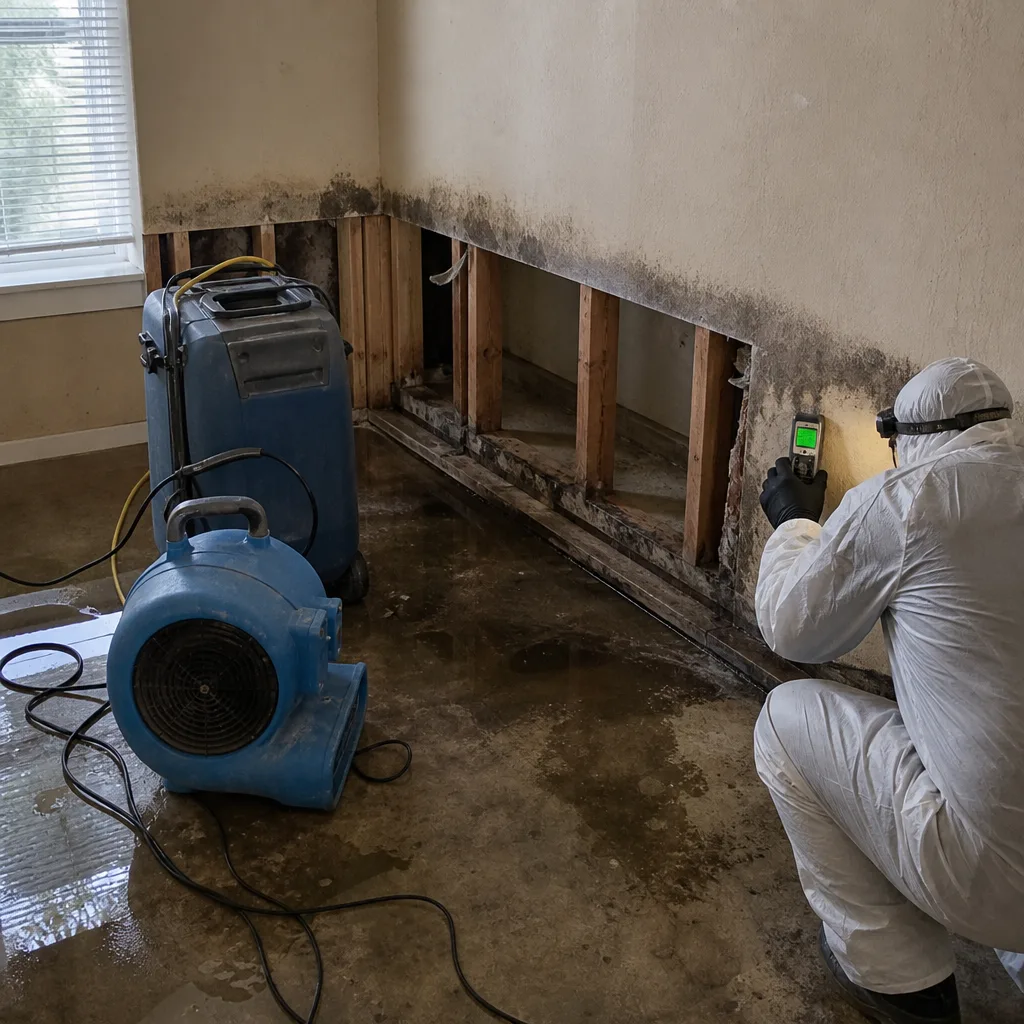 Before
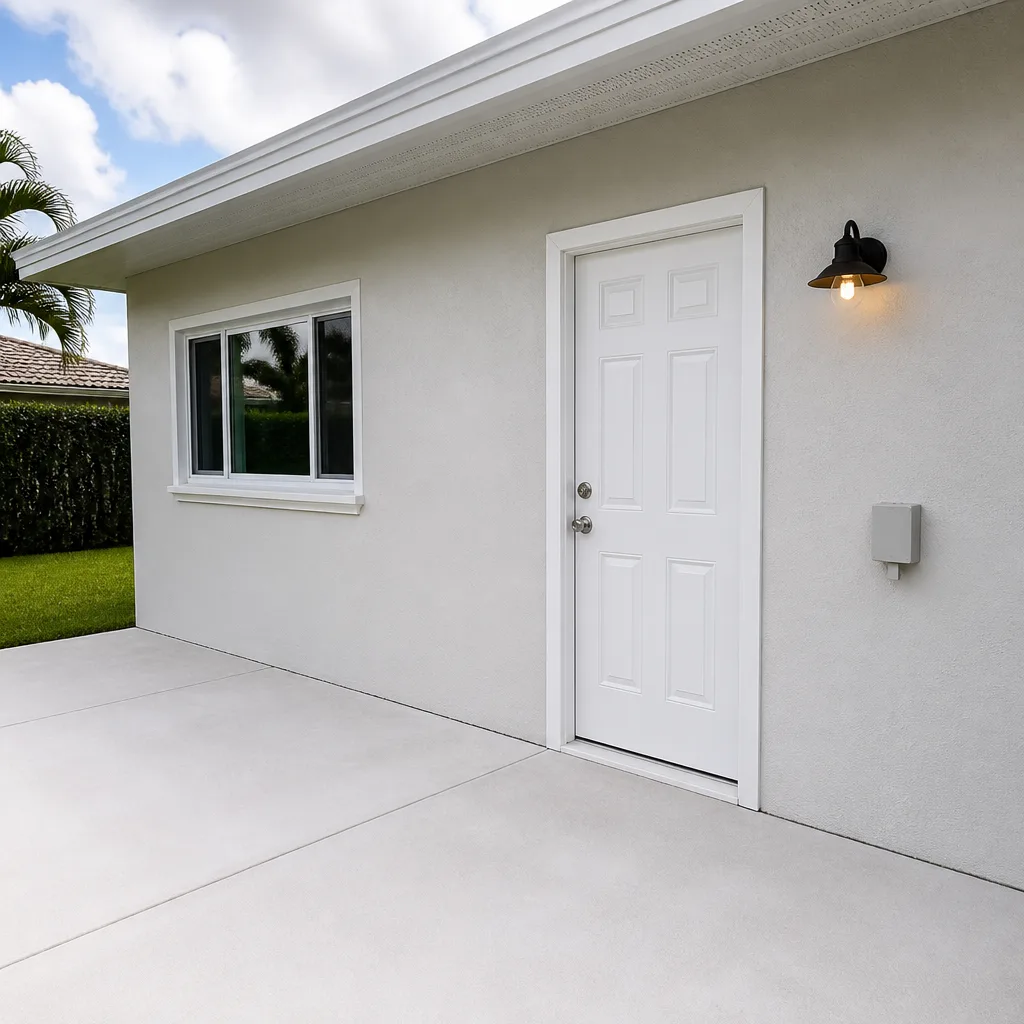 After
After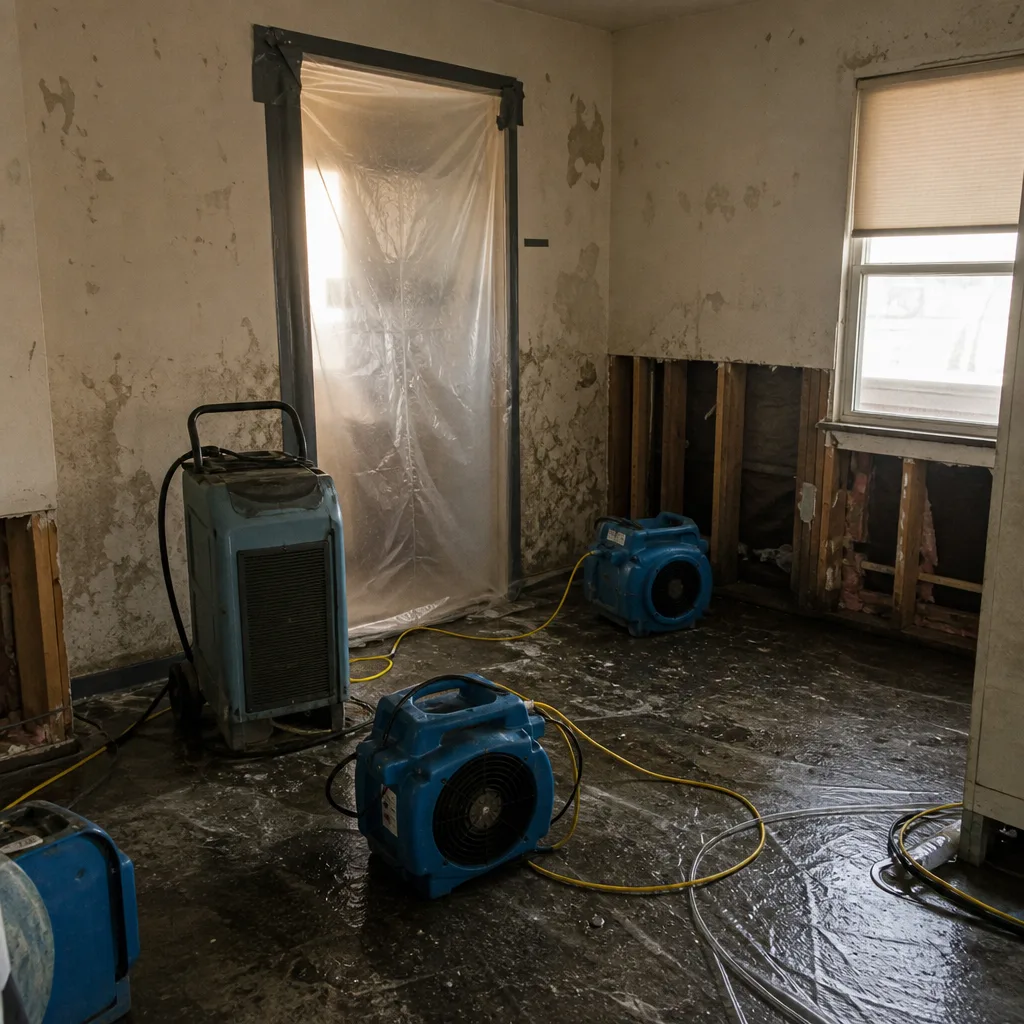 Before
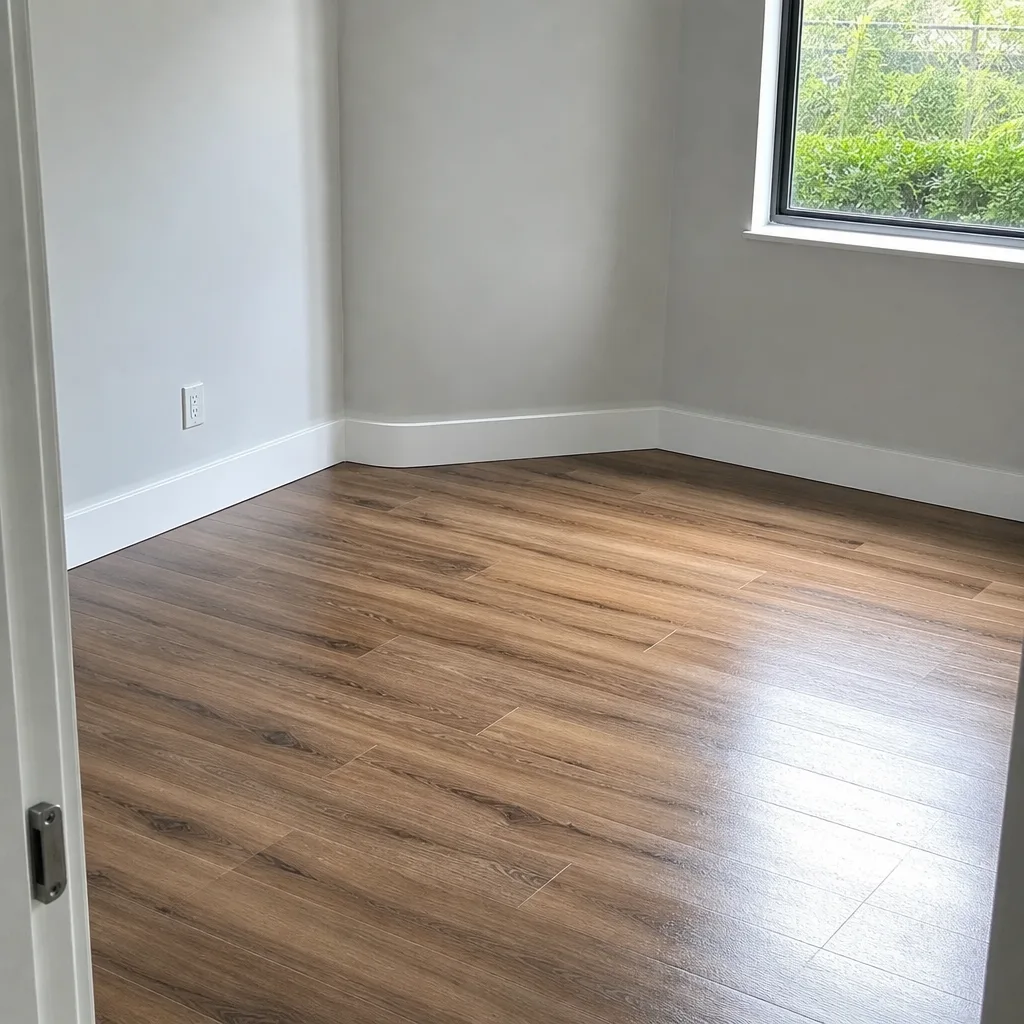 After
After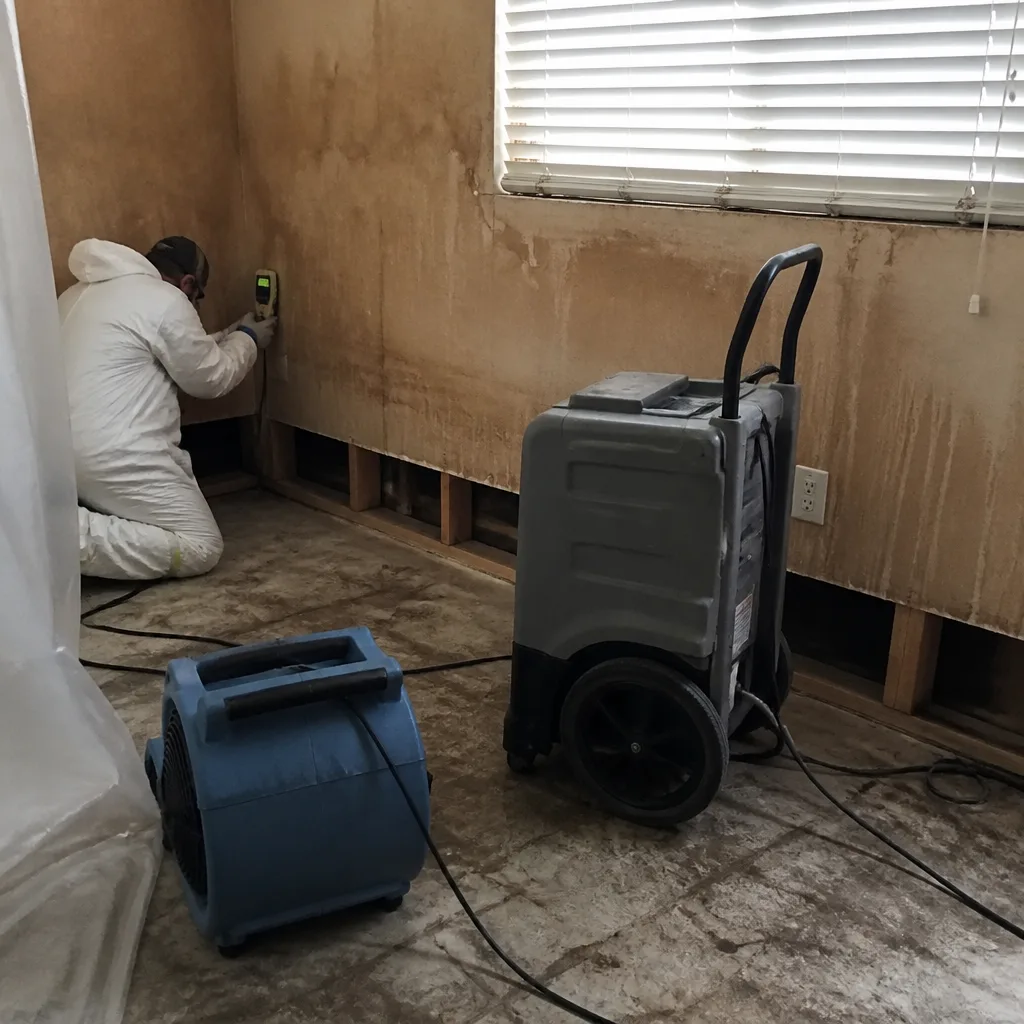 Before
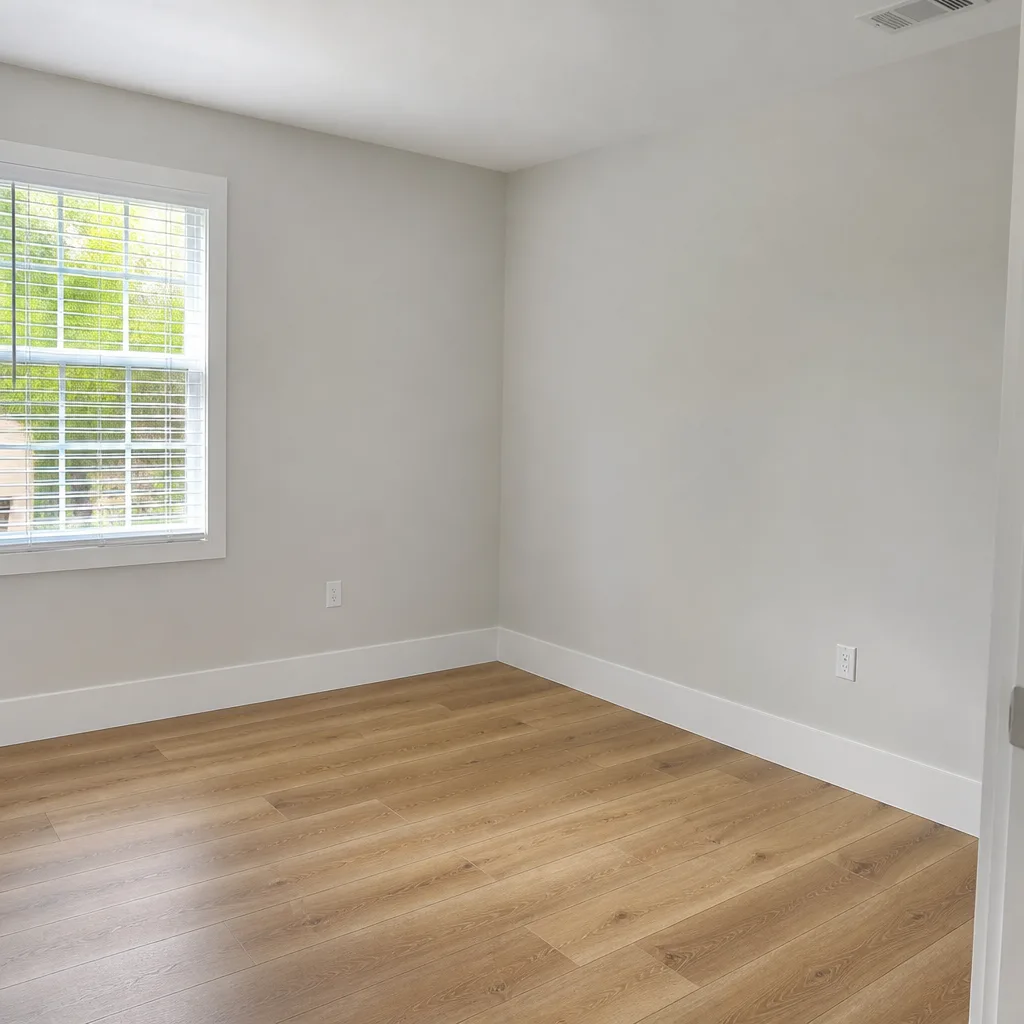 After
AfterThe Complete Guide to Damage Restoration in West Palm Beach
The average disputed water damage claim in Florida takes 187 days to resolve. That’s nearly six months of living with buckled floors, lingering odors, or a kitchen you can’t use - not because the storm was unusual, but because the contractor’s paperwork couldn’t survive an adjuster’s scrutiny. In West Palm Beach, where humidity sits above 70% RH for most of the year and afternoon thunderstorms can dump two inches in an hour, the gap between what happened to your home and what you can prove happened is where money disappears. This guide - and our more guides & resources - maps every phase of damage restoration through the lens of what an insurer actually requires to pay without dispute. You’ll learn how documentation decisions made in the first 24 hours determine whether your claim closes in three weeks or stalls for six months, why most drying timelines quoted in West Palm Beach underestimate actual duration, and what specific deliverables separate a payable invoice from a contested one.
Quick Answer
Damage restoration in West Palm Beach is the process of returning a home to pre-loss condition after water, fire, mold, storm, or biohazard damage, documented to IICRC, RIA, and IFA standards with a written price before work begins, room-by-room moisture readings, and a photo record on every visit. A properly documented restoration in this climate typically requires 20-40% longer drying time than national estimates due to sustained humidity above 70% RH. The difference between a claim paid in full and one disputed for six months usually comes down to whether the contractor delivered daily drying logs and a written scope before demolition started.
Table of Contents
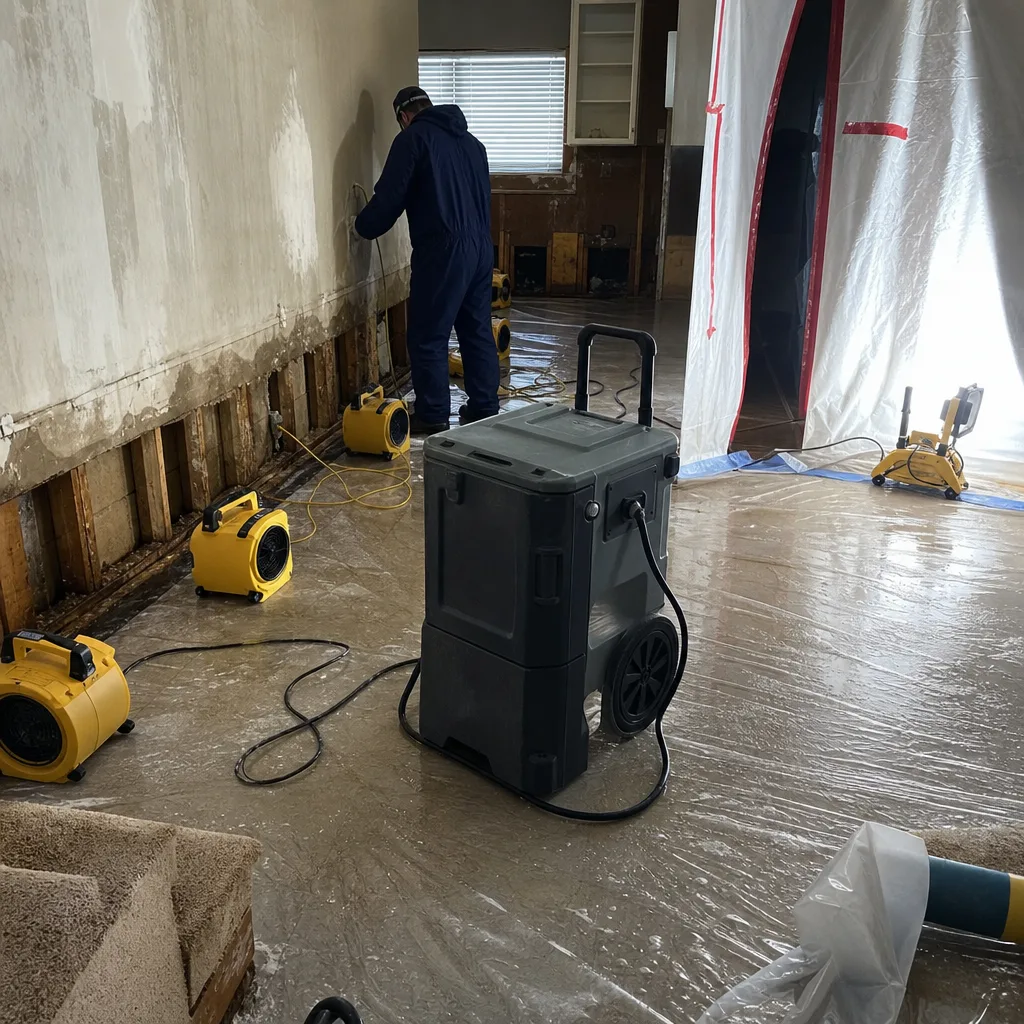
- Why Documentation Matters More Than Speed
- Water Damage Restoration: The Documentation Chain
- Mold Remediation: When Drying Isn’t Enough
- Fire & Smoke Damage: Beyond Surface Cleaning
- Storm & Disaster Restoration: West Palm Beach Specifics
- Sewage Cleanup & Biohazard Restoration
- Reconstruction & The Return to Normal
- Choosing a Restoration Contractor in West Palm Beach
 Before
 After
AfterWhy Documentation Matters More Than Speed
Most homeowners in El Cid, Flamingo Park, and Northwood call a restoration company asking one question: how fast can you get here? The better question is: what will you document when you arrive?
We’ve restored over 12,000 homes since 2011, and the pattern is consistent. The jobs that close cleanly - full payment, no supplement, no reinspection - share one trait: the contractor treated documentation as the product, not an afterthought. The jobs that linger in dispute almost always started with a verbal estimate, a handshake, and a crew that began demolition before anyone wrote down what was wet, how wet it was, or what dry looks like for that specific room.
Here’s what an insurer requires to pay a water damage invoice without dispute:
- Baseline moisture readings on Day 1, by room, by material. This means a calibrated penetrating moisture meter reading on drywall, wood framing, and subfloor in every affected space, recorded with the date, time, and technician name. Without this number, “dry” is an opinion. With it, “dry” is a measurement compared to a documented starting point.
- Daily psychrometric data. Psychrometrics is the study of air and moisture relationships. In practical terms, it means recording temperature, relative humidity, and vapor pressure differential at each dehumidifier and air mover, every day, until readings stabilize. Florida adjusters reference IICRC S500 standards when auditing invoices, and S500 requires this data to justify equipment rental days. A contractor who removes equipment based on “feels dry” invites a chargeback for excessive rental.
- A written scope of work signed before demolition. Haven Standard, Clause 1: written price before work begins. This scope must list affected rooms, square footage by classification (Class 1 through 4, per IICRC), materials to be removed, drying equipment count and placement, and anticipated duration. Change orders mid-project are the leading cause of disputed supplements. A fixed scope prevents scope creep.
- Photo documentation on every visit. Not jobsite snapshots for the company’s social media. An insurance-ready photo log includes wide shots showing room context, close-ups of damage with a measuring tape or moisture meter in frame, equipment placement with serial numbers visible, and post-drying verification shots with the same meter reading “dry” against the Day 1 baseline. We deliver this as standard, never as an upsell.
West Palm Beach’s climate makes documentation especially critical. Our average relative humidity runs 72-76% year-round, with summer spikes above 85%. That means evaporated moisture doesn’t leave the structure easily - it hangs in the air, reabsorbs into cooler surfaces, and extends drying timelines by 20-40% compared to drier climates. A contractor quoting national drying charts without local adjustment - a red flag among Damage Restoration Warning Signs: A West Palm Beach Homeowner’s Reference Guide - sets up a dispute when equipment stays on site longer than the estimate allows. We document the humidity differential between outdoor and conditioned air daily, justifying extended drying to the adjuster before they ask.
Water Damage Restoration: The Documentation Chain
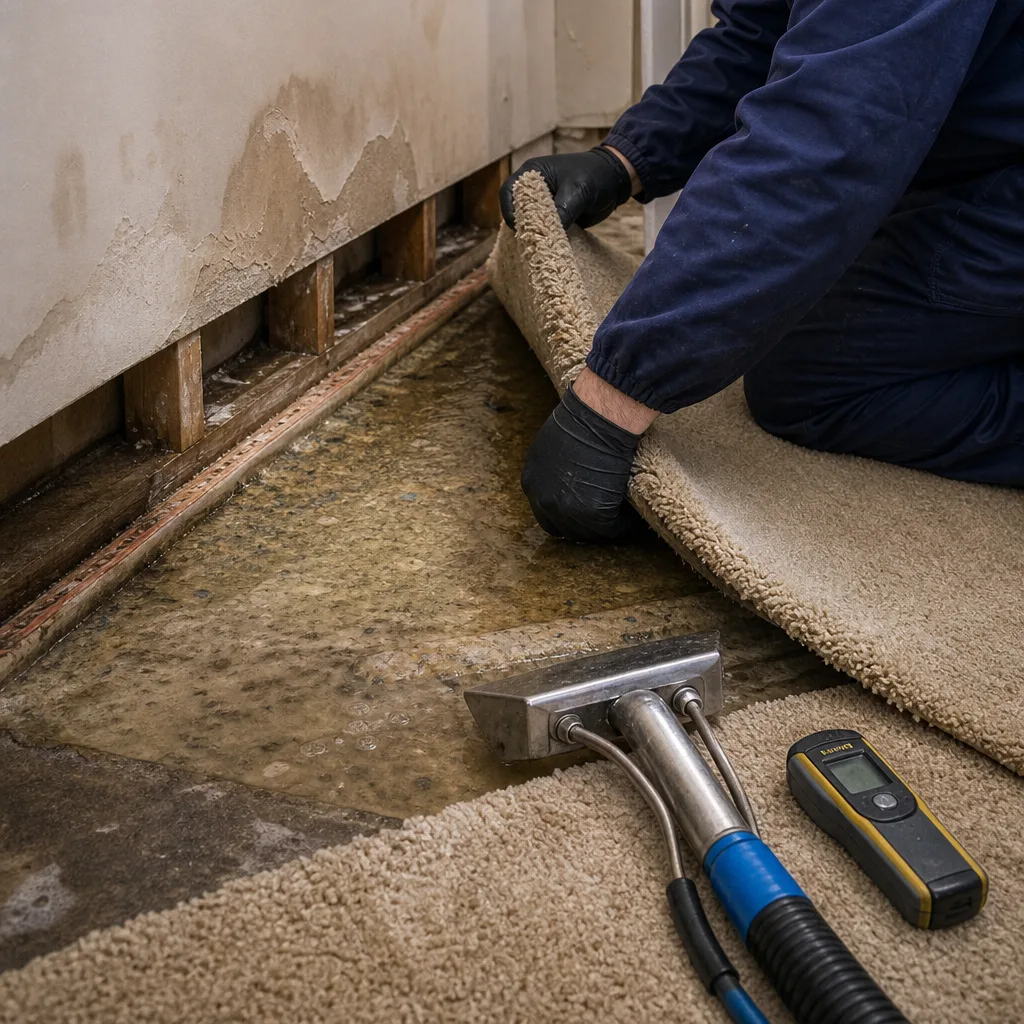
Water damage restoration in West Palm Beach follows a sequence where each step’s documentation enables the next step’s payment. Break the chain and the claim stalls.
Step 1: Emergency Response and Moisture Mapping
Within two hours of call receipt, a technician should arrive with a thermal imaging camera, penetrating and non-penetrating moisture meters, and a hygrometer. The first deliverable is a moisture map: a floor plan showing water migration paths, affected materials, and moisture content percentages. In our experience, water in West Palm Beach homes travels further than homeowners expect. Older homes in Flamingo Park with plaster walls and minimal vapor barriers show wicking up walls two feet above visible damage. Newer construction in Ibis with sealed wall cavities traps water in interstitial spaces that surface readings miss.
The moisture map becomes the baseline for every subsequent decision: which materials can be dried in place, which require removal, where to place dehumidification equipment, and how many drying days to quote. Without it, a contractor guesses. An adjuster reviewing a guess rejects it.
Step 2: Category and Classification
IICRC S500 defines water damage by category (clean, gray, black) and class (amount and evaporation potential). These aren’t bureaucratic labels. They determine safety protocols, equipment specifications, and whether materials must be removed or can be restored. Category 2 water - dishwasher discharge, washing machine overflow - becomes Category 3 if left standing more than 48 hours in West Palm Beach heat. We document the time of loss, the time of our arrival, and the observed condition at arrival to establish category at the moment of assessment.
Step 3: Equipment Deployment and Daily Monitoring
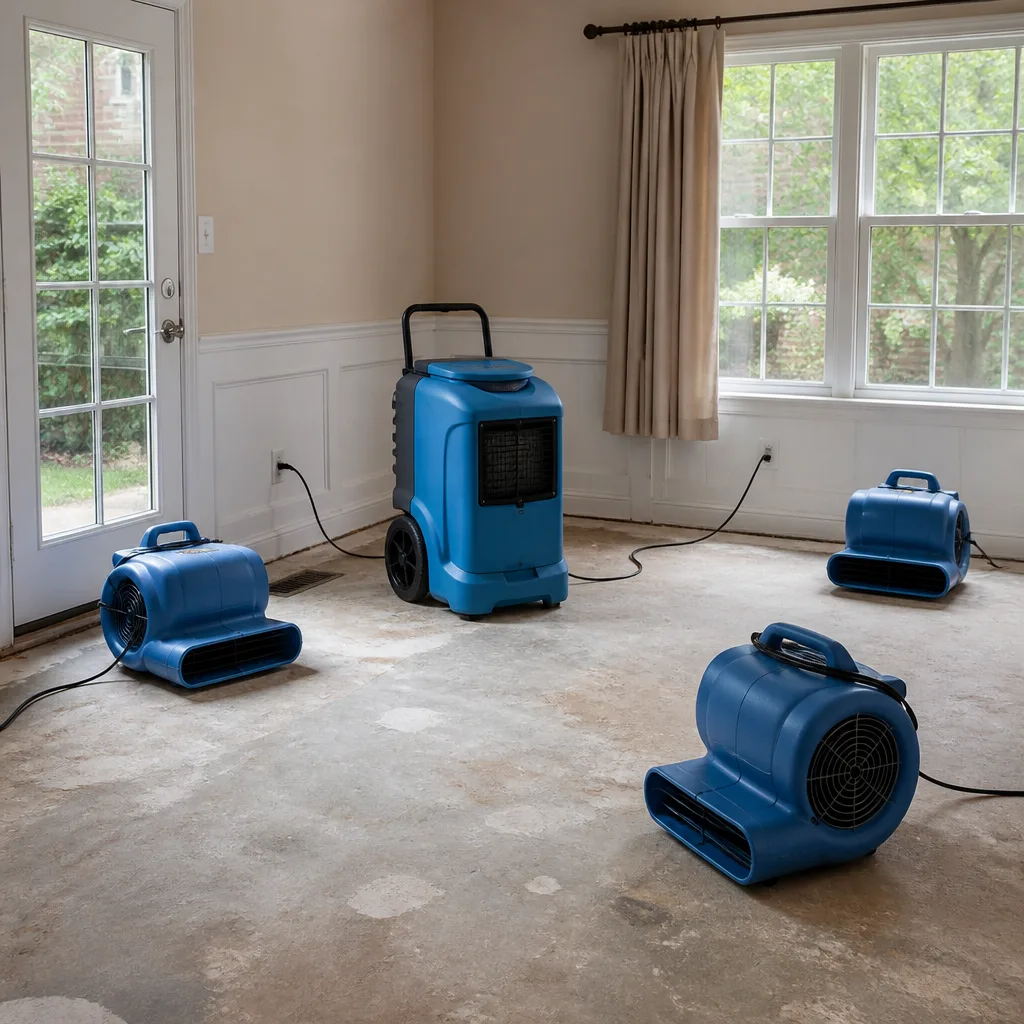
Professional-grade drying systems from Dri-Eaz, Phoenix, and XPOWER produce the airflow and dehumidification capacity that residential equipment cannot match. But the equipment alone doesn’t justify the invoice. Daily monitoring logs showing grain depression (the difference between indoor and outdoor moisture content), specific humidity readings, and equipment runtime hours prove the equipment was necessary and properly managed.
We use low-grain refrigerant dehumidifiers in most West Palm Beach applications because they perform efficiently in our high-humidity environment, supplemented with desiccant dehumidifiers for dense materials or sealed cavities. Each unit’s placement is photographed with the serial number visible, and daily readings are recorded to a cloud log the homeowner and adjuster can access.
Step 4: Verification of Dryness and Equipment Removal
Drying is complete when moisture content readings return to within 2-4 points of the established dry standard for that material in that geographic region. In West Palm Beach, “dry” for interior framing is typically 12-16% moisture content, higher than drier climates because ambient humidity prevents lower achievement without excessive energy cost. We document the dry standard source (IICRC S500, regional supplement, or manufacturer specification) and the final readings against that standard before equipment removal.
Typical Water Damage Restoration Costs in West Palm Beach
- Category 1, Class 1 (clean water, minimal absorption): $3,200 – $5,800
- Category 1, Class 2 (clean water, significant wall/floor wetness): $5,500 – $10,400
- Category 2, Class 2 (gray water, significant wetness): $7,800 – $14,200
- Category 3, Class 3 or 4 (black water, extensive saturation): $12,000 – $28,000+
- Contents packout and cleaning: $1,800 – $4,500
- Structural drying equipment per day: $85 – $140 per dehumidifier; $25 – $45 per air mover
These ranges reflect West Palm Beach market rates for documented, insured work with written scopes. Quotes significantly below these ranges often indicate undocumented labor, uninsured subcontractors, or equipment that won’t produce the drying logs your claim requires.
Mold Remediation: When Drying Isn’t Enough
Mold remediation in West Palm Beach occupies a special place in the restoration landscape because it’s where homeowner fear and adjuster skepticism collide. The fear is health-related and often amplified by online sources of varying reliability. The skepticism is financial: mold claims are among the most supplemented and disputed in Florida.
The documentation that resolves this tension is environmental: pre-remediation air and surface sampling, containment verification, and post-remediation clearance testing.
When Mold Follows Water Damage
In West Palm Beach, mold growth can begin 48-72 hours after water intrusion when humidity exceeds 60% and temperature holds above 70°F. That describes most of our year. Homes in neighborhoods like South End and Northwood, with older HVAC systems and inconsistent dehumidification, are particularly susceptible. We regularly see Aspergillus and Penicillium species in crawl spaces and behind baseboards where slow leaks went unnoticed.
The critical documentation sequence:
- Moisture source identification and elimination. Remediation without fixing the water source is temporary. We document the source, the repair, and verification that moisture readings returned to normal before remediation begins.
- Containment and negative air pressure establishment. A containment barrier of 6-mil polyethylene with sealed seams, maintained under negative pressure by HEPA-filtered air scrubbers, prevents cross-contamination. We photograph containment setup and record pressure differential readings.
- Removal of mold-damaged materials. Porous materials with visible mold growth - drywall, insulation, carpet pad - are removed and bagged within the containment. Semi-porous materials like wood framing are HEPA-vacuumed and treated with antimicrobial. We document each removed item with dimensions and disposal manifest.
- HEPA air filtration and surface cleaning. Air scrubbers run continuously during and after removal, with filter change documentation. Surfaces are cleaned with antimicrobial agents appropriate for the material and mold species identified.
- Post-remediation verification. Air samples collected outside containment are compared to indoor samples. Remediation is complete when indoor spore counts match outdoor background levels for the species present, or when independent laboratory analysis confirms clearance. We provide the lab report as a standard deliverable.
Mold Remediation Costs in West Palm Beach
- Small contained area (under 10 sq ft): $1,500 – $3,200
- Moderate area (10-100 sq ft, single room): $3,500 – $7,800
- Extensive area (100-300 sq ft, multiple rooms): $8,200 – $15,400
- Whole-house or HVAC contamination: $18,000 – $35,000+
- Post-remediation clearance testing: $450 – $850
Insurance coverage for mold varies by policy and cause. Mold resulting from a covered water loss is typically covered to policy limits, often $10,000. Mold from long-term maintenance neglect usually is not. We document the cause, the timeline, and the connection to a covered peril to support coverage determination.
Fire & Smoke Damage: Beyond Surface Cleaning
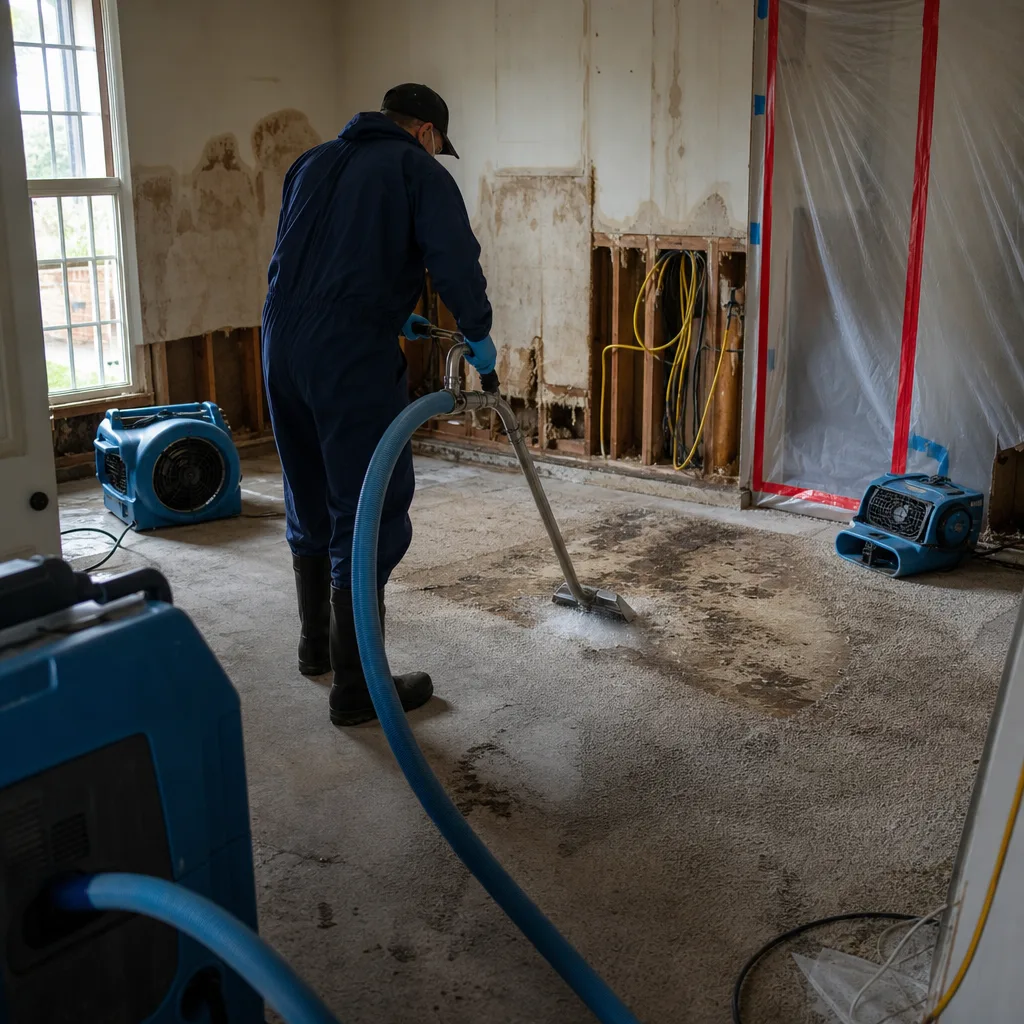
Fire and smoke damage restoration in West Palm Beach presents a documentation challenge different from water: the damage is often invisible, and the restoration timeline extends well beyond what homeowners expect.
Smoke particles are 0.4 to 1.0 microns in size, smaller than mold spores, and penetrate porous materials deeply. In our climate, high humidity causes these particles to hygroscopically attract moisture, accelerating corrosion of metals and permanent staining of surfaces. A kitchen fire in June produces different damage progression than the same fire in January elsewhere.
The Three Zones of Fire Damage Documentation
We document fire damage in three zones, each with distinct restoration protocols and insurance implications:
- Zone 1: Direct fire damage. Charring, melting, structural compromise. This is the most visible and least disputed. Documentation includes material identification, dimensions, and replacement cost. Structural elements require engineering evaluation before repair scope finalization.
- Zone 2: Proximate heat damage. Materials not ignited but degraded by radiant heat: warped vinyl siding three feet from the flame, cracked tile adhesive, compromised electrical insulation. This zone generates the most supplements because initial scopes often miss it. We use thermal imaging to identify heat-affected materials beyond the char line.
- Zone 3: Smoke and odor damage. The largest zone and the most documentation-intensive. Smoke travels through HVAC systems, wall cavities, and plumbing chases to affect rooms far from the fire origin. We document smoke residue patterns (protein fires leave nearly invisible residues that require specialized testing), odor perception mapping by room, and the restoration protocol for each material classification.
Restoration Sequence
Fire restoration typically proceeds through emergency board-up and stabilization, contents inventory and packout (with photo documentation of each item’s condition), structural cleaning and deodorization, reconstruction, and contents return. The contents inventory is where documentation discipline pays most directly: a detailed list with pre-loss photos, condition assessment, and restoration versus replacement recommendations supports personal property coverage payment.
We use ozone and hydroxyl generators for odor elimination, with treatment duration documented by hour and concentration. Thermal fogging for heavy odor loads requires evacuation documentation and clearance air testing before reoccupancy.
Fire & Smoke Restoration Costs in West Palm Beach
- Light smoke damage, single room: $4,500 – $9,200
- Moderate fire damage, kitchen or single room: $12,000 – $28,000
- Significant structural fire, partial reconstruction: $35,000 – $85,000
- Major fire, extensive reconstruction: $85,000 – $250,000+
- Contents packout and restoration: $3,500 – $15,000 depending on volume
Storm & Disaster Restoration: West Palm Beach Specifics
West Palm Beach sits in a hurricane exposure zone where wind-borne debris, storm surge, and inland flooding converge. The 2024 hurricane season reminded homeowners in neighborhoods like El Cid and Flamingo Park that storm damage is rarely single-mode: a roof breach admits wind-driven rain, which saturates insulation and drywall, which creates mold conditions if drying is delayed by widespread contractor demand.
Storm Restoration Documentation Priorities
Storm events create documentation challenges because damage is extensive, adjusters are overwhelmed, and temporary repairs must be documented separately from permanent restoration. We prioritize:
- Emergency mitigation documentation. Every tarp, board-up, and water extraction performed to prevent further damage must be photographed and described with dimensions and materials. These are separately payable as “additional living expense” or “emergency mitigation” under most policies, but only with documentation.
- Date-of-loss condition versus subsequent damage. Storm damage that sits unmitigated deteriorates. Insurers distinguish between damage from the storm and damage from delay. We document arrival time, initial conditions, and the progression that would have occurred without intervention.
- Code upgrade requirements. Florida Building Code updates after 2004 and 2017 hurricanes require wind mitigation features that may not have been present in the original construction. We identify code-triggered upgrades during initial scope development, document the code section, and present it to the adjuster as a covered additional expense under ordinance and law coverage.
Equipment and Timeline Realities
After a major storm, regional demand for drying equipment exceeds supply. Contractors without established equipment inventories and logistics systems face delays that extend damage. We maintain relationships with equipment manufacturers including B-Air and Injectidry to secure supplemental inventory before storm season, and we document equipment deployment with serial numbers and runtime hours regardless of demand pressure.
Drying timelines after storm events in West Palm Beach typically run 30-50% longer than standard water damage because power outages interrupt dehumidification, high ambient humidity reintroduces moisture during generator switches, and saturated ground conditions prevent normal vapor pressure differentials. We document each power interruption and its effect on drying progress.
Sewage Cleanup & Biohazard Restoration
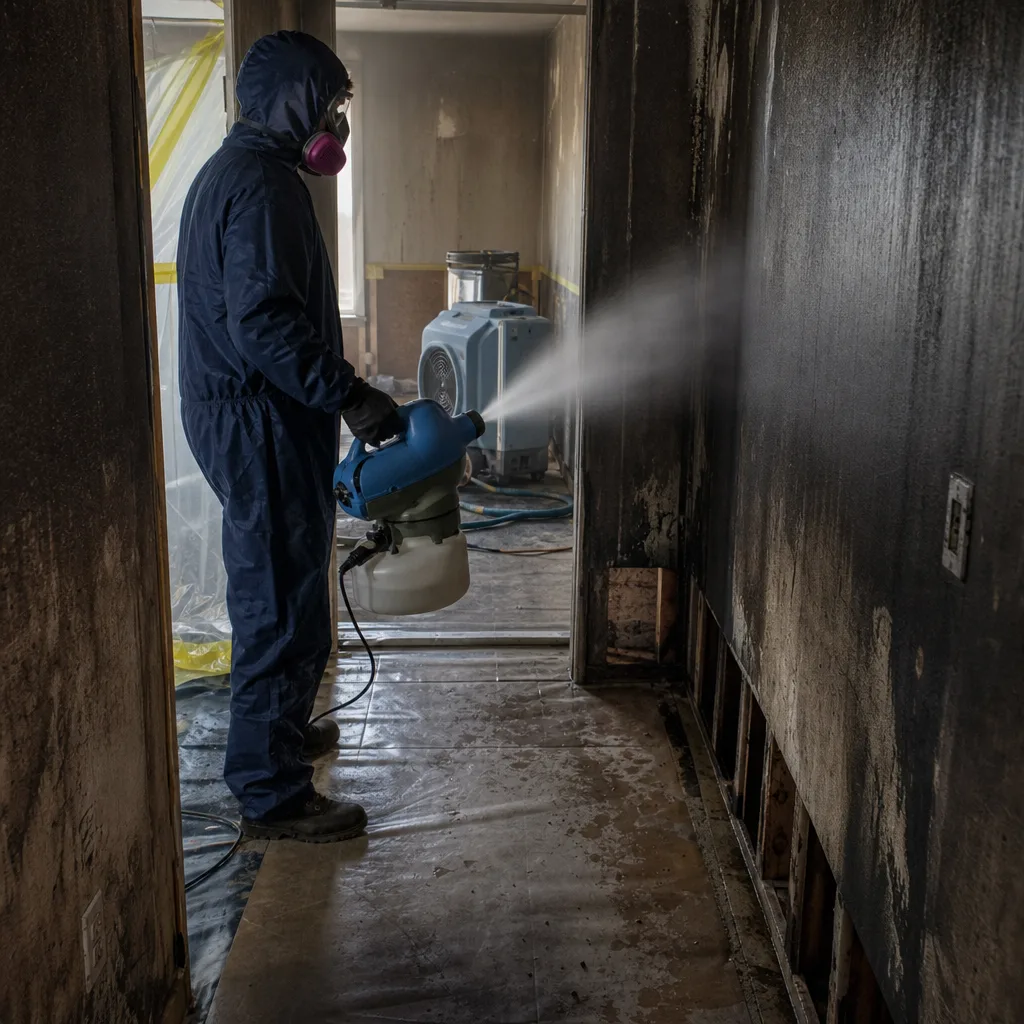
Sewage backup and biohazard contamination require restoration protocols that prioritize safety documentation alongside structural documentation. These are Category 3 water losses by definition, with pathogen risks that standard drying procedures cannot address.
Sewage Cleanup Protocol
A sewage backup in a West Palm Beach home, whether from municipal line overflow or private septic failure, requires:
- Full PPE for all technicians, documented with training records
- Containment of affected areas with negative air pressure
- Removal of all porous materials in the contamination zone
- Disinfection with EPA-registered antimicrobial effective against E. coli, Salmonella, and enteric viruses
- Post-cleanup environmental testing for coliform bacteria
- Documentation of disposal through licensed waste hauler
The documentation deliverable includes the initial contamination assessment with photos, the disposal manifest for removed materials, the disinfectant product and concentration used, technician PPE verification, and post-cleanup test results. This package satisfies both insurer requirements and Florida Department of Health protocols.
Biohazard and Crime Scene Cleanup
These situations require additional sensitivity and regulatory compliance. We work under OSHA Bloodborne Pathogens Standard 29 CFR 1910.1030, with documentation of training, exposure control plan, and waste disposal through licensed medical waste facilities. Homeowners receive a completion certificate documenting that the property has been restored to habitable condition by trained technicians.
Sewage and Biohazard Costs in West Palm Beach
- Sewage backup, single bathroom or kitchen: $5,500 – $12,000
- Sewage backup, multiple rooms or basement: $12,000 – $28,000
- Septic system failure, extensive ground contamination: $18,000 – $45,000
- Biohazard scene cleanup: $3,500 – $15,000 depending on scope and duration
- Post-cleanup environmental testing: $650 – $1,200
Reconstruction & The Return to Normal
Reconstruction is where restoration transitions from emergency service to construction project, and where documentation requirements shift from insurance justification to contract protection, including Damage Restoration Permits, Codes & Inspections in FL: What You Need to Know.
Unlike mitigation work, which responds to immediate conditions, reconstruction is scoped, scheduled, and priced in writing before work begins. Haven Standard, Clause 1 applies with full force: a written price delivered before anyone starts work, with no scope-creep additions once the crew is inside. This is not merely our policy; it is the protection against the most common complaint we hear from homeowners who used other contractors.
The Reconstruction Documentation Package
A proper reconstruction scope includes:
- Detailed material specifications. Not “paint, two coats” but “Sherwin-Williams Duration Home, satin finish, color to be selected from standard palette, two coats over primer.” Not “tile floor” but “Daltile Restore, 12×24, Color 0614, installed with Laticrete 254 Platinum thinset, 1/8″ grout joints, Mapei Flexcolor CQ grout.”
- Line-item labor and material pricing. Each component priced separately, permitting homeowner adjustment and adjuster line-item comparison to estimating software.
- Project schedule with milestones. Start date, rough-in inspection, finish material delivery, final inspection, and substantial completion. Delays documented with cause and revised timeline.
- Change order protocol. No work outside the written scope without a signed change order describing the modification, the reason, and the price impact. This protects both parties from the “while we’re here” escalation that doubles project costs.
- Warranty documentation. The 365-Day Done Right Promise, backed by The Haven Standard: if it’s not done right, we make it right. A signed guarantee, not a verbal assurance, with specific response time and resolution protocol.
Reconstruction Costs in West Palm Beach
Reconstruction costs vary widely by finish level and scope. In our market, with current material and labor rates:
- Kitchen reconstruction, mid-range finishes: $45,000 – $85,000
- Bathroom reconstruction, mid-range: $18,000 – $35,000
- Whole-home flooring replacement, LVP or engineered hardwood: $12 – $28 per square foot installed
- Drywall repair and painting, per room: $3,200 – $7,500
- Roof replacement, asphalt shingle: $8,500 – $18,000 for typical West Palm Beach home
Choosing a Restoration Contractor in West Palm Beach
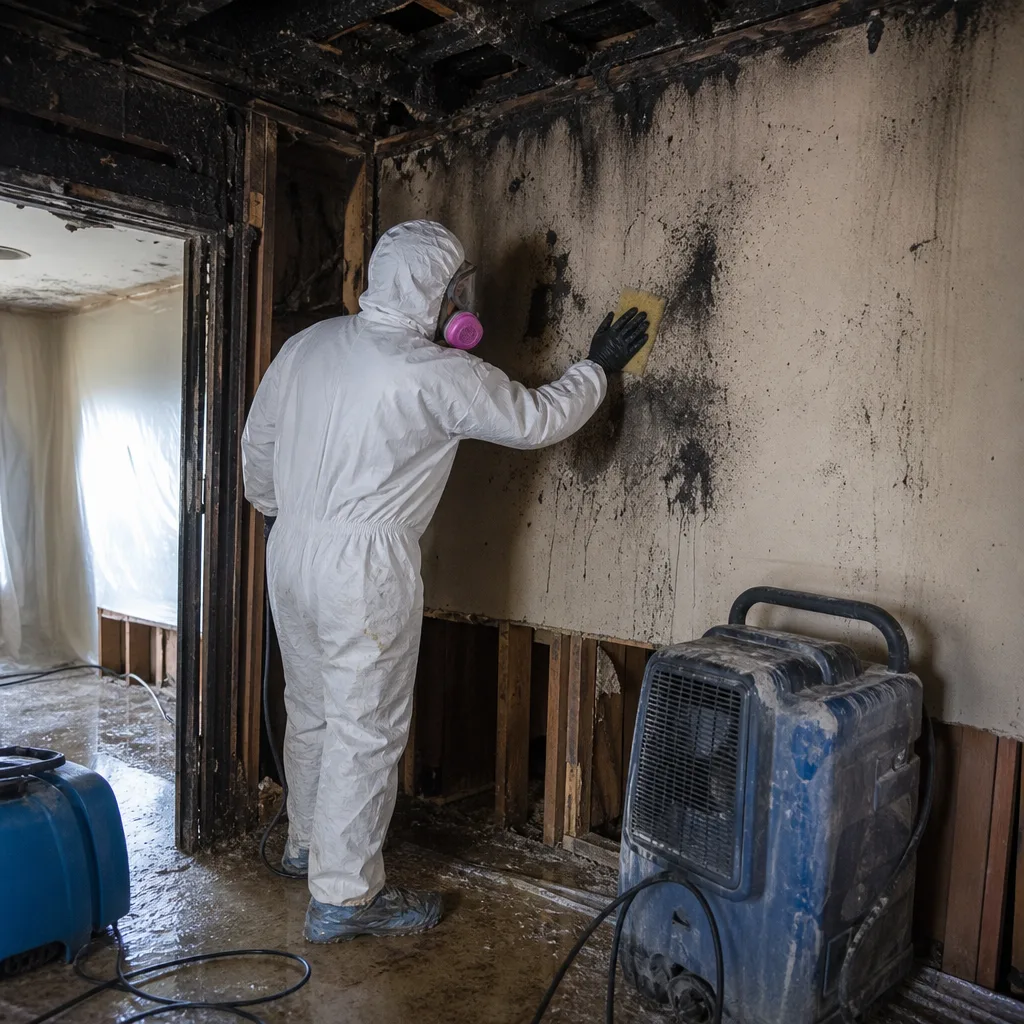
The contractor you choose determines whether your claim closes or stalls. Here are the specific verification steps we recommend, based on what we’ve seen fail:
Verify Documentation Practices Before You Hire
Ask to see a sample deliverable package: a redacted moisture log, photo record, and written scope from a completed job. A contractor who cannot produce this before you sign will not produce it after. Ask specifically:
- Do you record baseline moisture readings in every affected room before equipment placement?
- Do you provide daily psychrometric data with equipment runtime hours?
- Do you photograph equipment with serial numbers visible?
- Do you deliver a written scope with fixed pricing before demolition begins?
- Do you provide a photo record on every visit as standard, not an upsell?
Verify Insurance and Licensing
Florida requires mold remediation contractors to hold a state license. Ask for the license number and verify it through the Florida Department of Business and Professional Regulation. Ask for certificates of insurance showing general liability, workers compensation, and pollution liability coverage. Ask whether technicians are background-checked and uniformed - named individuals, not day labor.
Verify Equipment and Standards
Professional restoration requires professional equipment. Ask what dehumidification and air movement equipment the contractor deploys. Names like Dri-Eaz, Phoenix, and XPOWER indicate industrial-grade capability. Ask whether work is documented to IICRC, RIA, and IFA standards - and ask what those acronyms mean to the person answering. If they don’t know, they don’t follow them.
Verify Communication Protocol
Will you speak to a live person when you call, or navigate a voicemail tree? We answer every call with a live person, 24 hours a day, 7 days a week. Will you receive direct contact information for your project manager, or a general office number? Will the adjuster receive documentation directly, or must you forward it? These details determine whether your claim moves or waits.
DryMark Restoration West Palm Beach home operates under The Haven Standard with Alicia Brennan’s founding principle: the documentation gap that costs homeowners their claims is a solvable problem, solved one written price, one photo record, one daily log at a time.
Common Mistakes to Avoid
- Starting demolition before documentation. The urge to tear out wet drywall immediately is understandable, but without baseline moisture readings and photo documentation, you cannot prove what was damaged or how wet it was. Insurers deny claims for “pre-existing conditions” when documentation is absent.
- Accepting verbal estimates. Haven Standard, Clause 1 exists because verbal estimates become verbal disputes. A written price before work begins protects you from scope creep and gives the adjuster a fixed point of reference.
- Ignoring humidity-adjusted drying timelines. National drying charts assume moderate humidity. West Palm Beach’s sustained 70%+ RH extends drying by days or weeks. A contractor quoting standard timelines without local adjustment sets up a mid-project supplement that delays your claim.
- Skipping post-remediation verification. Whether water, mold, or fire, restoration completion requires verification against a documented standard. “Looks good to me” is not a standard. Moisture readings, lab clearance, or odor panel testing are.
- Using unlicensed or uninsured contractors after storms. Post-storm, itinerant contractors appear with local phone numbers and out-of-state plates. Verify Florida licensing, local business registration, and insurance before signing. The money you “save” disappears when the claim is denied for unlicensed work.
- Failing to document temporary repairs separately. Emergency tarping, board-up, and water extraction are separately payable mitigation expenses. If your contractor bundles them into the reconstruction scope, you may lose coverage for additional living expenses or emergency mitigation categories.
- Not requesting a second opinion on competitor estimates. We offer a Free Second Opinion on any competitor’s written estimate at no charge. A second professional review often identifies missed scope, inflated line items, or documentation gaps that will cost you at claim time.
When to Call a Professional
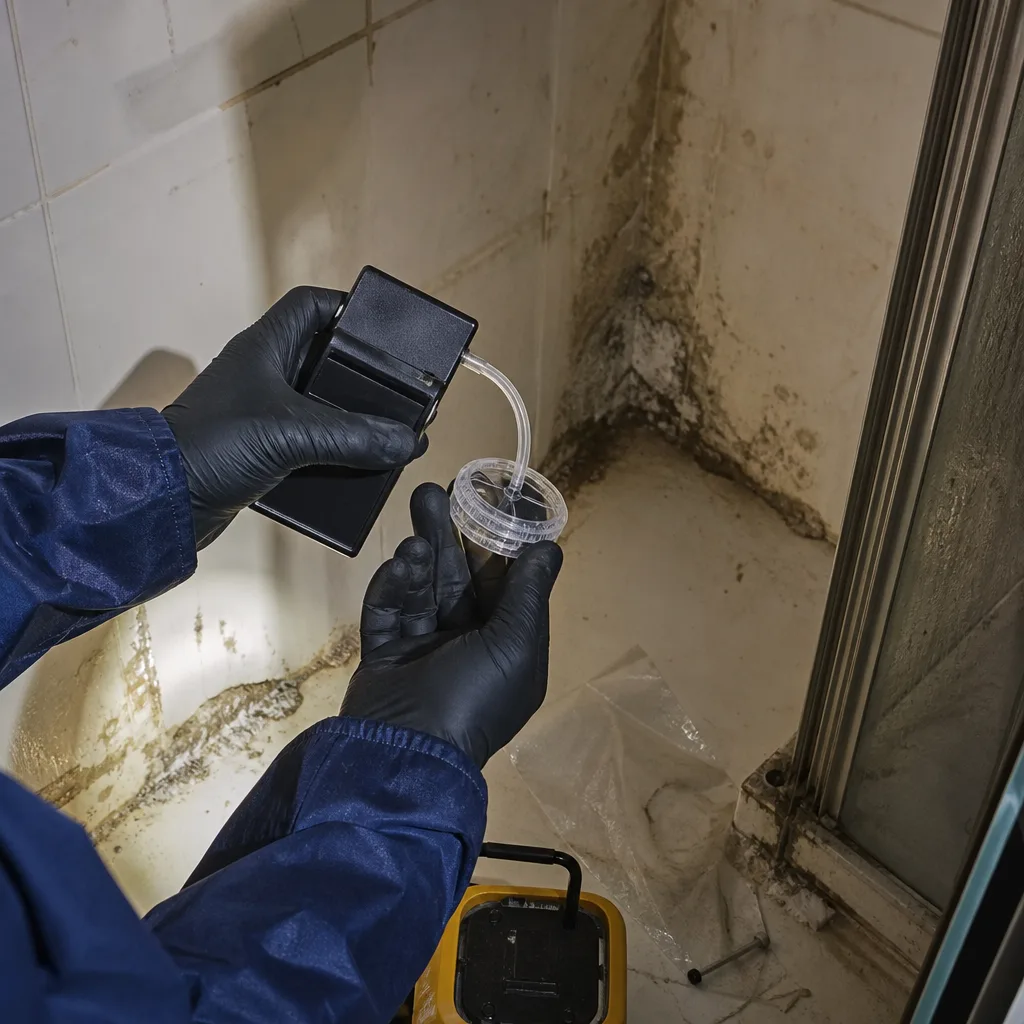
Call a professional restoration contractor when water has affected more than a single small area you can dry with household fans, when mold is visible or suspected, when fire or smoke has affected multiple rooms, when sewage or biohazard contamination is present, or when storm damage has compromised your roof or exterior envelope. These situations require documentation, equipment, and safety protocols that exceed homeowner capability and that your insurer expects to see performed by qualified technicians.
DryMark Restoration West Palm Beach offers free estimates in West Palm Beach - call (561) 290-5060. Every estimate includes a written scope and price before any work begins, documented to The Haven Standard. If you have a competitor’s estimate, we’ll review it at no charge and tell you what documentation it contains and what it misses.
Frequently Asked Questions
Water damage restoration in West Palm Beach typically takes 3-7 days for structural drying in standard Class 1 or 2 losses, but extends to 10-21 days for Class 3 or 4 losses or when humidity exceeds 75% RH. Our climate’s sustained high humidity slows evaporation, requiring extended dehumidification documented with daily psychrometric logs. Call (561) 290-5060 for a specific timeline based on your damage classification - estimates are free.
Mold remediation is covered when it results from a covered water loss, such as sudden pipe rupture or storm damage, up to your policy’s mold sublimit, typically $10,000. Mold from long-term leaks, maintenance neglect, or humidity without a water loss event is usually excluded. We document the cause, timeline, and connection to a covered peril to support coverage determination. Call (561) 290-5060 and we’ll review your policy language with your written estimate.
An insurance-ready photo log includes wide shots with room context, close-ups with measuring devices or moisture meters in frame, equipment serial numbers visible, and pre/post comparison against documented baselines, all organized by date and technician. Regular photos lack these elements and often fail adjuster scrutiny. We deliver an insurance-ready photo log as standard on every visit, never as an upsell.
West Palm Beach’s average 72-76% relative humidity, with summer spikes above 85%, reduces the vapor pressure differential that drives moisture from materials into the air. This extends drying timelines 20-40% beyond national estimates and requires more powerful dehumidification equipment. We document ambient humidity daily and adjust equipment capacity accordingly, justifying extended timelines to adjusters with data rather than requests.
Visible mold growth exceeding 10 square feet, mold in HVAC systems, or mold resulting from Category 2 or 3 water damage requires professional remediation with containment, negative air pressure, and post-remediation clearance testing. DIY cleaning without these controls spreads spores and leaves hidden growth that regenerates. We provide a written scope and fixed price before any remediation begins, with clearance documentation for your insurer.
We coordinate directly with your adjuster, providing documentation packages that include moisture logs, photo records, written scopes, and equipment justification formatted for claims review. This direct coordination reduces your administrative burden and accelerates claim resolution. You remain informed of all communications and approve any scope changes, but you don’t forward paperwork or chase responses.
The Bottom Line
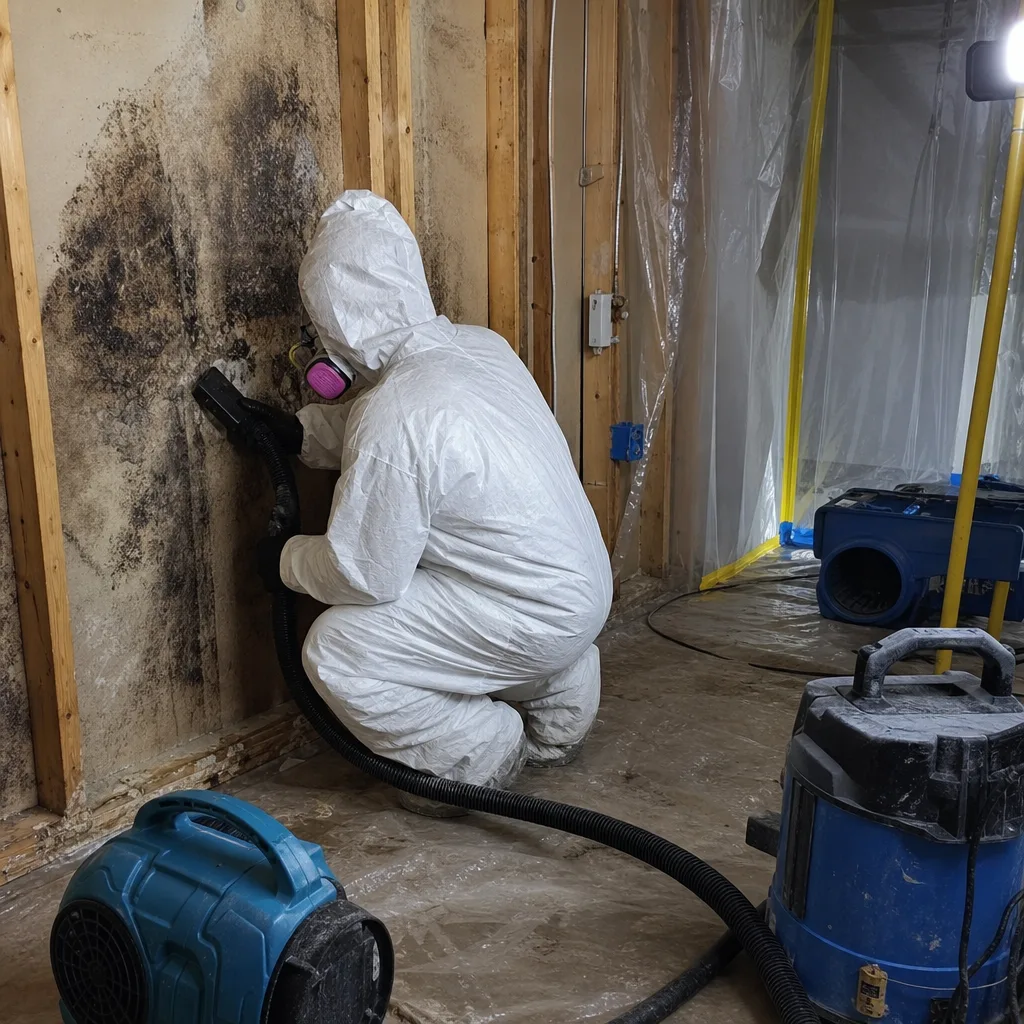
Damage restoration in West Palm Beach succeeds or fails on documentation. The moisture reading taken on Day 1, the daily psychrometric log, the photo with the serial number visible, the written scope signed before demolition - these are not administrative details. They are the evidence that transforms a contractor’s invoice into a claim an insurer pays without dispute. In a climate where humidity extends every timeline and storm season tests every system, the contractor who treats documentation as the product delivers what the contractor who treats it as an afterthought cannot: a closed claim, a restored home, and a homeowner who never calls us asking why the check hasn’t arrived.
Call (561) 290-5060 for a free estimate. We’ll deliver a written price before any work begins, documented to The Haven Standard, with a Free Second Opinion available on any competitor’s written estimate.
Written by Alicia Brennan, Owner at DryMark Restoration West Palm Beach, serving West Palm Beach since 2011.