

Free visual inspection and a written scope of work before any mitigation begins - photos, moisture readings, and drying logs go in your claim file
The scope we write is the scope we bill. Anything new gets shown to you, in writing, before we touch it.
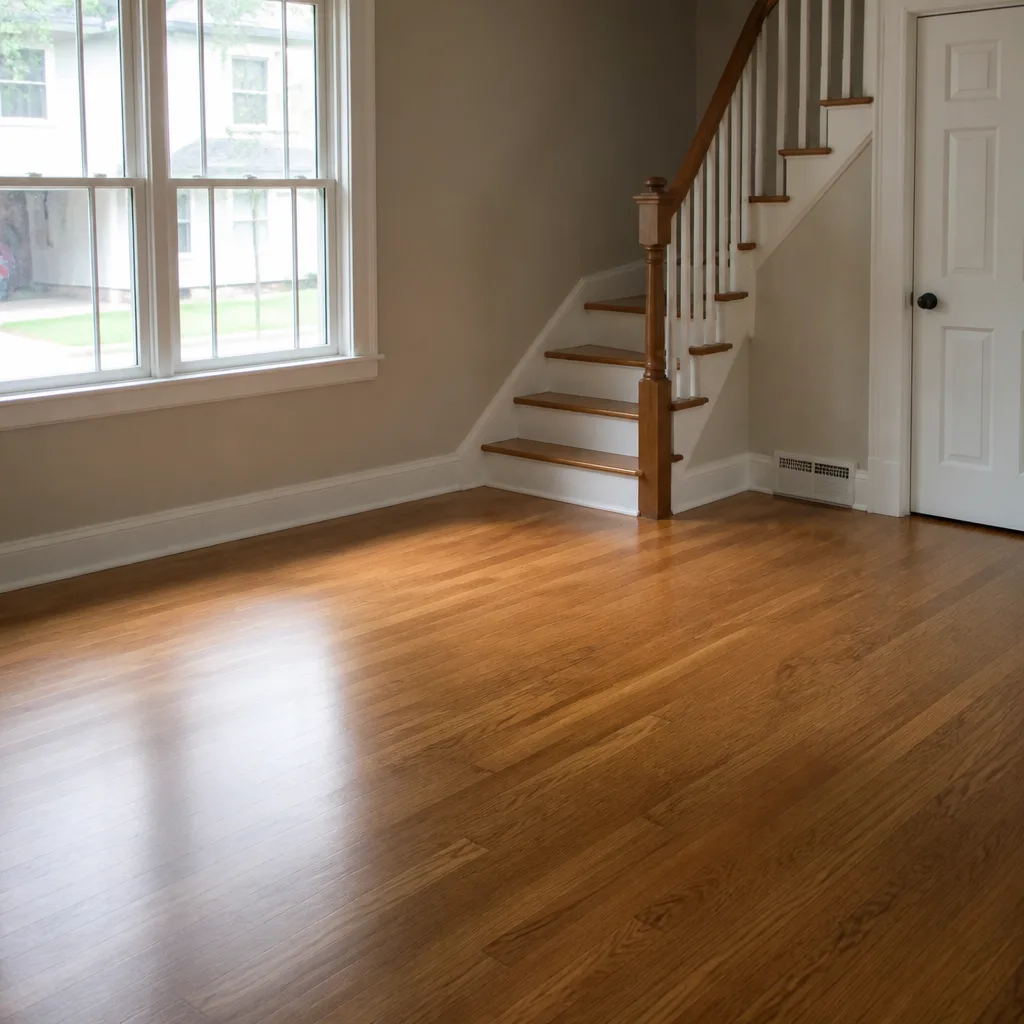
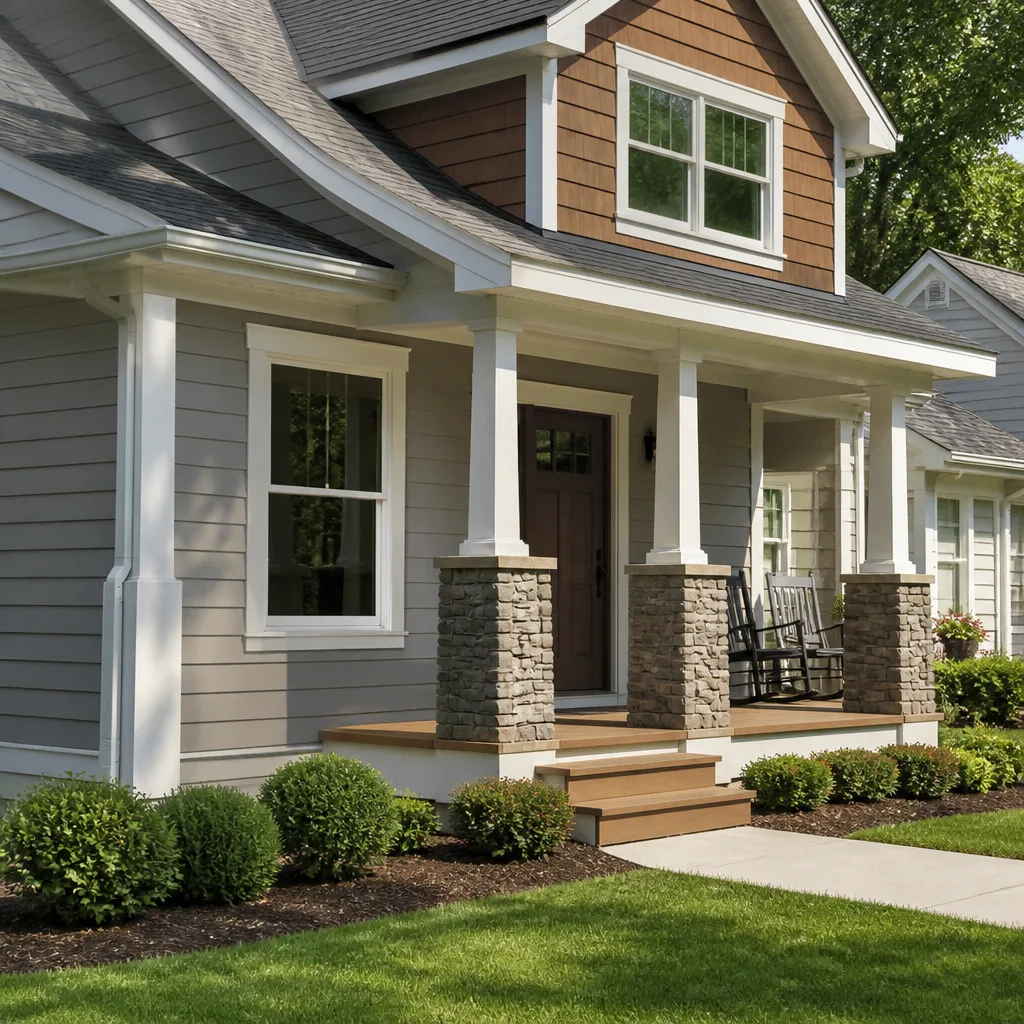
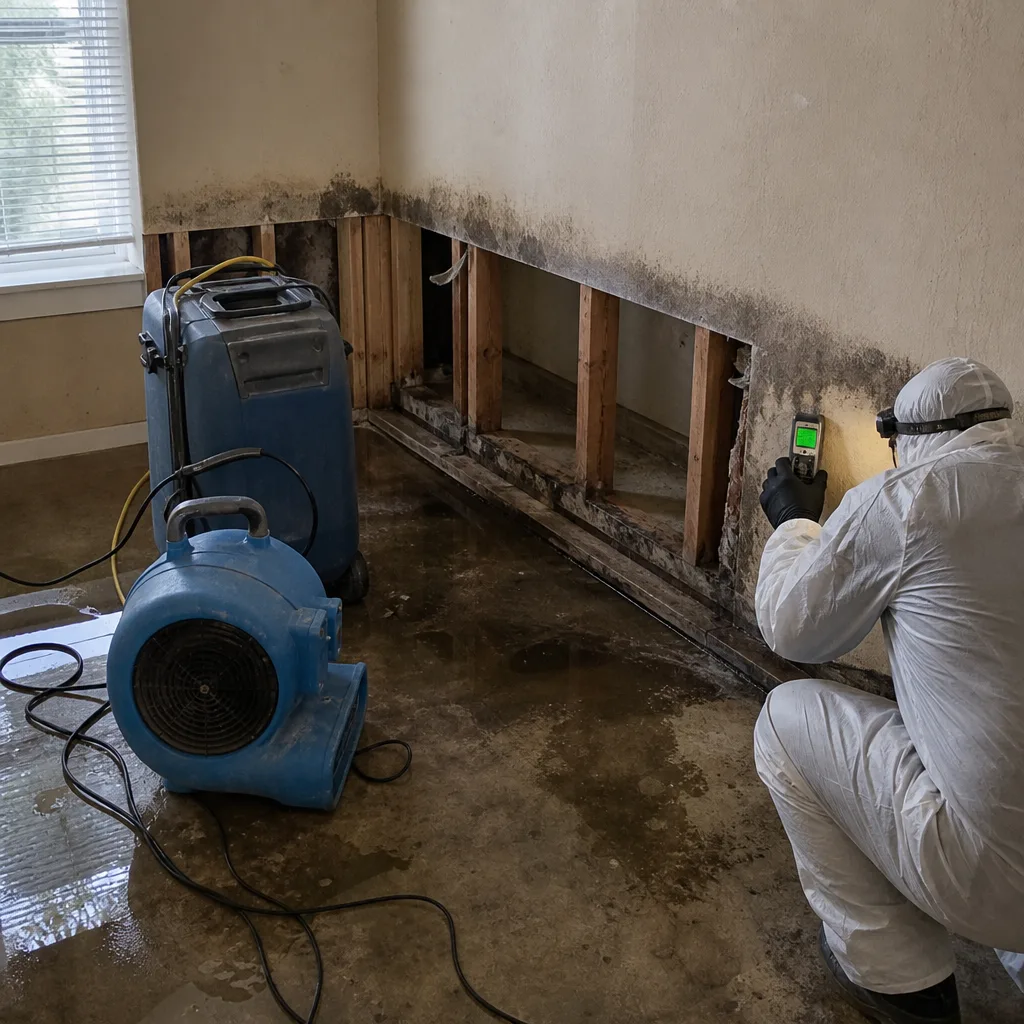 Before
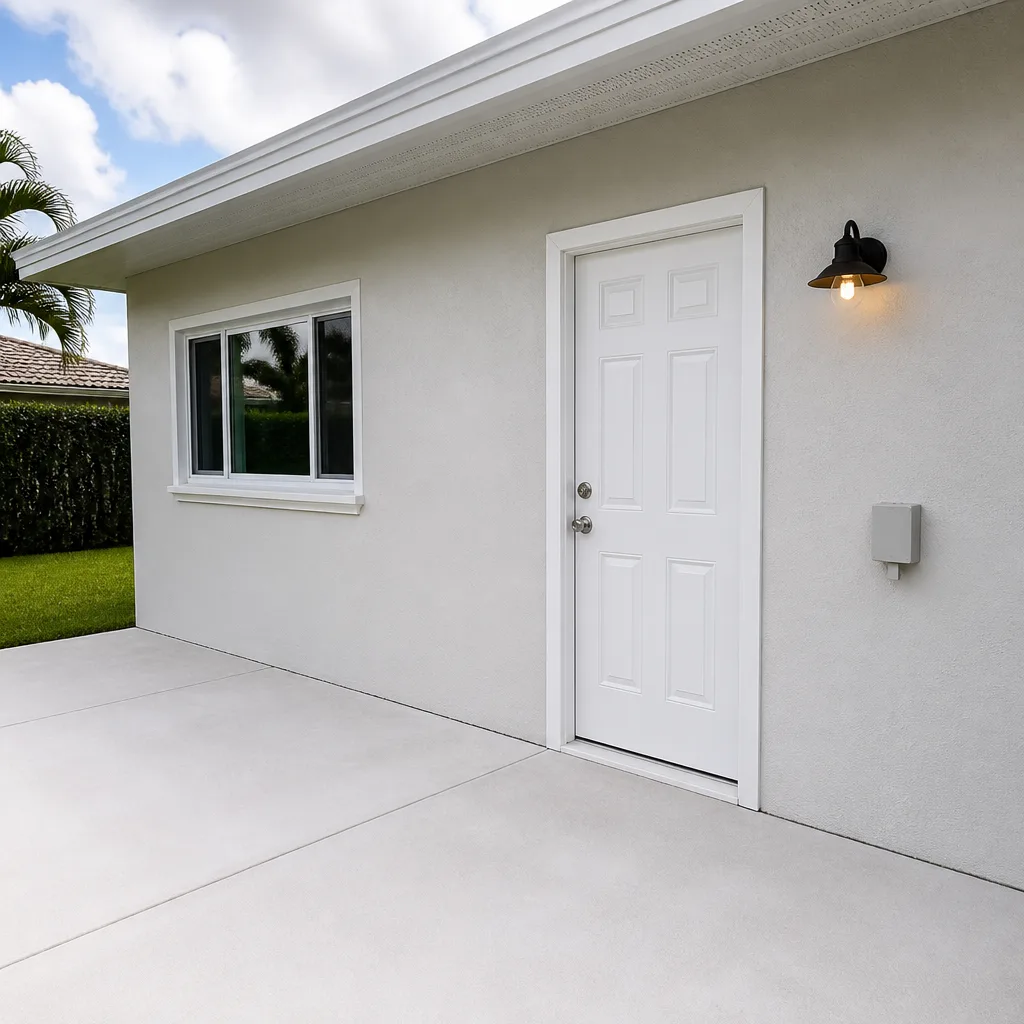 After
After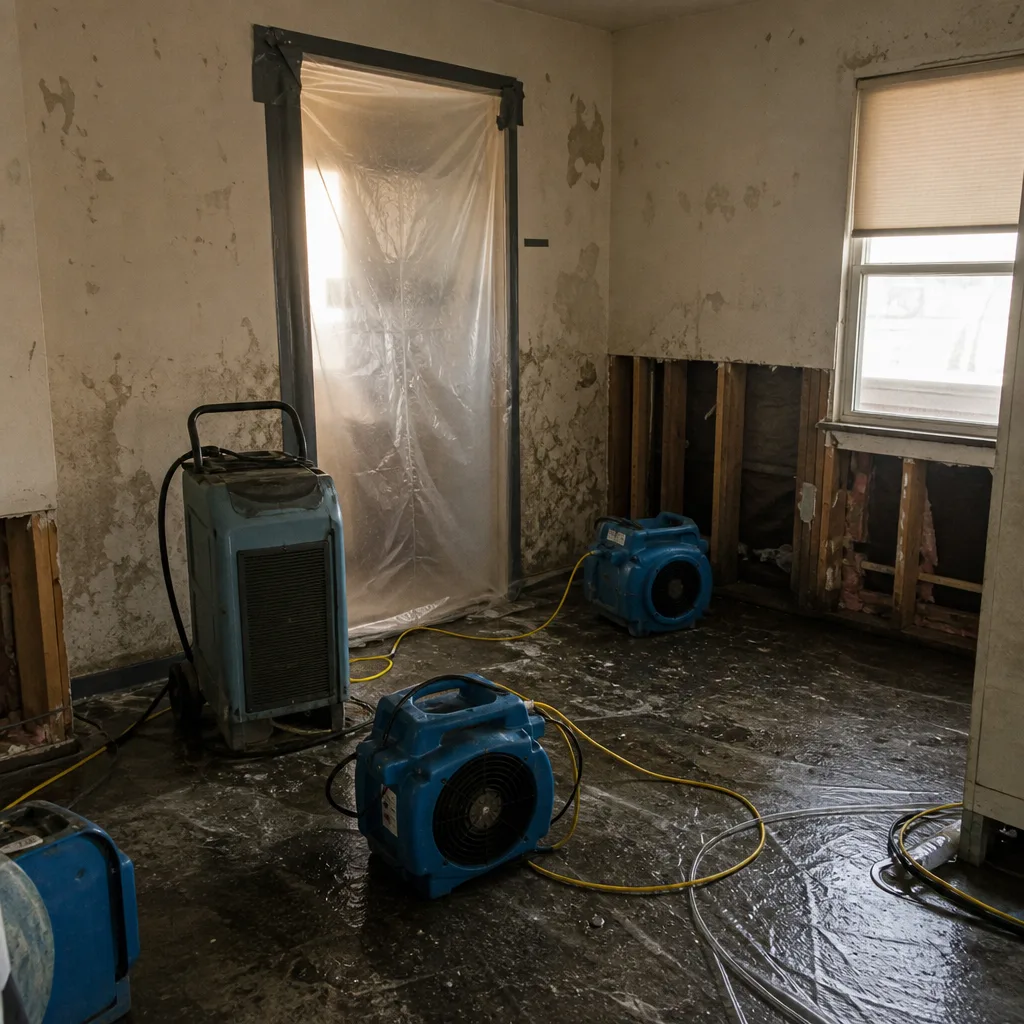 Before
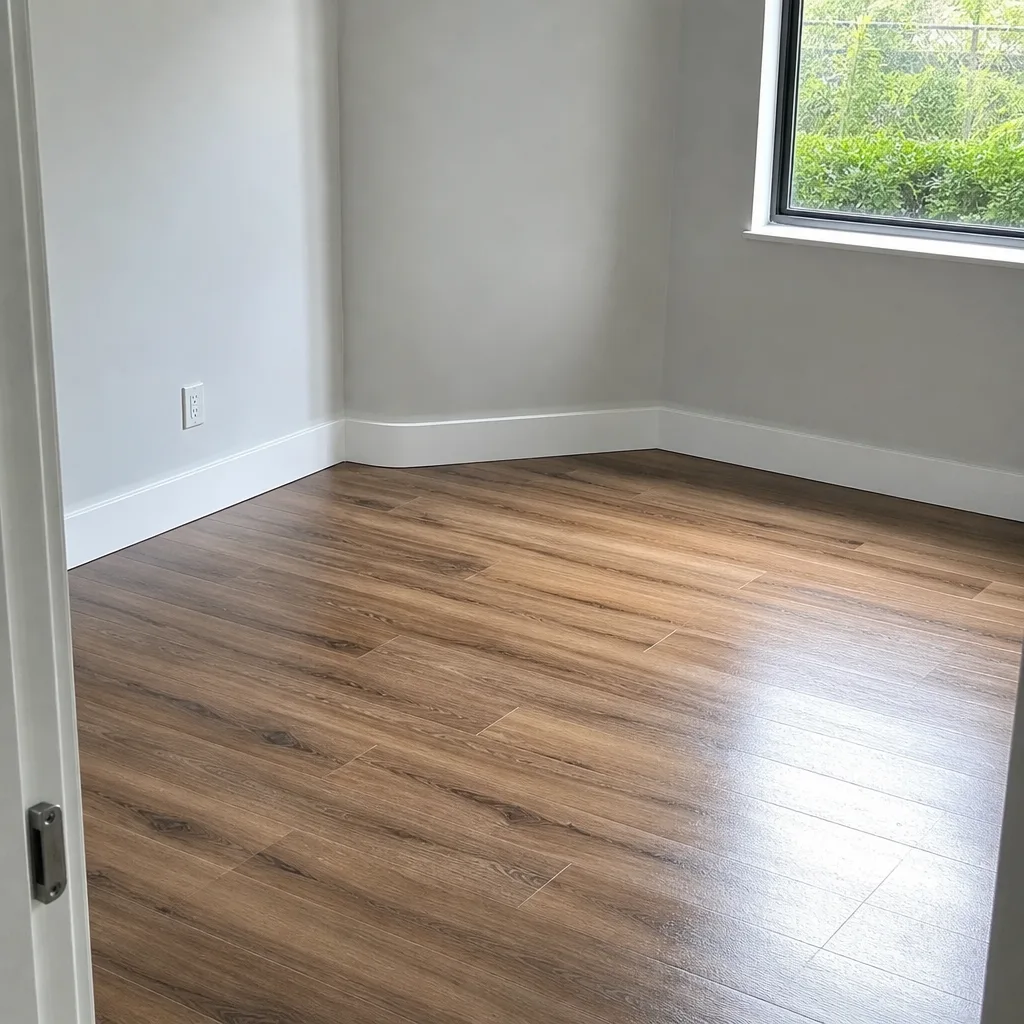 After
After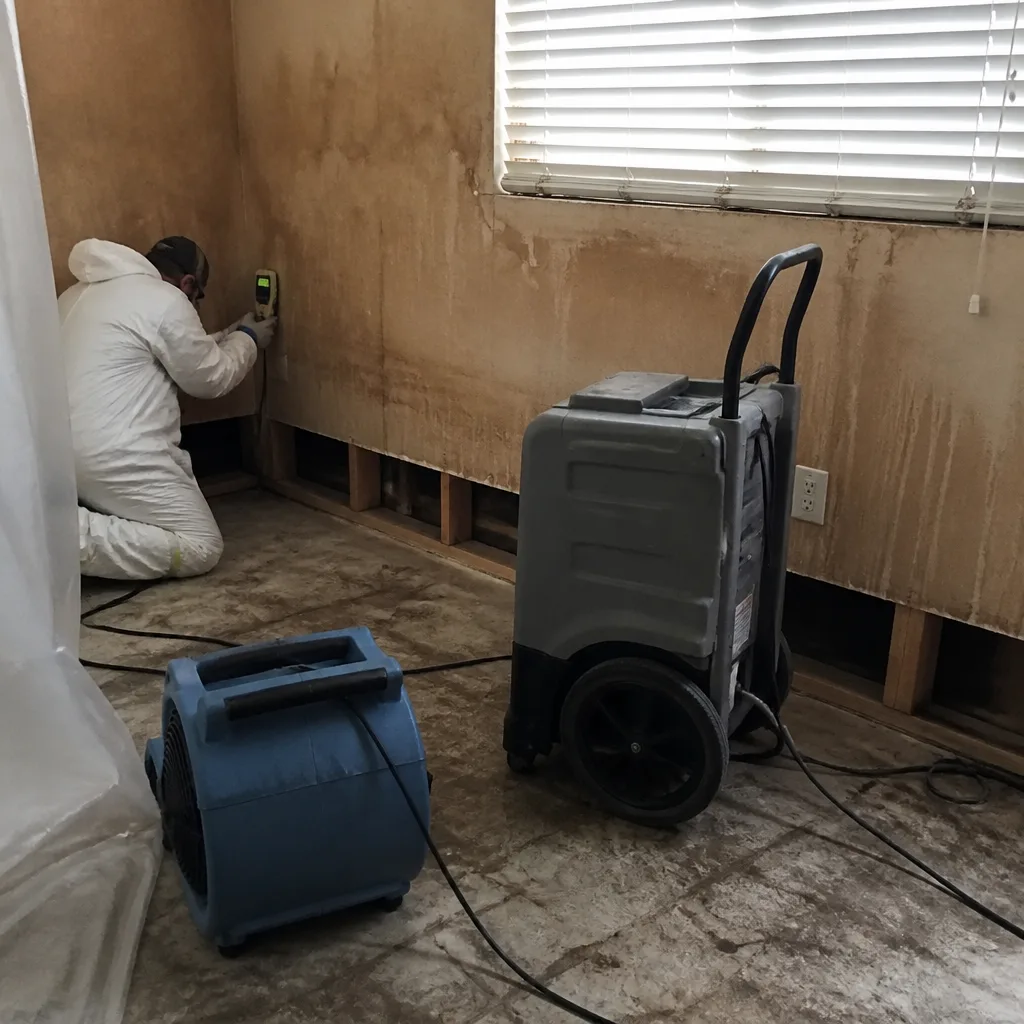 Before
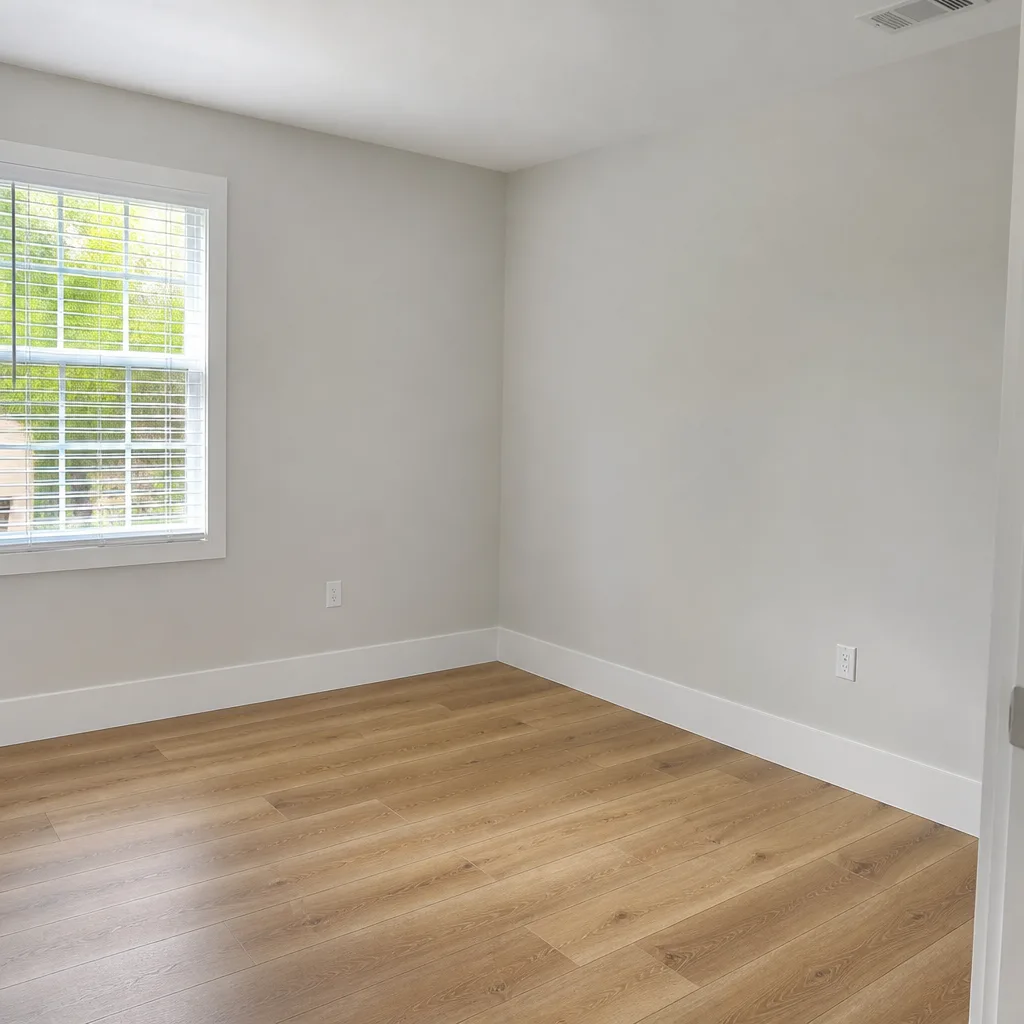 After
After24/7 Emergency Mold Remediation in Wellington
Mold remediation in Wellington typically costs $1,800-$6,500 for residential properties and $8,000-$45,000+ for large equestrian structures, with containment and air scrubbing started same day. Crews answer live at (561) 290-5060 - no voicemail, no callback queue - and we’re dispatched to Wellington properties within 45 minutes of your call. The first hour matters because mold reaches saturation thresholds in 24-48 hours in Wellington’s ambient humidity, which regularly exceeds 80% from May through October. Every minute we delay containment, spore counts multiply behind CBS walls and under slab-on-grade foundations where you cannot see them. We provide a free visual inspection, document moisture readings with thermal imaging, and deliver a written scope before any work begins - Haven Standard, Clause 1.
Understanding Mold Remediation Severity in Wellington Properties
Wellington’s housing stock presents a dual challenge no template can address. The General Development Corporation buildout from the mid-1970s through mid-2000s produced thousands of CBS homes now 30-50 years old with aging flat or low-slope tile roofs highly vulnerable to wind uplift and water intrusion. Once moisture breaches the envelope, it migrates through slab-on-grade foundations with little resistance - Wellington sits atop a shallow water table on extremely flat terrain, and our engineered canal network backs up fast during summer convective storms.
We classify mold severity by affected square footage, material classification, and airborne spore count. Category 1 water - clean supply line breaks - can still produce Category 3 mold conditions if left wet beyond 72 hours in Wellington’s humidity. Tertiary drying, the final phase of structural drying, requires vapor pressure differential management: we maintain a specific gap between the vapor pressure in the air and the vapor pressure in the wet material, forcing moisture out. Psychrometric data - temperature, relative humidity, and dew point - gets logged every visit. In a Wellington CBS home, we often find concealed moisture pockets behind stucco where the original waterproofing membrane has failed, readings climbing from 12% wood moisture content to 28% while the interior drywall reads dry.
For equestrian properties, the scale changes entirely. A 40,000 sq ft covered arena with a wind-torn roof membrane introduces thousands of cubic feet of humid air; without commercial-scale containment and HEPA-negative air scrubbing, cross-contamination spreads spores from the arena into climate-controlled barn aisles where the most valuable assets on the property - the animals - are stabled.
Why Wellington Property Owners Choose DryMark Restoration West Palm Beach
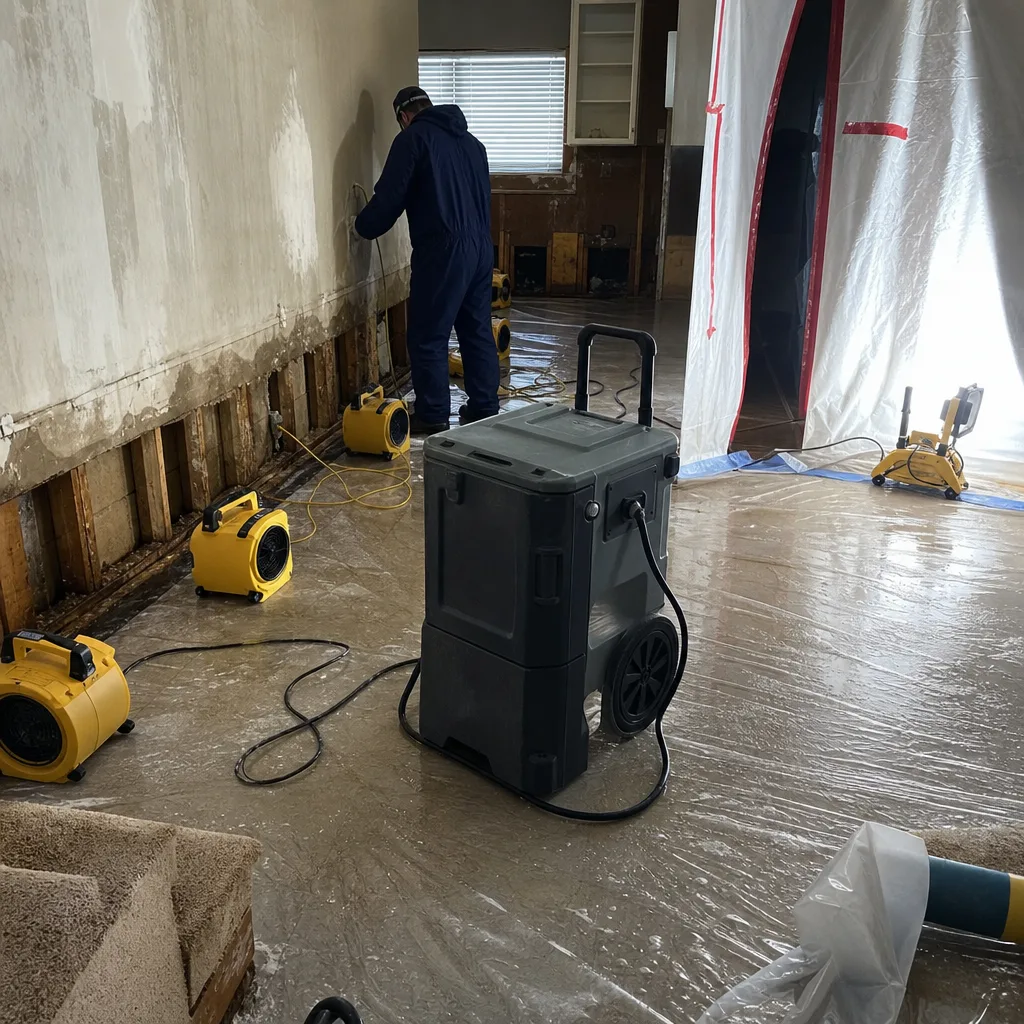
- 45-minute response commitment to Wellington properties, including equestrian estates off South Shore Boulevard and Greenview Cove
- 24/7 live answer - a real person, never an automated system, picks up every call to (561) 290-5060
- IICRC-certified crews holding WRT (Water Damage Restoration Technician) and AMRT (Applied Microbial Remediation Technician) certifications
- Free visual inspection with thermal imaging and moisture meter readings, documented before we leave
- Direct insurance billing with photo-documented scopes that adjusters approve without dispute
- One team from containment through reconstruction - no handoffs between subcontractors that lose institutional knowledge of your property
 Before
 After
AfterOur Mold Remediation Process
Inspection & Assessment
We map moisture with FLIR thermal imaging, penetrating moisture meters, and hygrometers across every affected surface. In Wellington’s CBS homes, we pay particular attention to slab perimeter and wall baseplates where ground moisture wicks upward. For equestrian structures, we assess roof membrane integrity, stall framing moisture content, and tack room humidity levels. Every reading is photographed and logged.
Containment & Air Scrubbing
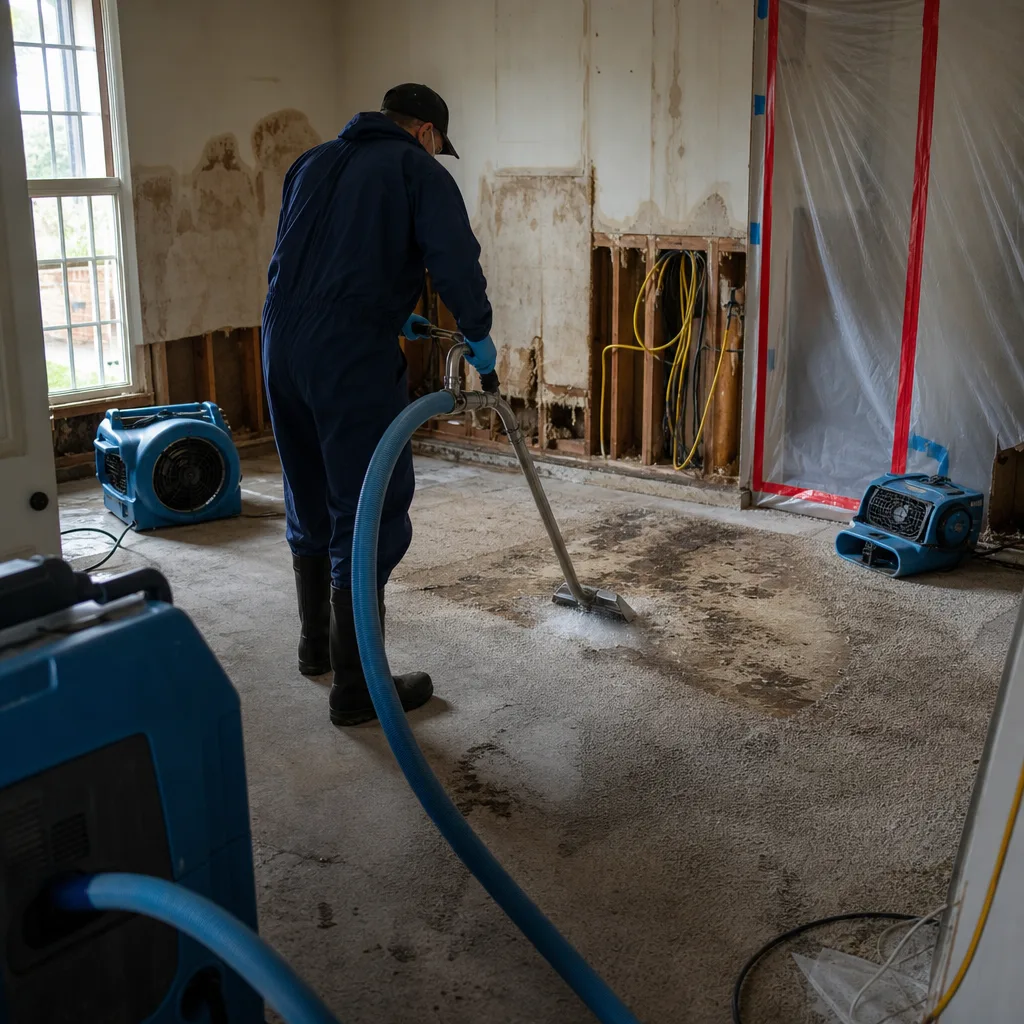
We erect polyethylene containment barriers with zipper doors and maintain negative air pressure using HEPA-filtered air scrubbers - critical in Wellington barns where spore migration threatens climate-controlled aisles. Commercial-scale structures require multiple scrubber units sized to air changes per hour. We seal HVAC returns to prevent duct contamination.
Moisture Extraction & Stabilization
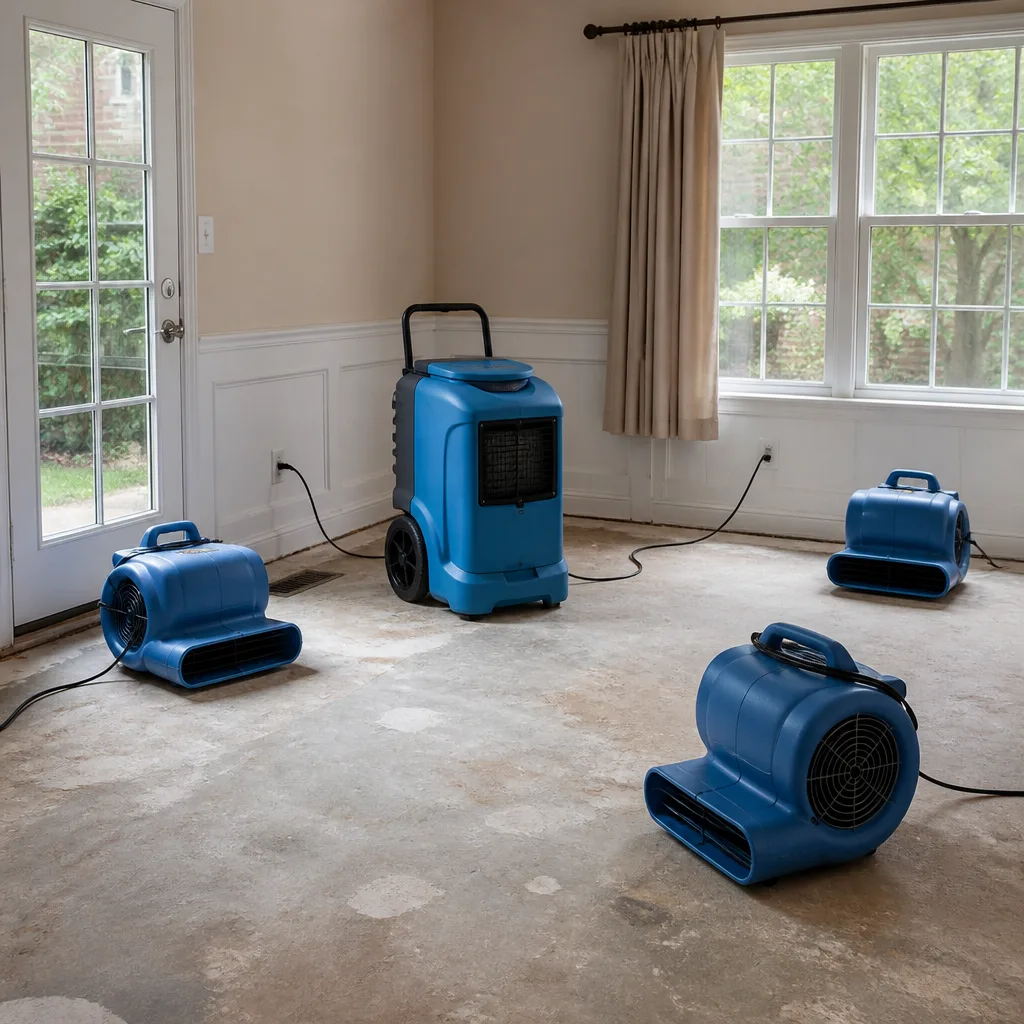
Standing water is extracted with truck-mounted systems; residual moisture is addressed with Injectidry mat systems for hardwoods and B-Air air movers for open areas. In slab-on-grade CBS homes, we calculate specific humidity targets based on psychrometric data, not guesswork. Daily moisture logs track progress to the dry standard.
Antimicrobial Treatment & Cleaning
EPA-registered antimicrobial agents are applied to affected structural materials after HEPA vacuuming removes surface mold. In Wellington tack rooms, we perform pack-out of saddles and leather goods before treatment, documenting each item with photos for insurance. Wood stall framing receives targeted application; we do not fog indiscriminately.
Specialty Equestrian Asset Recovery
High-value tack, custom leather goods, and equipment are transported to our controlled-drying facility for specialized restoration. We coordinate with equine insurance specialists for appraisal documentation. This service exists because Wellington’s market demands it - no standard residential protocol addresses six-figure saddle collections.
Clearance Testing & Restoration
Third-party clearance testing confirms airborne spore counts have returned to ambient baseline before containment is removed. We then reconstruct affected finishes - drywall, trim, flooring - with the same materials and craftsmanship standards as the original construction. The 365-Day Done Right Promise applies to all work.
Need Emergency Mold Remediation in Wellington Now?
Crews minutes away, answering live 24 hours a day. The sooner we start, the less it costs.
Working With Your Insurance Company
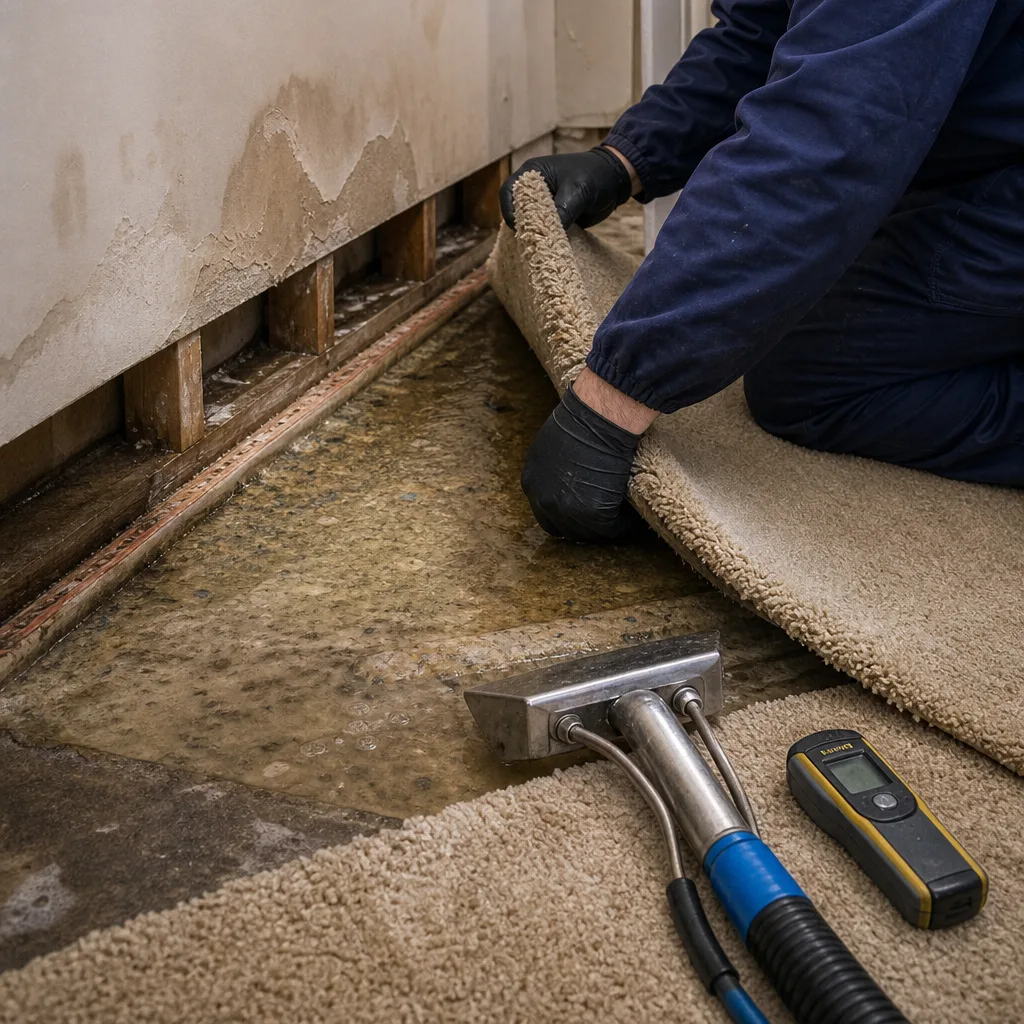
Documentation from the first hour is how claims get paid. We photograph every room before touching anything, record moisture readings with instrument serial numbers visible, and produce daily drying logs that meet IICRC and RIA standards. Your adjuster receives a line-item scope with unit pricing, not a lump-sum estimate they will dispute. We coordinate directly with carriers on coverage questions - whether your mold damage stems from a covered water loss or requires additional mold rider verification - and we provide the evidence that moves claims forward.
What We Provide Your Insurer
- Thorough documentation of the loss
- Photos of all damage, room by room
- Moisture readings and drying logs
- A detailed, line-item scope of work
- Direct coordination with your carrier
Built for Wellington’s Loss Calendar
January through April, the Winter Equestrian Festival draws international competitors and spectators; properties are occupied, monitored, and maintained. Then the exodus begins. Wellington’s wealthiest estate owners follow the horse-show circuit north, leaving sprawling equestrian properties unoccupied straight through peak hurricane season. We see the consequences every September and October: property managers or caretakers discovering catastrophic secondary damage in multi-million-dollar barns and main residences that sat wet and unattended for weeks.
May through October brings South Florida’s convective storm season. Wellington’s flat terrain and shallow water table mean neighborhoods flood quickly when drainage capacity is overwhelmed. Ground moisture pushes through slab foundations. Ambient humidity stays above 80% for days. Any structure left wet - especially a large, unmonitored horse barn with a compromised roof membrane - crosses mold saturation thresholds within 24-48 hours.
November through December offers a brief window of lower humidity, but residual moisture from hurricane season continues wicking through CBS walls. We perform post-storm inspections for properties where owners are still away, documenting conditions before the next weather system arrives.
Mold Remediation Across Wellington’s Neighborhoods
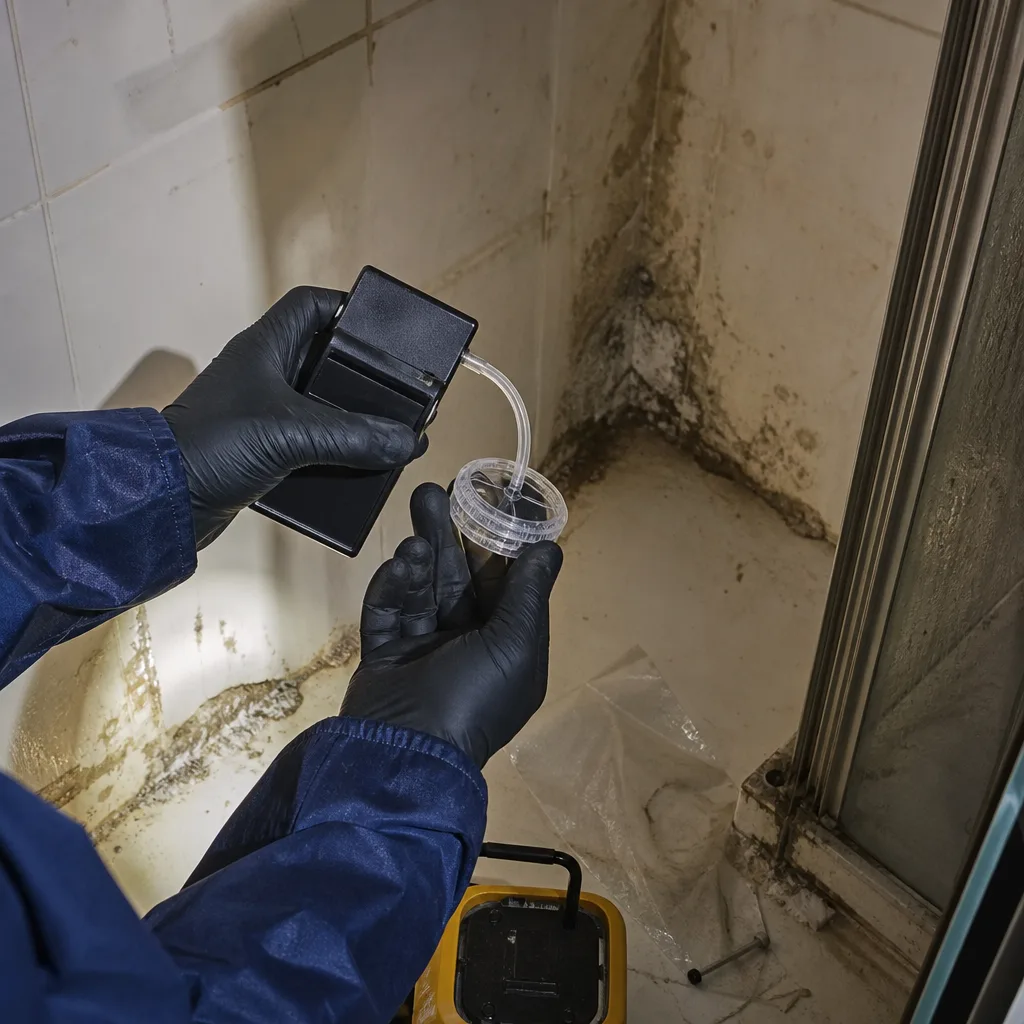
Greenview Cove and the neighborhoods along Forest Hill Boulevard contain the General Development Corporation buildout homes - CBS construction, aging tile roofs, slab-on-grade foundations with original waterproofing now past service life. We respond regularly to water intrusion through failed roof membranes here, moisture mapping behind stucco and finding concealed colonization in wall cavities that homeowners never suspected.
South Shore Boulevard and the equestrian estates west of State Road 7 present an entirely different scope. Properties here include 12,000 sq ft covered arenas, climate-controlled barn aisles, tack rooms holding six-figure inventories, and grooms’ quarters that require large-loss commercial restoration expertise. Our crews know the difference between residential containment protocols and the negative-air systems required for 40,000+ sq ft structures. We were called to a 12,000 sq ft covered arena and attached barn off South Shore Boulevard after a tropical system pushed water through the arena’s wind-torn roof membrane; the tack room held six-figure saddles and custom leather goods sitting in Category 3 water for eleven days before a caretaker checked in. Our crew performed water extraction, moisture mapping across the slab-on-grade foundation, set containment around the tack room and grooms’ quarters, ran Injectidry and Dri-Eaz dehumidification with air movers through the barn aisle, applied antimicrobial treatment to the stall framing, and logged daily moisture readings for the property manager’s insurance scope of work.
The Village Walk and Olympia areas mix newer construction with original Wellington development, and we see the transition points: homes where additions meet original structures create waterproofing vulnerabilities, and where aging cast iron or polybutylene plumbing fails behind finished walls. Dispatch and scheduling for these responses are coordinated from our Miami office; crews serve Wellington locally and carry the equipment inventory for both residential and large-loss commercial protocols.
Specialized Mold Remediation Services We Offer in Wellington
Mold Inspection & Testing
We begin with visual inspection, thermal imaging, and moisture mapping - not guesswork. Air sampling and surface testing are available when clearance documentation is required for real estate transactions or insurance verification. In Wellington’s unoccupied equestrian estates, we perform pre-season inspections for property managers who need documented condition reports before owners return.
Mold Removal
Physical removal of colonized materials follows IICRC S520 standards, not bleach-and-cover shortcuts. In CBS homes, this often means controlled demolition of drywall and baseplates to expose cavity moisture; in barns, it means assessing wood stall framing for structural integrity after prolonged wet exposure.
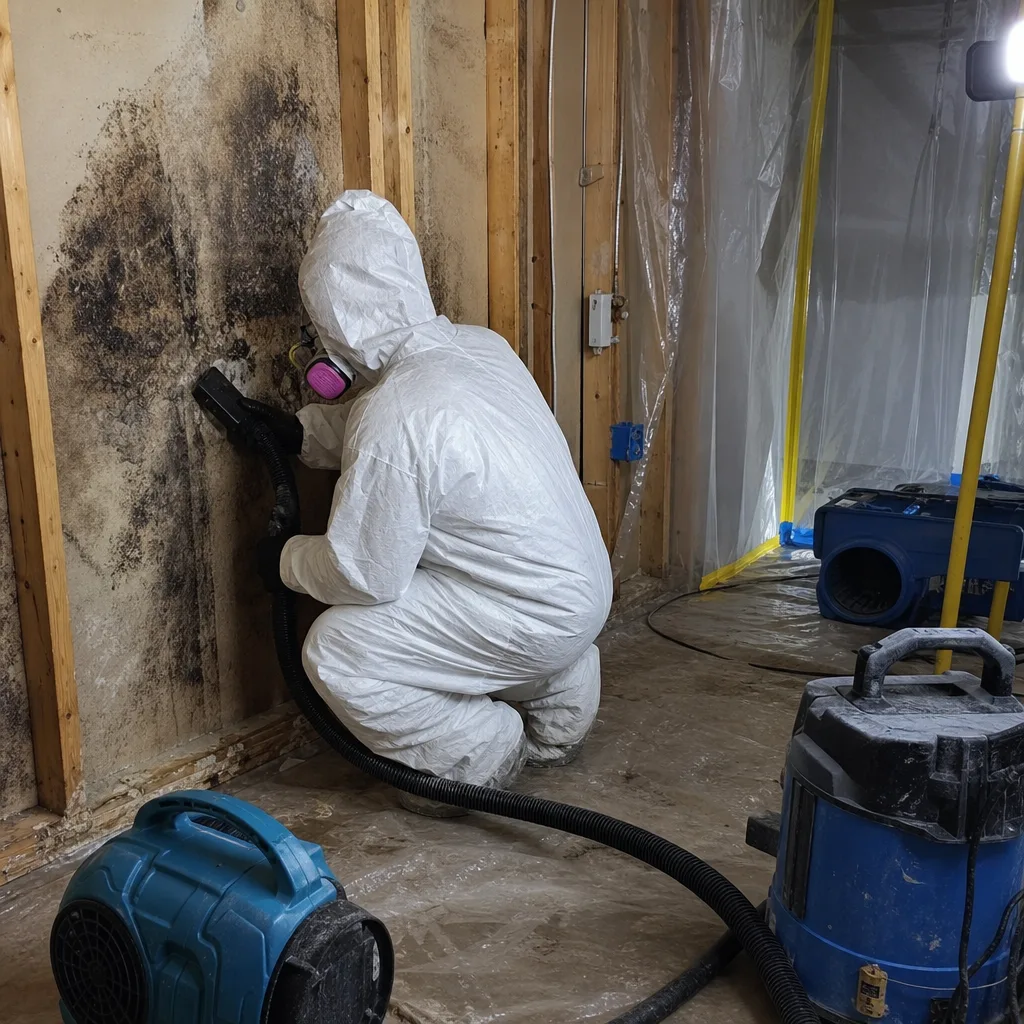
Black Mold Remediation
Stachybotrys chartarum and other toxigenic species require enhanced containment, full-face respirator protocols, and specialized disposal. We do not disturb visible colonization without containment in place - aerosolizing spores in a Wellington home with central air conditioning creates whole-structure contamination.
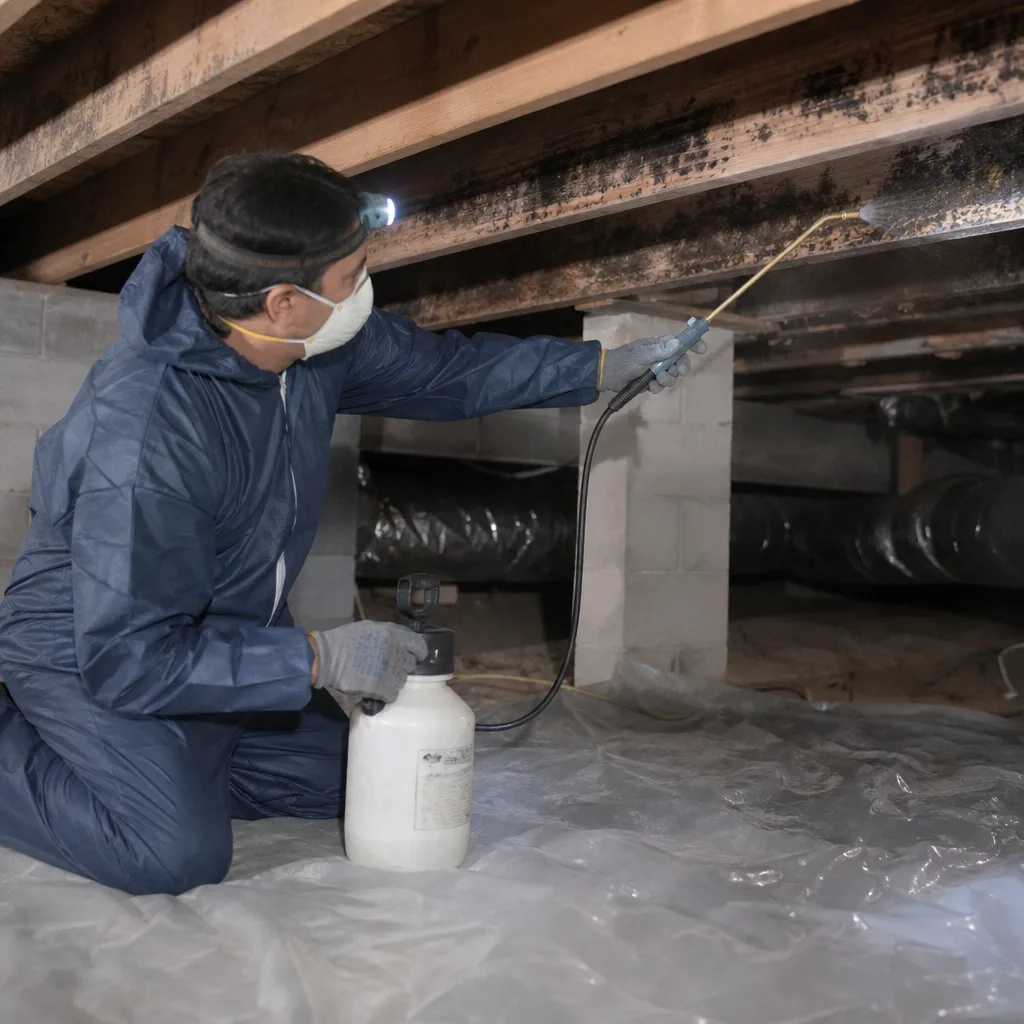
Air Quality Restoration
HEPA air scrubbing, duct cleaning, and post-remediation verification testing restore breathable air quality. For Wellington properties with sophisticated HVAC systems - common in newer construction and climate-controlled barns - we coordinate with mechanical contractors to ensure ductwork is not a spore reservoir.
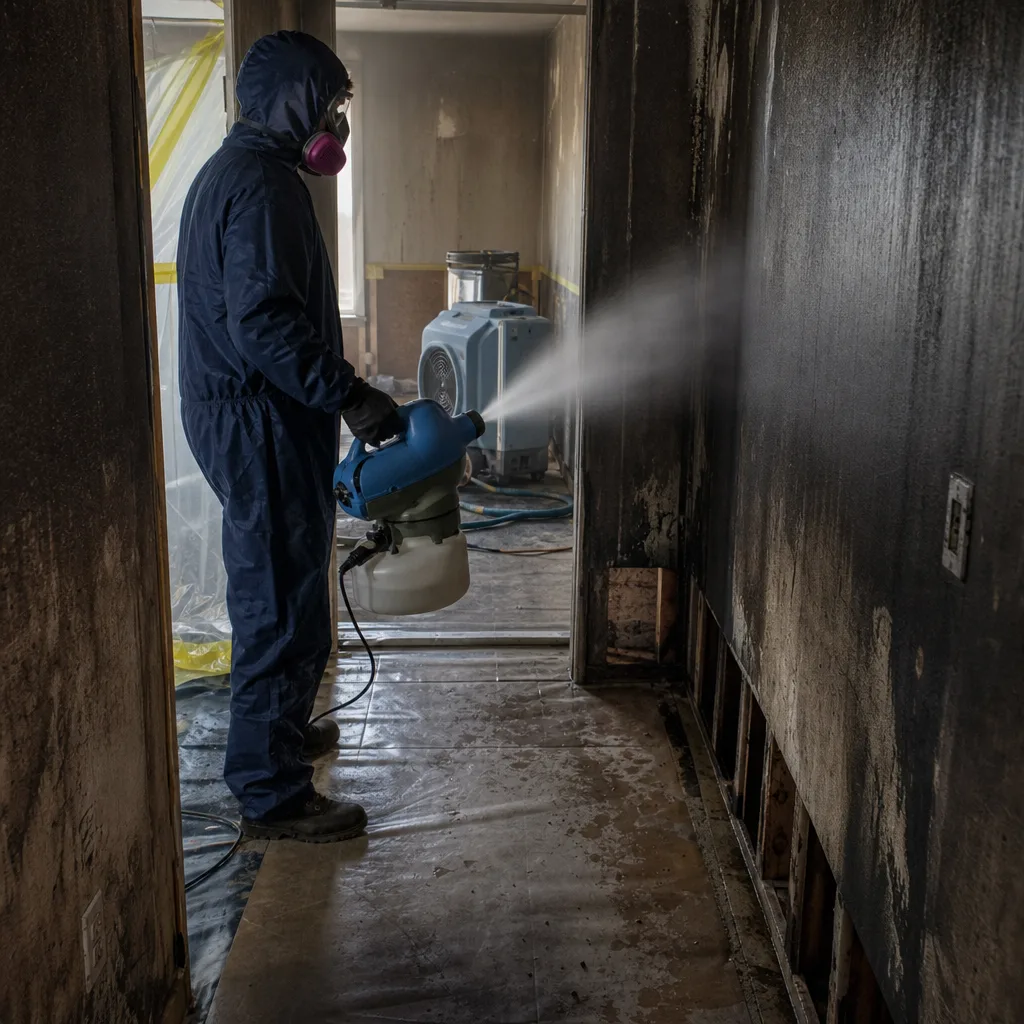
Crawl Space Treatment
Wellington’s slab-on-grade construction minimizes traditional crawl spaces, but raised additions, guest houses, and some older structures have confined subfloor areas where humidity concentrates. We install vapor barriers, dehumidification, and conditioned-air solutions to prevent recurrence.
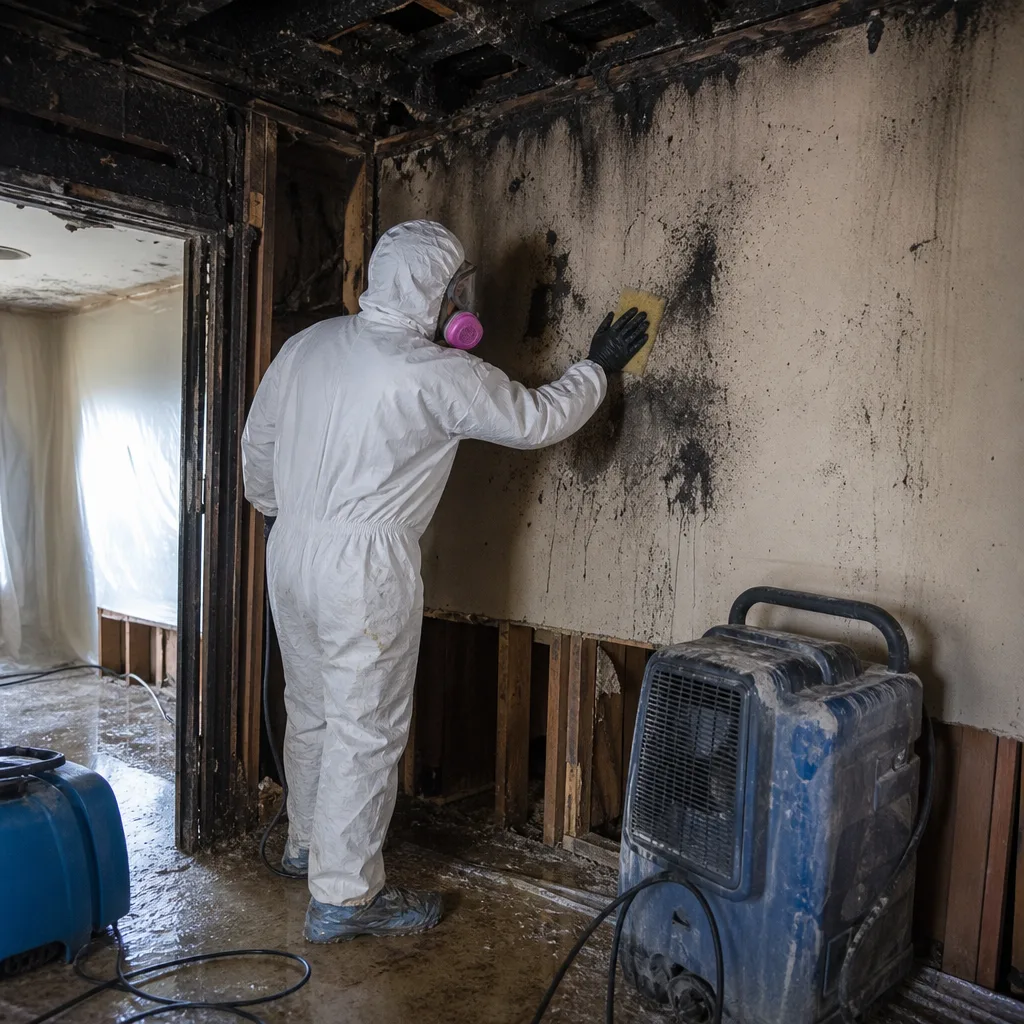
Moisture & Humidity Control
Long-term mold prevention requires controlling the water source. We install permanent dehumidification, improve ventilation in barn structures, and recommend waterproofing upgrades for recurring intrusion points. Our moisture control plans include seasonal monitoring protocols for unoccupied properties.
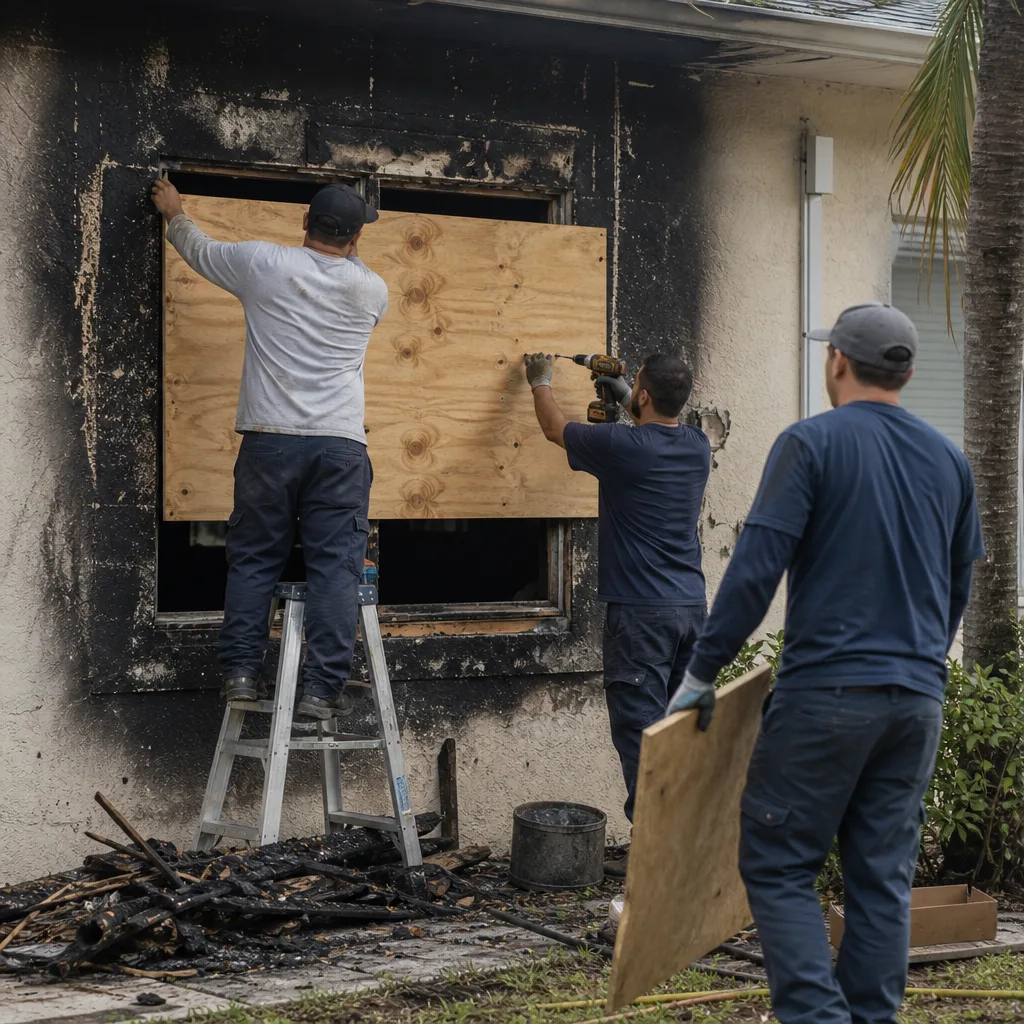
What happens when you call
- 1
A real person answersNo phone trees - you reach a local pro.
- 2
You get an upfront price rangeHonest numbers before anyone is dispatched.
- 3
A background-checked tech heads outLicensed & insured, dispatched right away.
- 4
You approve before work beginsNothing starts until you say go.
Mold Remediation Costs in Wellington, FL
A typical residential mold inspection and containment in Wellington runs $1,800-$3,200. Full remediation of a standard 2,000 sq ft CBS home with localized colonization ranges $3,500-$6,500. Large equestrian structures - barns, covered arenas, ancillary buildings - start at $8,000 and can exceed $45,000 depending on square footage, contamination extent, and specialty asset handling requirements.
What moves the price: affected square footage, material classification (porous vs. non-porous), accessibility for containment setup, and whether Category 3 water was involved requiring enhanced PPE and disposal protocols. Tack room pack-outs and leather restoration are additional line items, documented separately for equine insurance.
Insurance coverage varies: mold resulting from a sudden, covered water loss is typically included; mold from long-term maintenance issues often is not. We review your policy language, document the loss origin, and coordinate with your adjuster. Our free inspection produces a firm written scope - Haven Standard, Clause 1 - so you know exactly what you’re paying before work starts.
We Also Serve Cities Near Wellington
Our crews respond throughout western Palm Beach County, including Wellington, Royal Palm Beach, Lake Worth, Greenacres, and West Palm Beach. Each city’s building stock, flood risk profile, and insurance claim patterns differ; our documentation protocols adapt to each.
Serving Wellington, FL - Our Local Coverage Area
We’re based in the Wellington area and know this community well. Use the map below to see our service coverage - if you’re nearby, we can almost certainly help.
Wellington Mold Remediation Questions, Answered
How fast does mold take hold in an unoccupied Wellington equestrian estate after a storm?
In Wellington’s summer humidity, which regularly exceeds 80%, mold reaches dangerous saturation thresholds within 24-48 hours on wet materials. In unoccupied equestrian estates after the Winter Equestrian Festival exodus, we’ve found advanced colonization - collapsed ceilings, rotted stall framing, saturated tack - after eleven days of undetected water intrusion. Call (561) 290-5060 for immediate dispatch; containment started in hour one costs a fraction of full structural remediation.
Why does mold remediation in Wellington barns require commercial-scale containment?
Standard residential containment - a single polyethylene chamber with one air scrubber - cannot maintain negative pressure across 12,000-40,000+ sq ft structures. Wellington’s covered arenas and barn aisles require multiple HEPA scrubbers, engineered airflow patterns, and specialized PPE protocols. Using residential methods on commercial-scale structures risks cross-contamination into climate-controlled areas where animals are stabled. Our Mold Remediation team sizes equipment to cubic footage, not habit.
What does moisture mapping tell you in a CBS home on a slab-on-grade foundation here?
Moisture mapping reveals concealed water migration that surface inspection misses. In Wellington’s CBS homes, we regularly find moisture wicking through slab perimeters and climbing wall baseplates while interior drywall reads dry - thermal imaging shows the temperature differential, and penetrating meters confirm wood moisture content above 20%, the threshold for mold growth. Without mapping, remediation addresses visible damage while concealed colonization continues behind walls.
Can high-value tack, saddles, and leather goods be saved after a flood in a Wellington tack room?
Yes, if addressed promptly with proper protocols. We perform pack-out before antimicrobial treatment, transport items to our controlled-drying facility, and coordinate with equine restoration specialists for finish stabilization. Eleven days in Category 3 water, as we encountered off South Shore Boulevard, pushes recovery probability down significantly - but documentation for insurance replacement value begins immediately. Call (561) 290-5060; estimates are free.
What’s the difference between Category 1, 2, and 3 water when a Wellington barn floods?
Category 1 is clean water from supply lines; Category 2 is gray water with chemical or biological contamination from sump failures or appliance leaks; Category 3 is black water containing pathogens, typically from ground flooding or sewage backup. In Wellington, summer storms overwhelming canal drainage frequently push Category 3 water into barns and ground-level structures. Category 3 requires enhanced PPE, specialized disposal, and more extensive material removal - and it accelerates mold colonization due to nutrient load. We classify on arrival and document the determination for your insurer.
How long does full mold remediation take in a Wellington property?
Residential containment and remediation typically requires 3-7 days, plus 24-48 hours for third-party clearance testing. Large equestrian structures run 2-4 weeks depending on square footage and specialty asset handling. We provide a written timeline with our scope - Haven Standard, Clause 1 - and daily moisture logs verify progress rather than calendar guesses.
Can my family or animals stay in the home during mold remediation?
We recommend temporary relocation during active remediation, especially for toxigenic species or extensive colonization. Containment maintains negative pressure, but demolition and air scrubber operation create noise and temporary air quality disruption. For occupied barns, we sequence work to maintain safe aisles for animal movement, though stabling relocation may be necessary during treatment of individual wings. We discuss occupancy plans during our free inspection.
What certifications do your Wellington mold remediation crews hold?
Our technicians hold IICRC WRT (Water Damage Restoration Technician) and AMRT (Applied Microbial Remediation Technician) certifications, with ongoing education to RIA and IFA standards. Background checks and license verification are completed before any technician arrives at your property. License numbers are provided on request. We document crew certification in your job file for insurance review.
Call (561) 290-5060 for 24/7 live answer. Free inspection. Written scope before any work begins. Every job documented with photo records, daily moisture logs, and the 365-Day Done Right Promise under The Haven Standard.
Written by Alicia Brennan, Owner at Back to Dry Restoration, serving Wellington since 2011.
Mold Remediation in Nearby Areas