
Free visual inspection and a written scope of work before any mitigation begins - photos, moisture readings, and drying logs go in your claim file
The scope we write is the scope we bill. Anything new gets shown to you, in writing, before we touch it.
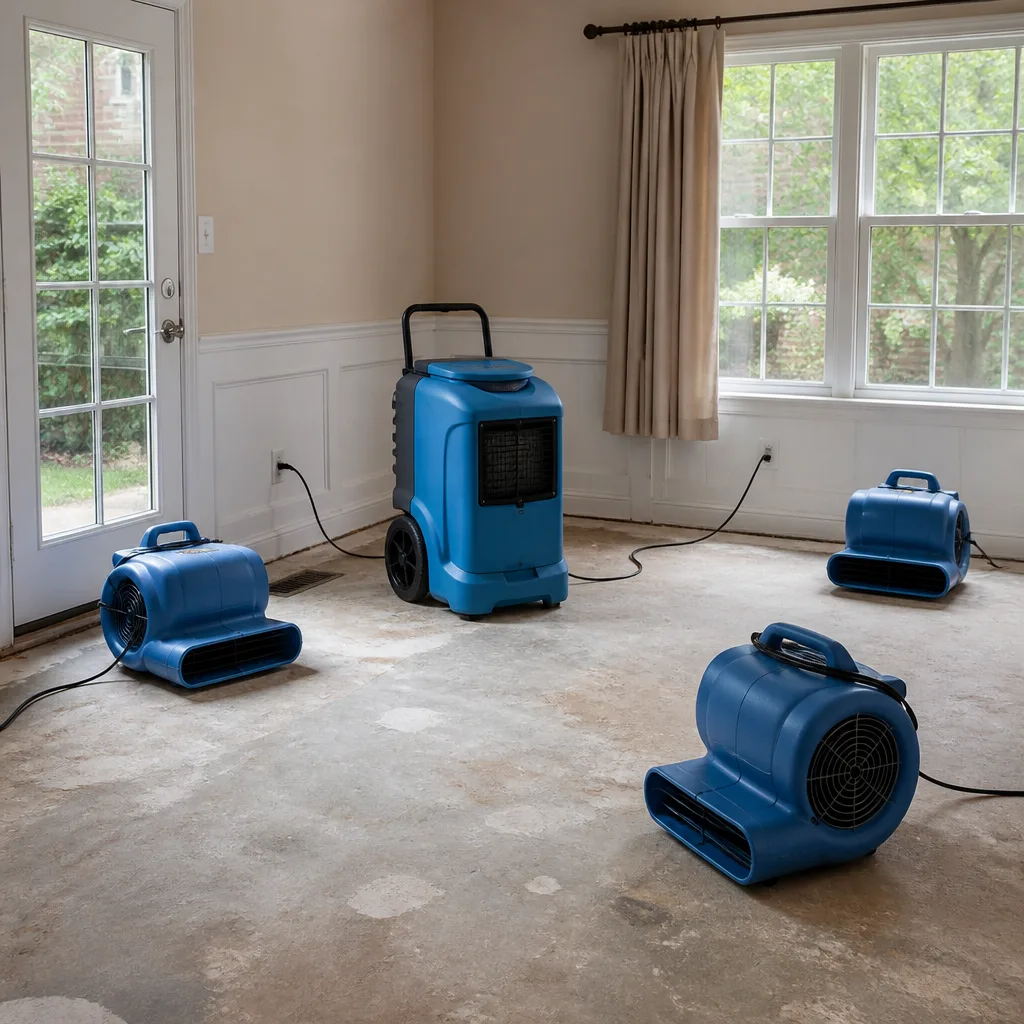
 Before
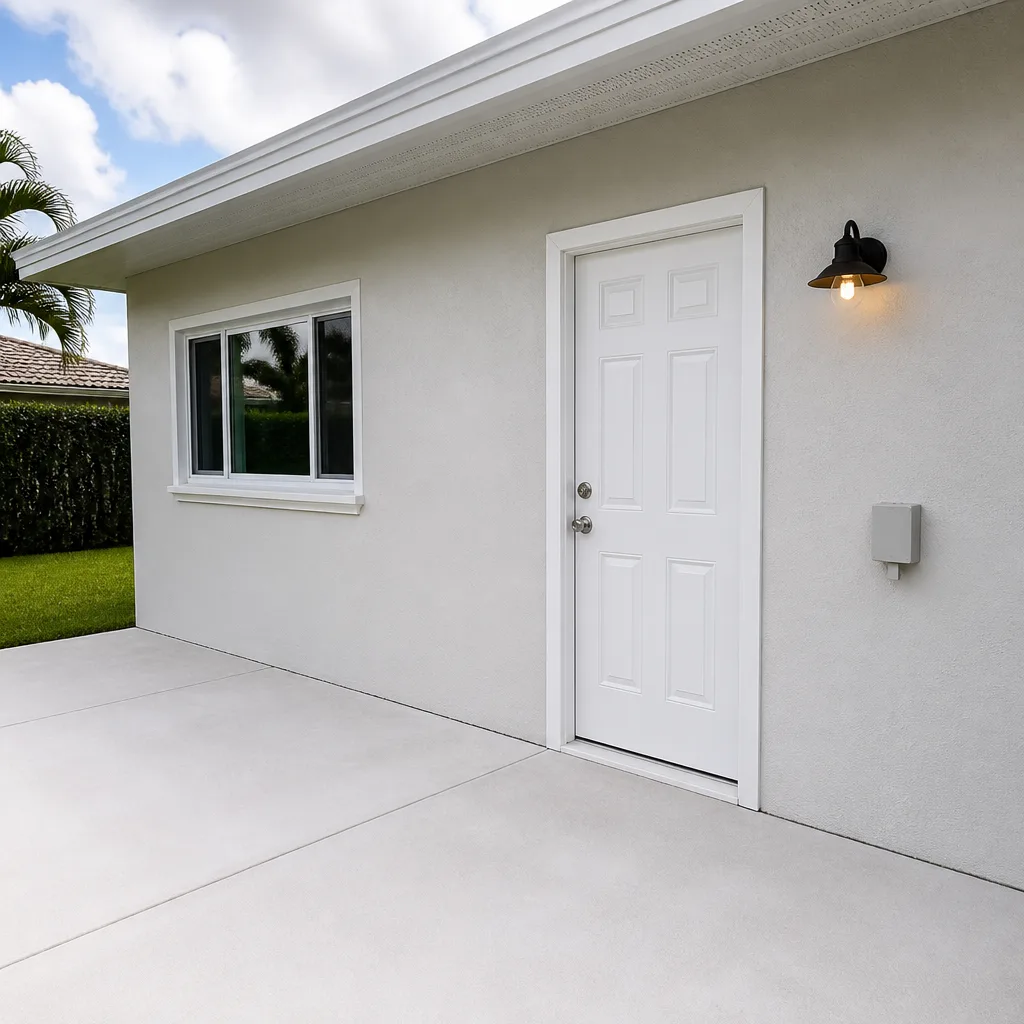 After
After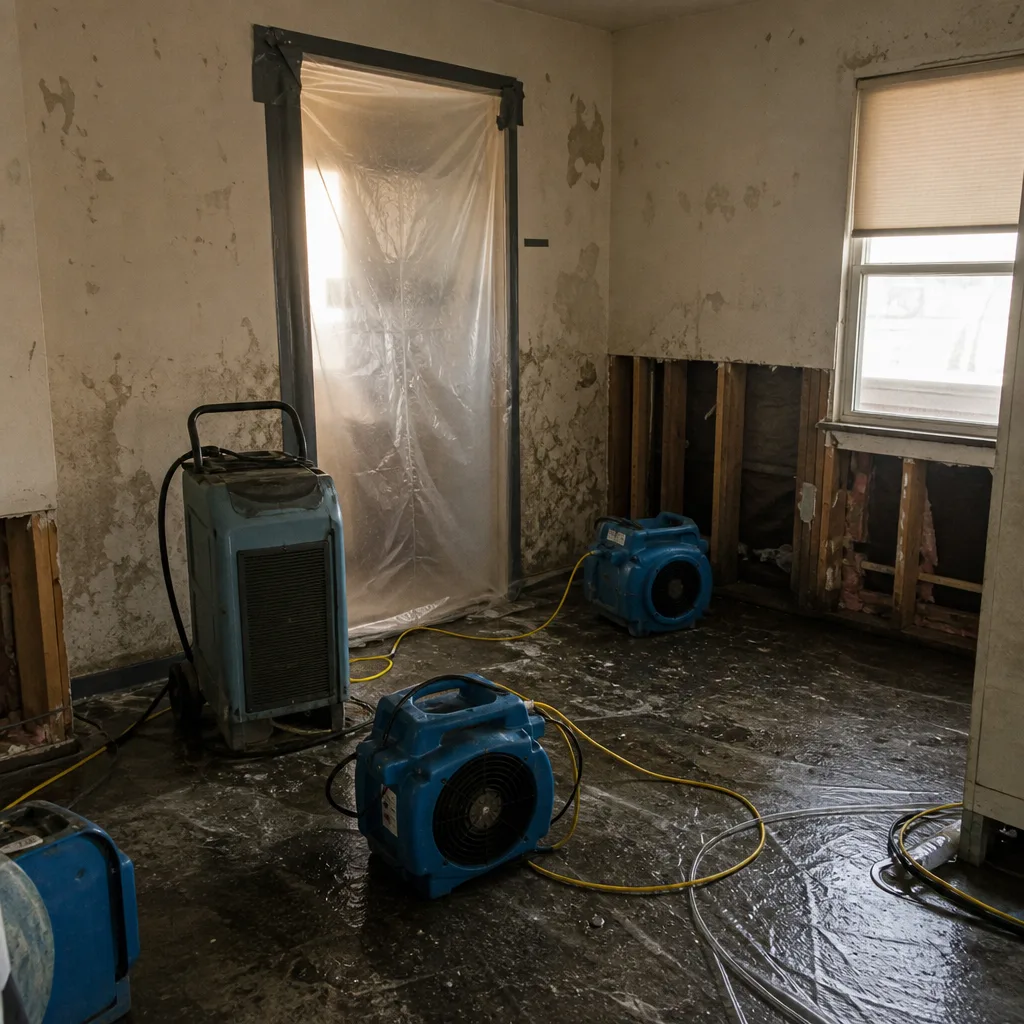 Before
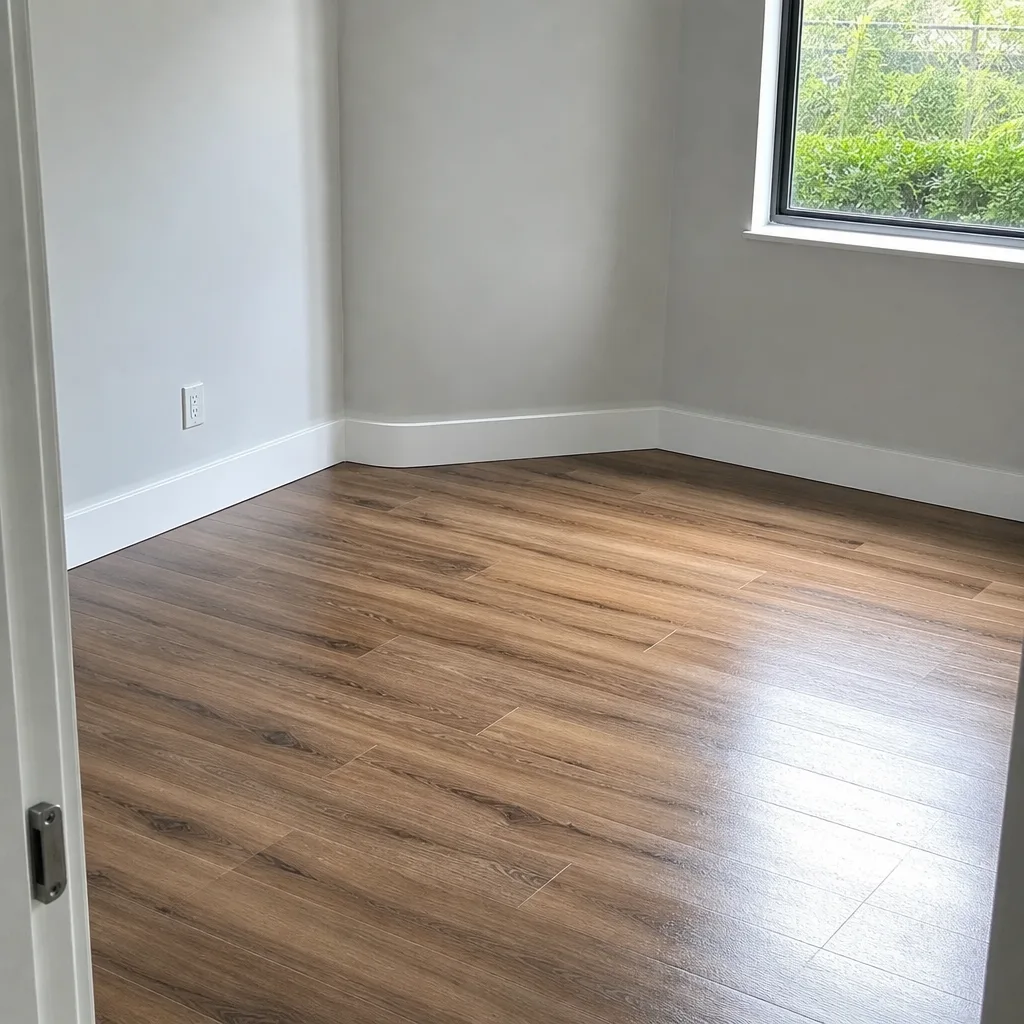 After
After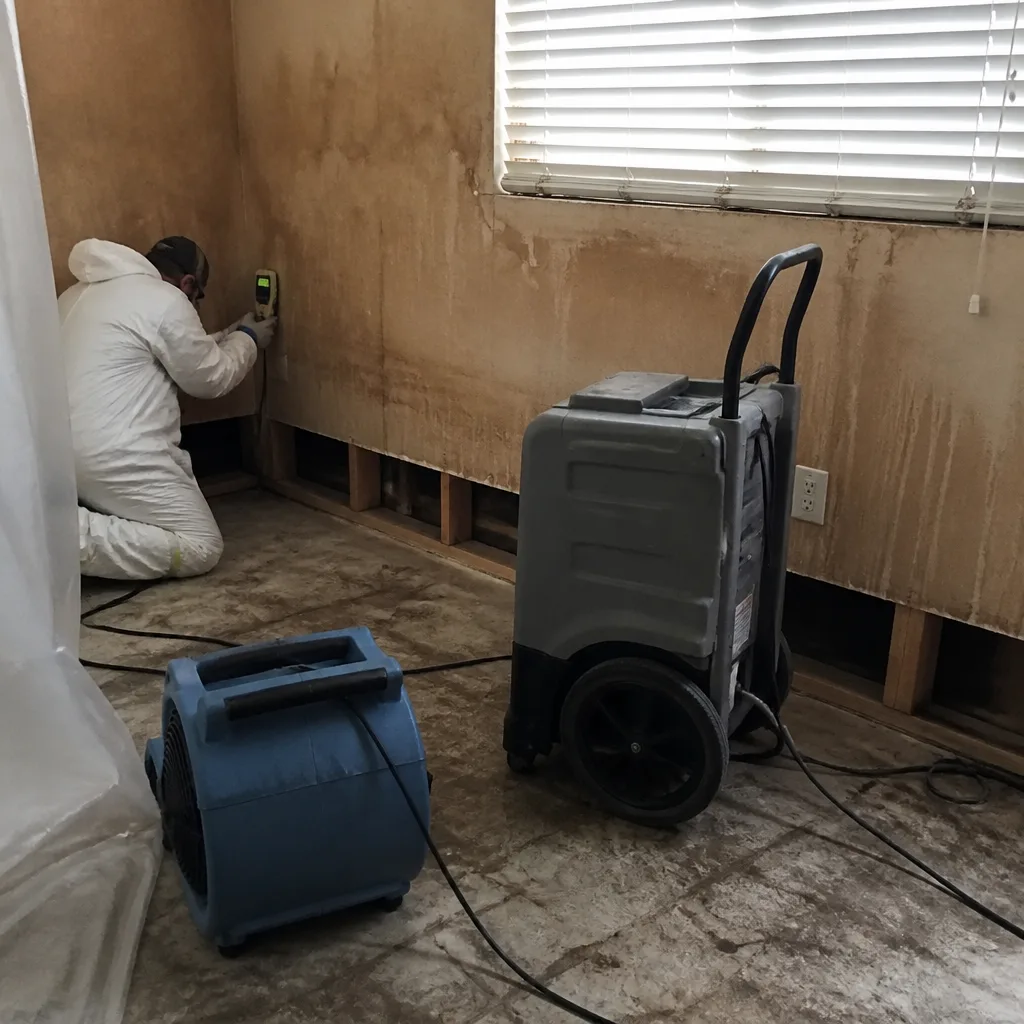 Before
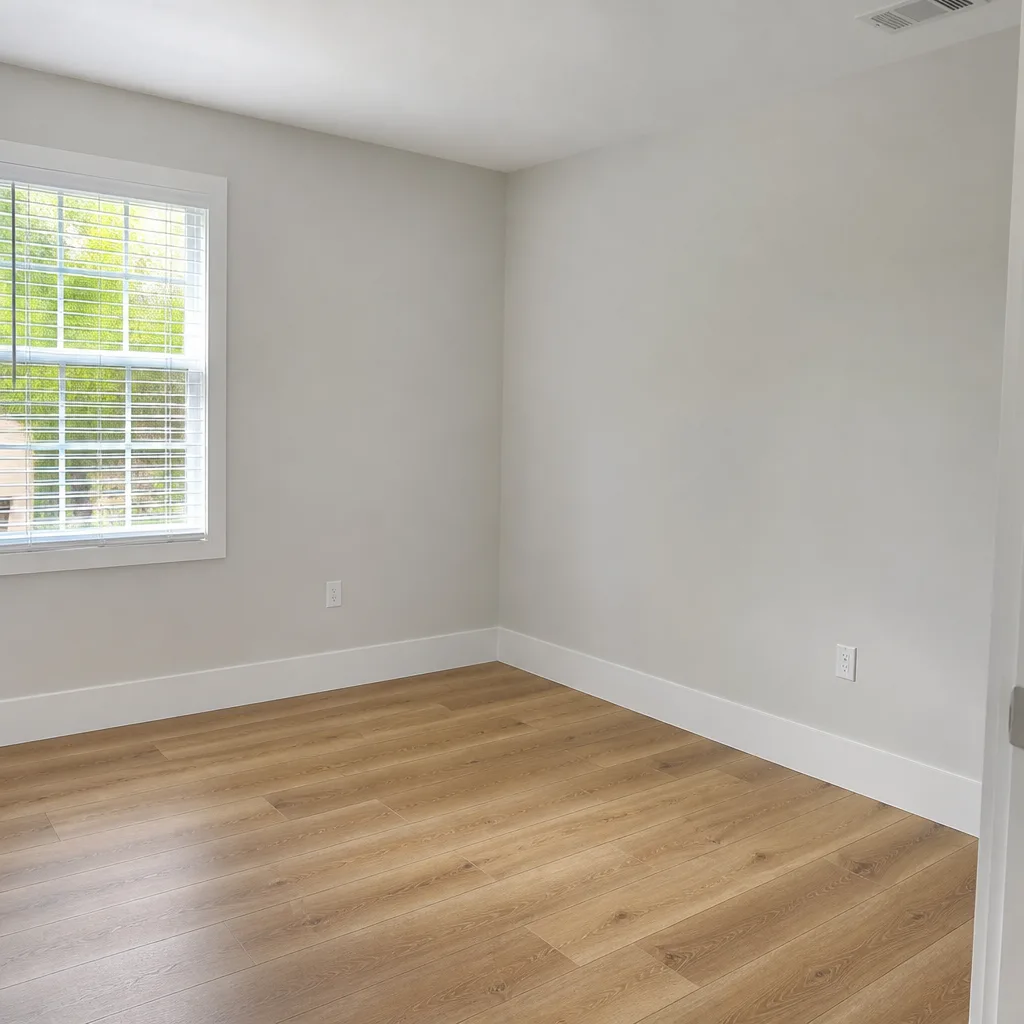 After
After24/7 Emergency Water Damage Restoration in Palm Beach
Water damage restoration in Palm Beach typically runs $2,800-$7,500 for a standard residential mitigation, with emergency extraction starting at $1,200 and full structural drying adding $1,600-$4,200 depending on affected square footage and material classes. Most Palm Beach properties we see need same-day dispatch because water keeps moving through plaster assemblies and concrete-block cavities long after the source stops. Call (561) 290-5060 now and a live person will answer, 24 hours a day, 7 days a week - no voicemail trees, no next-business-day callbacks while moisture is still wicking upward. Our crews are dispatched from our South Florida office and can be on-site anywhere on the island within 45 minutes of your call. The first hour determines whether we are extracting standing water or later tearing out irreplaceable historic finishes.
Understanding Water Damage Restoration Severity in Palm Beach Properties
Water damage in Palm Beach falls into three categories under IICRC S500 standards, and the distinction matters here more than in most markets. Category 1 is clean water from a supply line - a burst copper pipe in a Via Mizner estate’s second-floor bath, for example. Category 2 carries contaminants from appliances or sump failures. Category 3 is grossly contaminated: sewage, or the saltwater surge that Palm Beach’s barrier-island geography makes a genuine threat after every named storm. That dual exposure from the Atlantic and Lake Worth (the Intracoastal Waterway) means saltwater intrusion is not an exception for us; it is the baseline we plan for.
Moisture mapping on these properties reveals another layer of complexity. The 1920s-1950s masonry estate homes that dominate the island were built with thick concrete-block walls, often 8 inches or more, with plaster applied directly to the block. Water migrates slowly through that mass but holds tenaciously. Surface dryness means nothing without psychrometric data - vapor pressure differential readings that tell us whether the wall cavity is actually equalized to ambient conditions. We document every reading to IICRC, RIA, and IFA standards, producing the daily drying logs that turn restoration invoices into payable claims.
Many of these structures also contain original lime plaster, Keystone limestone detailing, and hand-formed clay barrel tile that cannot be replaced with off-the-shelf materials. A moisture meter on plaster reads differently than on modern drywall, and misreading it leads to premature demolition of salvageable historic fabric.
Why Palm Beach Property Owners Choose DryMark Restoration West Palm Beach
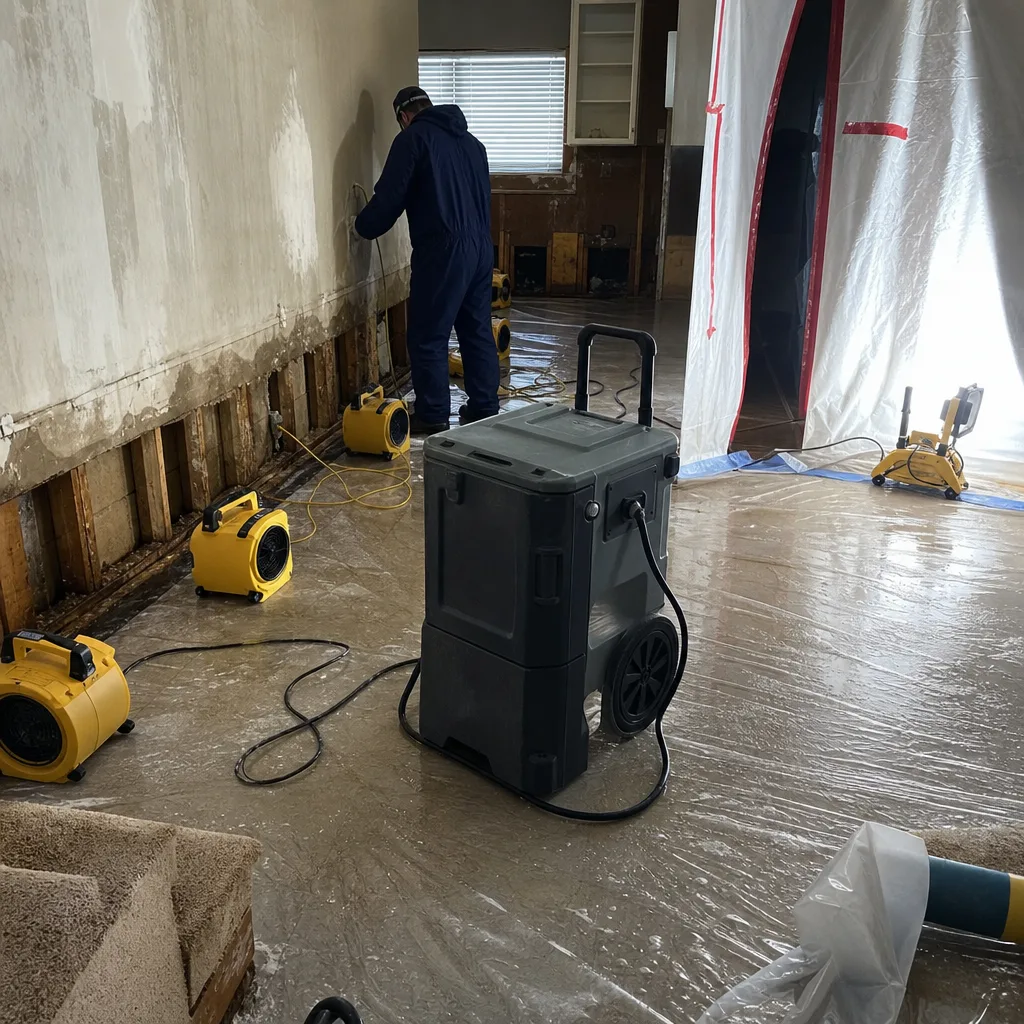
- 45-minute response commitment to anywhere on the Palm Beach barrier island, with crews staged from our South Florida office.
- 24/7 live answer - a real person, never an automated system or voicemail tree, because water does not wait for business hours.
- IICRC-certified crews holding WRT (Water Damage Restoration Technician) and ASD (Applied Structural Drying) credentials, with AMRT (Applied Microbial Remediation Technician) on staff for secondary mold concerns.
- Free visual inspection and moisture assessment before any work is authorized or priced.
- Direct insurance billing and adjuster coordination, with photo-documented estimates in industry-standard Xactimate format.
- One team from extraction through reconstruction - no handoffs between mitigation and rebuild contractors that leave gaps in documentation or accountability.
 Before
 After
AfterOur Water Damage Restoration Process
1. Inspection & Assessment
We arrive with thermal imaging cameras, penetrating and non-penetrating moisture meters, and hygrometers to map the full extent of migration. On Palm Beach’s historic estates, we immediately identify whether the property falls under Landmarks Preservation Commission jurisdiction and flag any original lime plaster, Keystone limestone, or clay barrel tile that will require specialty sourcing.
2. Extraction & Stabilization
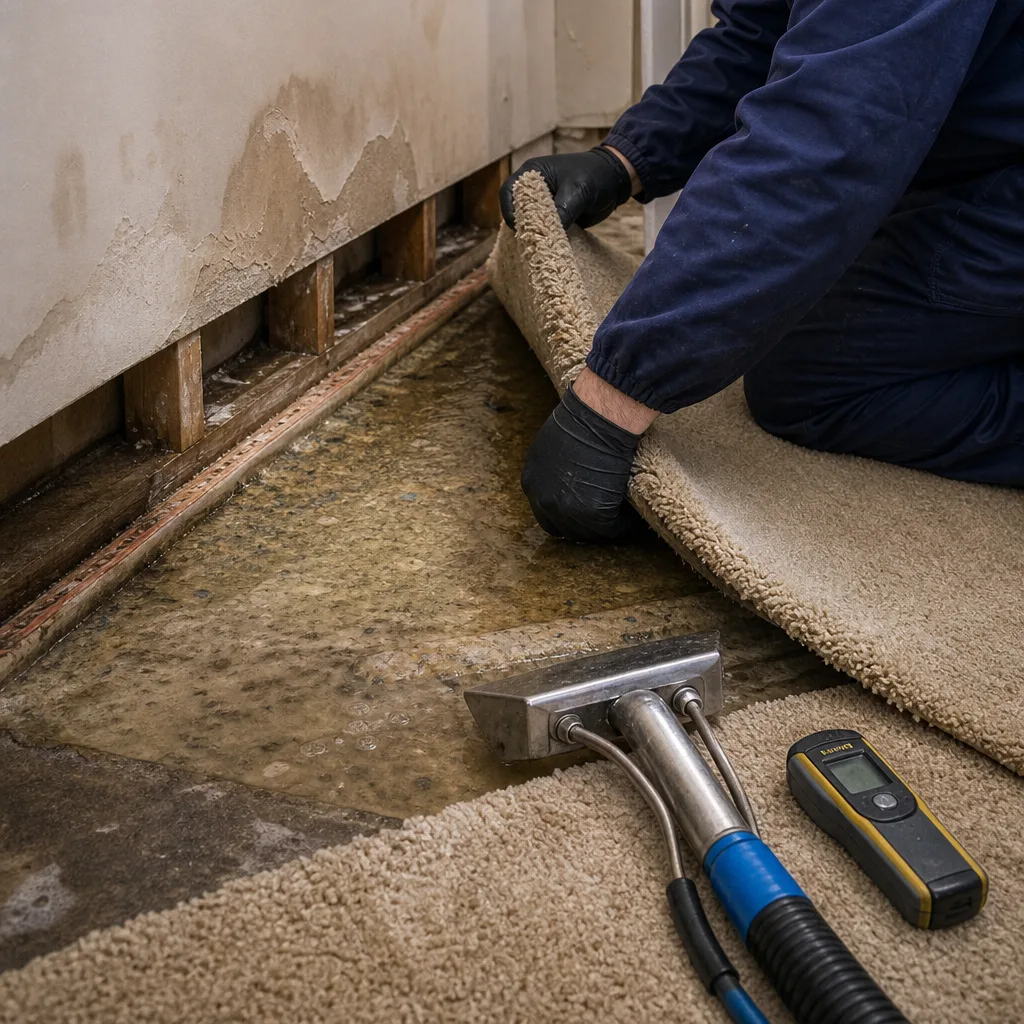
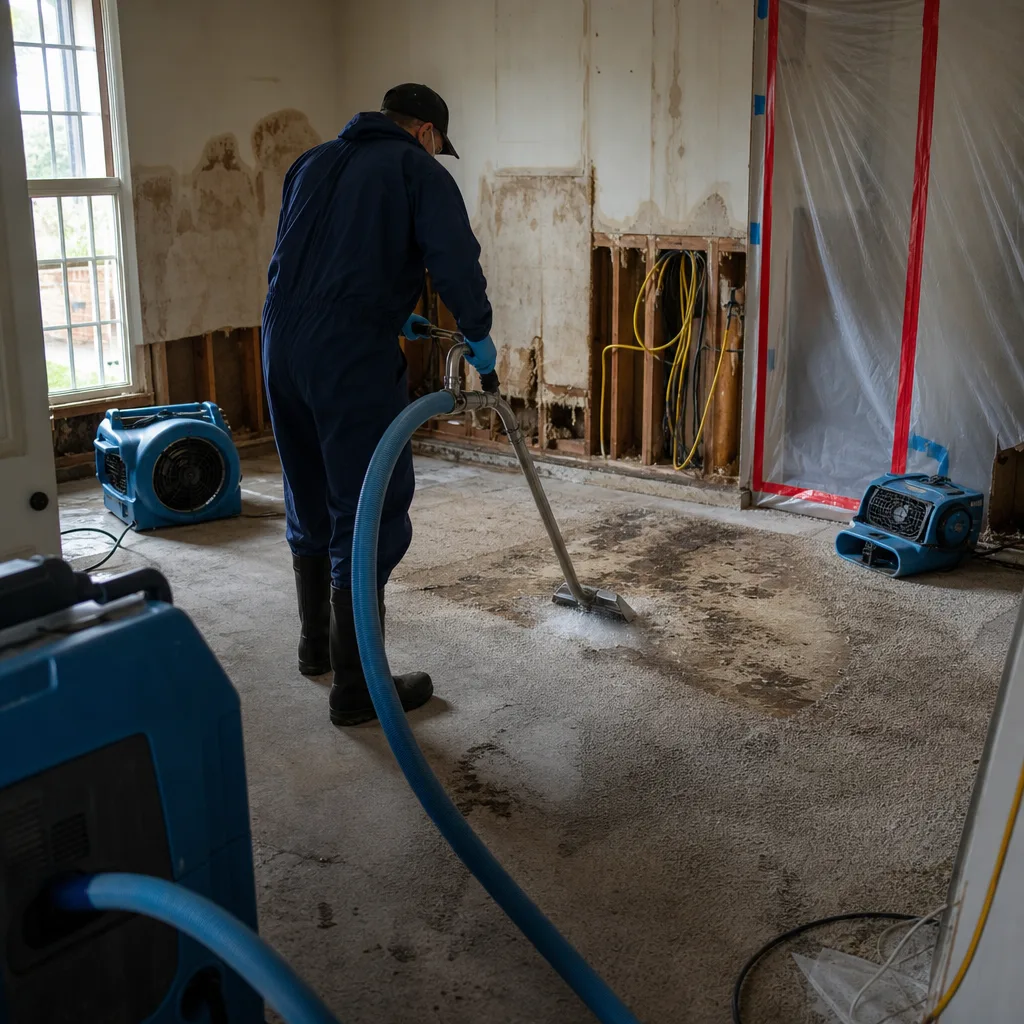
Standing water is removed with truck-mounted extraction systems and weighted water claws for saturated carpet or padding. For hard surfaces, we deploy squeegee wands and portable extraction units. If the loss involves Category 3 saltwater from storm surge, we apply antimicrobial treatment immediately to prevent corrosion acceleration from salt residue.
3. Drying & Dehumidification
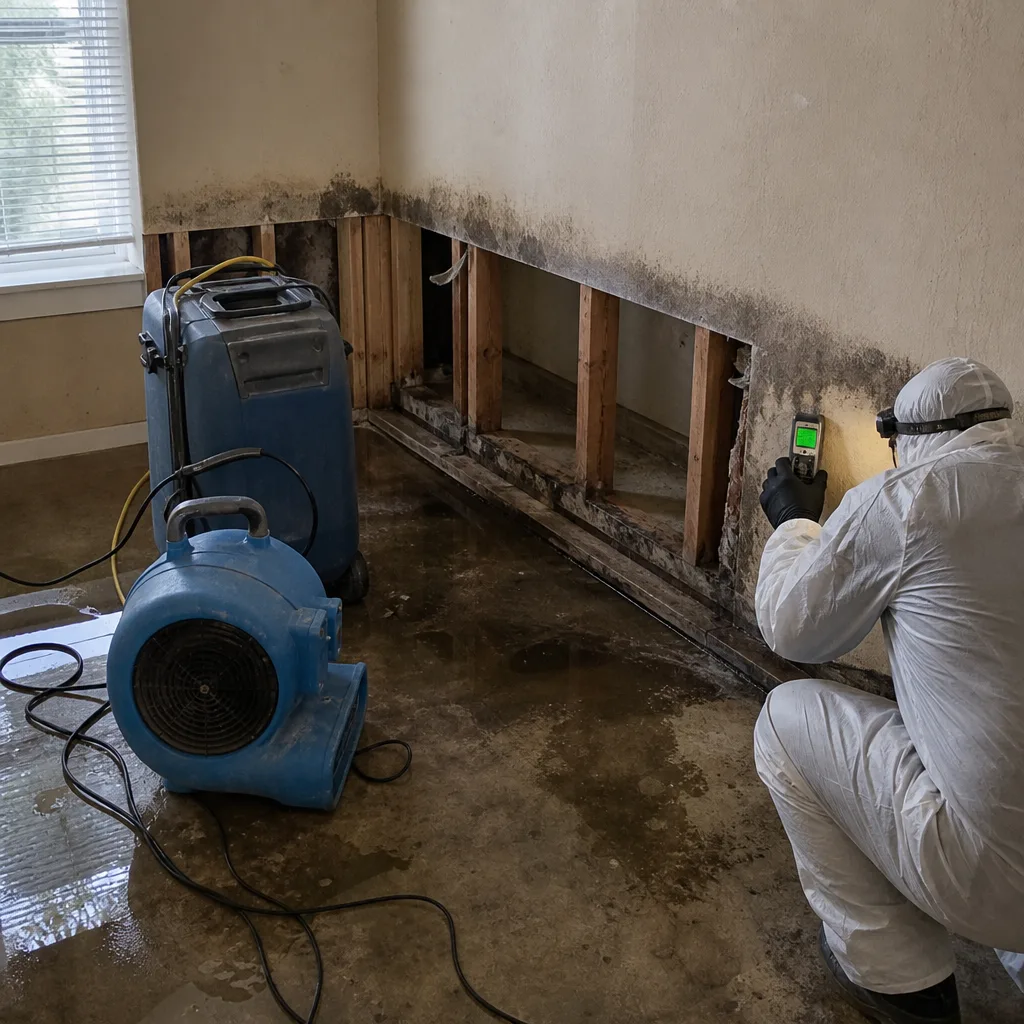
We establish a drying chamber using Phoenix LGR dehumidifiers, B-Air air movers positioned for optimal airflow patterns, and Injectidry wall-cavity drying panels for the thick concrete-block assemblies common in Mediterranean Revival construction. Daily moisture readings are logged until materials reach their dry standard.
4. Cleaning & Sanitization
All affected surfaces receive HEPA vacuuming and antimicrobial treatment appropriate to the water category. On historic finishes, we select products that will not compromise future adhesion of matching lime plaster or specialty coatings required by Landmarks review.
5. Historic Material Matching & Landmarks Coordination
For designated properties, we compile documentation of original materials - stucco formulations, tile profiles, limestone sources - and submit to the Palm Beach Landmarks Preservation Commission for review. We source replacement clay barrel tile from domestic or European suppliers as needed, and engage artisan plasterers familiar with historic lime finishes. This step exists virtually nowhere else in South Florida restoration.
6. Repairs & Restoration
Once drying is verified and approvals are in hand, our reconstruction team restores the property to pre-loss condition. Every phase is photo-documented, and the final scope is delivered with our 365-Day Done Right Promise under The Haven Standard.
Need Emergency Water Damage Restoration in Palm Beach Now?
Crews minutes away, answering live 24 hours a day. The sooner we start, the less it costs.
Working With Your Insurance Company
Insurance claims succeed or fail on documentation, and we built our company around that fact. Alicia Brennan founded Back to Dry in 2011 after seeing how many homeowners lost legitimate claims to sloppy paperwork. Every Palm Beach job begins with a photo record on the first visit and ends with a complete file: moisture readings, drying logs, material specifications, and a line-item scope in Xactimate format that adjusters recognize immediately.
We do not ask you to manage the adjuster. We coordinate directly with your carrier, provide the documentation they require, and flag any Landmarks-related timeline extensions that affect Additional Living Expense coverage. Our Water Damage Restoration team has handled claims on estates valued in the tens of millions, where the complexity of custom finishes and historic materials demands a level of detail that generic restoration invoices simply do not provide.
What We Provide Your Insurer
- Thorough documentation of the loss
- Photos of all damage, room by room
- Moisture readings and drying logs
- A detailed, line-item scope of work
- Direct coordination with your carrier
Built for Palm Beach’s Loss Calendar
January through March, we see supply-line bursts when cold fronts drop temperatures enough to stress aging copper in unconditioned attic spaces or guest-house plumbing. The island’s estate homes often have secondary structures - pool houses, carriage houses, staff quarters - with less insulation and more exposure.
April through June brings the pre-hurricane season pattern of heavy thunderstorms and the first tidal flooding events. Lake Worth’s water level rises with spring rains, pushing groundwater intrusion into older foundation systems. July through November is hurricane season proper, and Palm Beach’s barrier-island position means dual-surge exposure: Atlantic storm surge from the east, wind-driven Lake Worth backflow from the west. After every major hurricane, we treat saltwater contamination as the default assumption, not a special case.
December brings seasonal residents returning to find slow leaks that developed in their absence - ice maker lines, water heater failures, condensation line backups in HVAC systems sized for year-round cooling. The salt-laden air that blows across the island year-round accelerates corrosion in everything from angle stops to evaporator coils, compressing the interval between maintenance and failure.
Water Damage Restoration Across Palm Beach’s Neighborhoods
North End estates along County Road and near the Palm Beach Country Club present a particular challenge: many are original 1920s Mizner designs with hand-formed clay tile roofs that cannot be matched from a big-box supplier. When a roof leak sends water through ornate plaster ceilings, we coordinate the tarping, the interior drying, and the Landmarks material sourcing simultaneously.
The Estate Section south of Worth Avenue contains some of the highest-value residential properties in the United States. Water losses here routinely involve art collections, custom millwork, and finishes specified by named designers. Our pack-out and contents restoration protocols reflect that reality - detailed photo inventory, climate-controlled storage, and conservator consultation when appropriate.
Midtown properties, including those near the Royal Poinciana Plaza corridor, often mix historic structures with more recent construction. The loss patterns differ: newer buildings may have standard drywall and modern plumbing, but they sit on the same narrow island with the same saltwater exposure and the same flood zone designations.
South End neighborhoods toward Sloan’s Curve and the inlet see the most direct Atlantic exposure. Storm surge hits here first, and the combination of wind-driven rain and tidal inundation produces Category 3 losses that require full antimicrobial treatment and corrosion assessment of every metal component in the building envelope.
Specialized Water Damage Restoration Services We Offer in Palm Beach
Emergency Water Extraction
Standing water in a Palm Beach estate is not just a flooring issue - it is a threat to plaster assemblies, hardwood inlay, and the substrate beneath stone floors. We extract with truck-mounted systems and portable units sized for the job, whether it is a 400-square-foot guest bath or a 6,000-square-foot main residence with water across multiple levels.
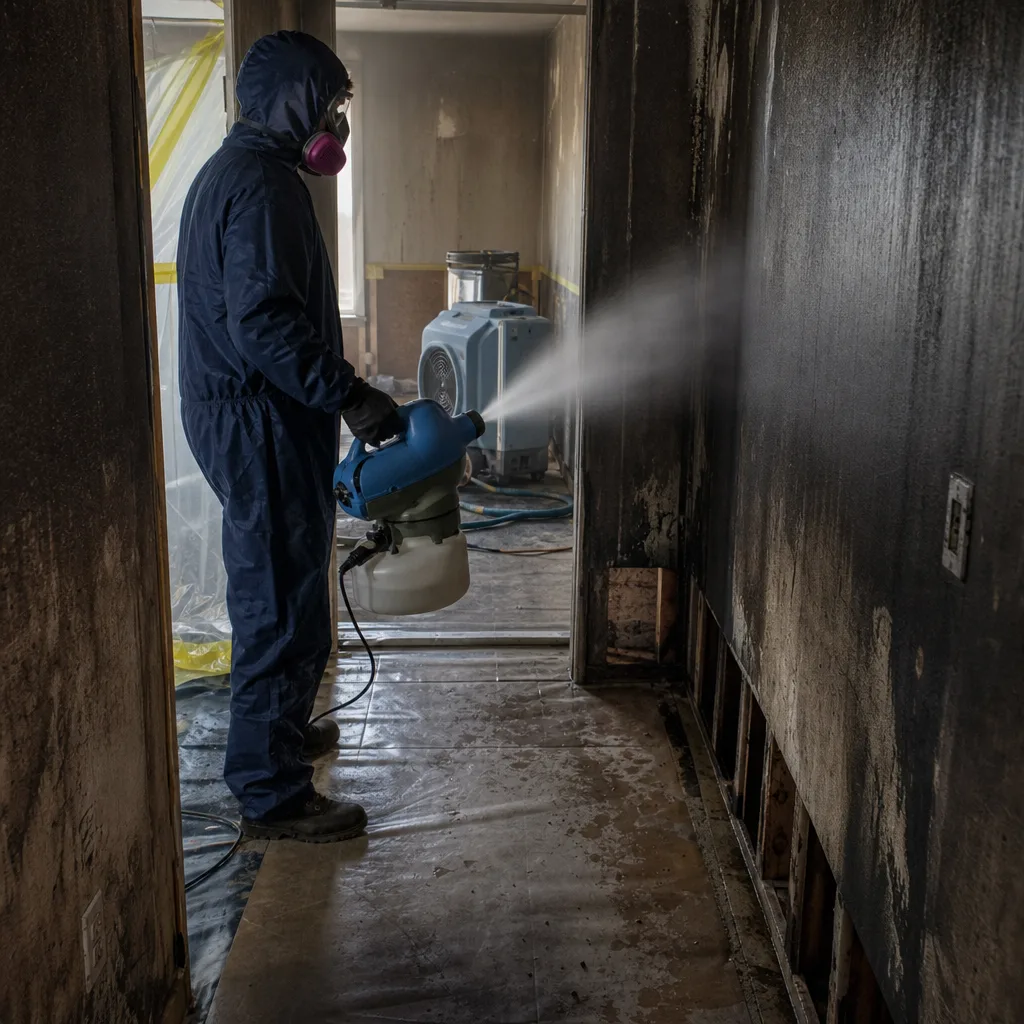
Structural Drying & Dehumidification
The thick concrete-block walls of Mediterranean Revival construction do not dry quickly. We deploy Phoenix LGR dehumidifiers and Injectidry cavity-drying systems to establish vapor pressure differentials that pull moisture from deep in the wall assembly, with daily readings logged until the structure reaches its documented dry standard.
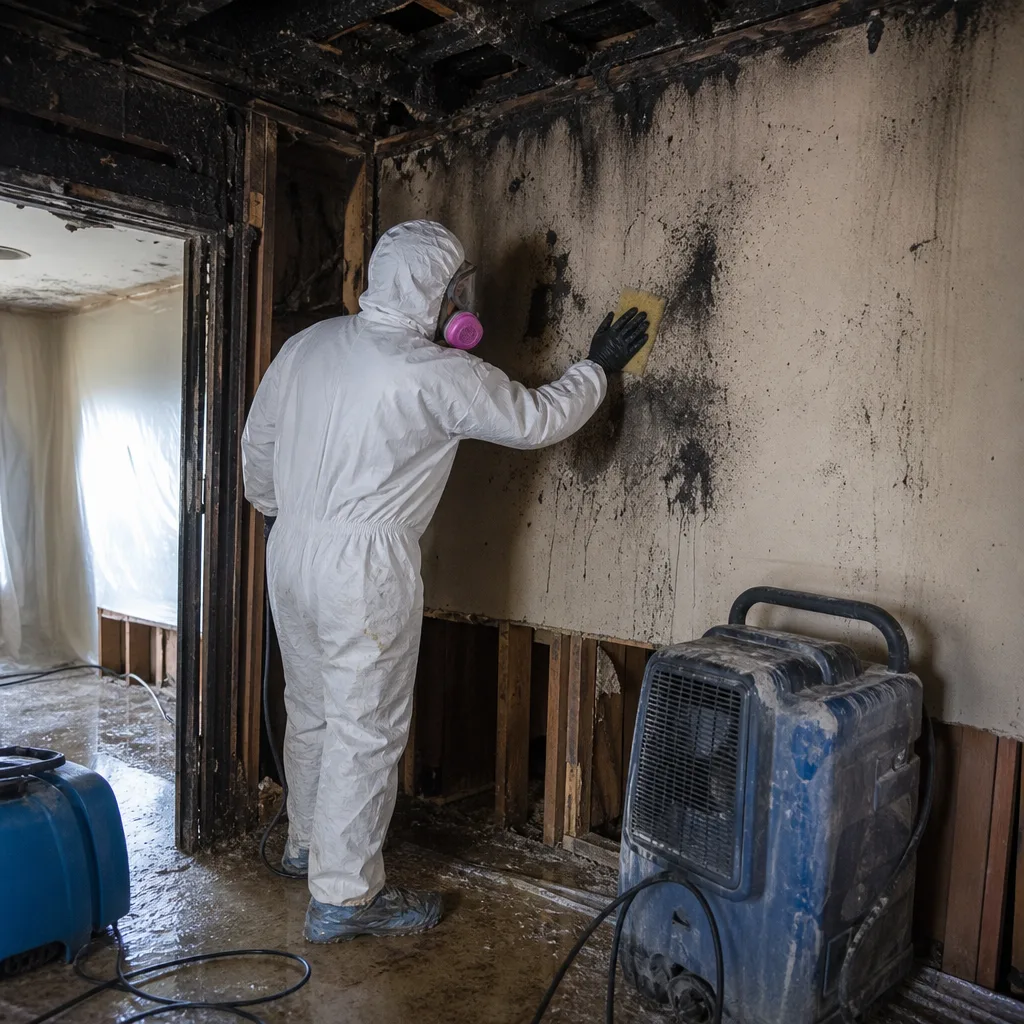
Flood Cleanup
Palm Beach flood losses range from Lake Worth tidal intrusion to storm surge that deposits saltwater, sand, and debris throughout a property. We treat these as Category 3 events by default, with full PPE for crews, antimicrobial application, and corrosion assessment of structural fasteners and HVAC components.
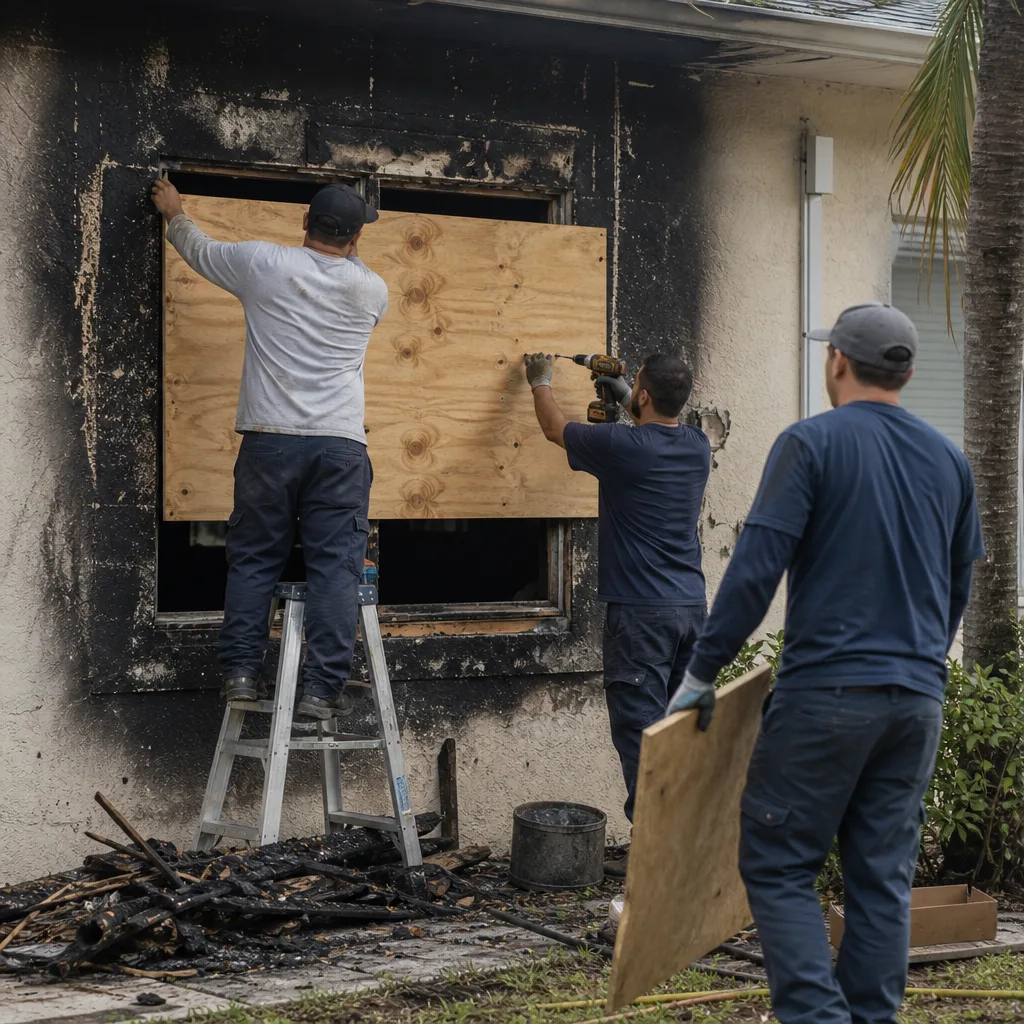
Burst Pipe Restoration
Copper supply lines in older Palm Beach homes fail at joints stressed by decades of salt-air corrosion. We extract, dry, and document the full extent of migration - including water that has traveled through concrete-block cavities to appear in rooms far from the source - then coordinate the plumbing repair and the restoration of affected finishes.
Basement Water Removal
While true basements are rare in South Florida, many Palm Beach estates have lower-level service areas, wine cellars, or mechanical rooms below grade. These spaces flood differently than slab-on-grade construction, often requiring submersible pumps and specialized drying configurations for limited-access spaces.
What happens when you call
- 1
A real person answersNo phone trees - you reach a local pro.
- 2
You get an upfront price rangeHonest numbers before anyone is dispatched.
- 3
A background-checked tech heads outLicensed & insured, dispatched right away.
- 4
You approve before work beginsNothing starts until you say go.
Water Damage Restoration Costs in Palm Beach, FL
Water damage restoration in Palm Beach carries a premium over inland Palm Beach County markets, and the reasons are specific to the island. Material costs for historic finishes run higher. Labor for artisan plaster and tile matching is specialized. And the Landmarks Preservation Commission review process adds timeline that affects temporary housing costs and project overhead.
| Service | Typical Range in Palm Beach |
|---|---|
| Emergency water extraction (up to 1,500 sq ft) | $1,200 - $2,400 |
| Structural drying & dehumidification | $1,600 - $4,200 |
| Category 3 flood cleanup with antimicrobial treatment | $3,500 - $8,500 |
| Historic material matching & Landmarks coordination | $2,000 - $6,000 additional |
| Full restoration with reconstruction | $8,500 - $35,000+ |
Insurance typically covers sudden and accidental water damage, including the extraction, drying, and restoration of affected materials. Out-of-pocket costs most often arise from deductibles, upgrades beyond like-kind replacement, or losses that developed gradually and were not promptly reported. We provide a written price before any work starts, every time, with no scope-creep additions once the crew is inside - Haven Standard, Clause 1. Bring a competitor’s written estimate and we will review it at no charge.
We Also Serve Cities Near Palm Beach
Our crews respond throughout the Palm Beach County corridor, including Palm Beach itself plus West Palm Beach, North Palm Beach, Greenacres, and Palm Beach Gardens. Each market has distinct building stock, flood exposure, and regulatory environment, and our estimates reflect those local conditions rather than a one-size template.
Serving Palm Beach, FL - Our Local Coverage Area
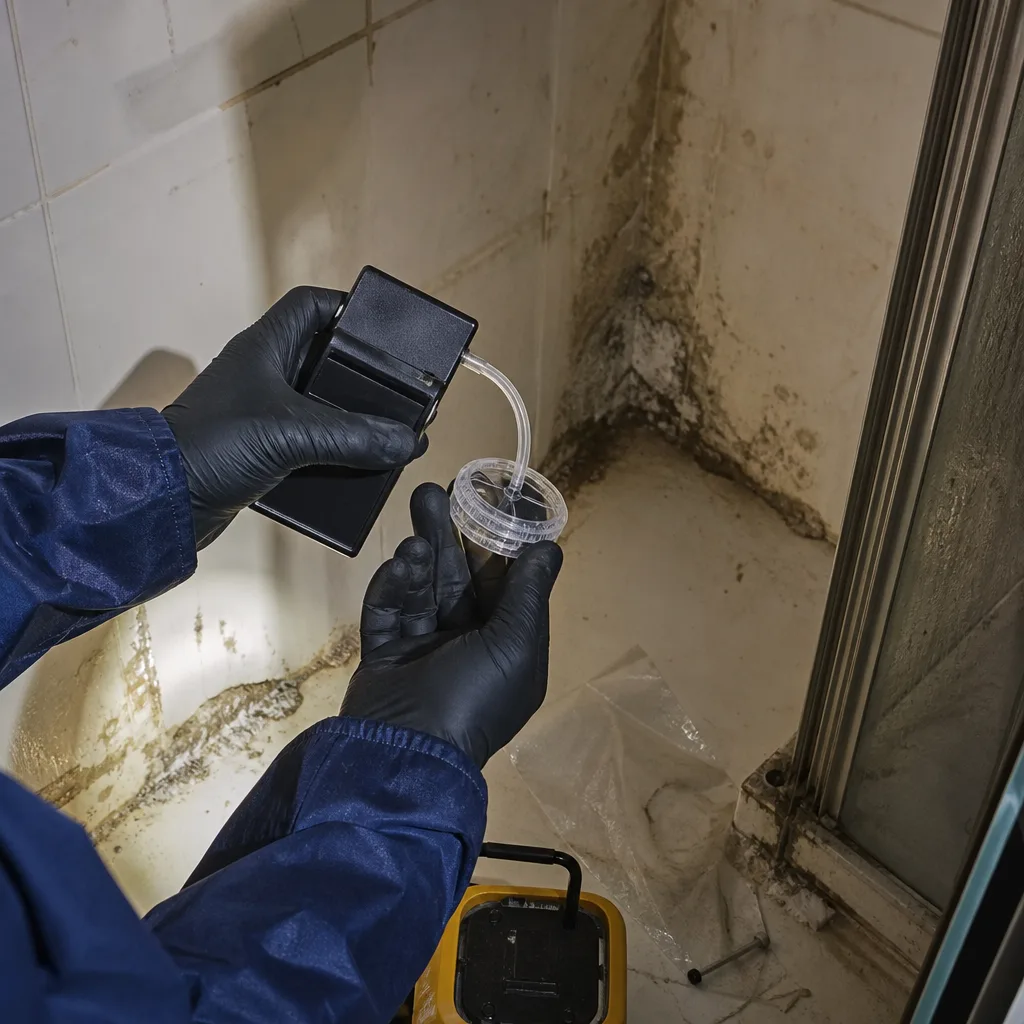
We’re based in the Palm Beach area and know this community well. Use the map below to see our service coverage - if you’re nearby, we can almost certainly help.
Palm Beach Water Damage Restoration Questions, Answered
Does water damage restoration on a Palm Beach Landmarks-designated estate actually take longer than on a non-designated home?
Yes, typically by 4-12 weeks depending on material lead times. The Palm Beach Landmarks Preservation Commission requires that replacement stucco, clay barrel tile, and limestone match originals precisely, and specialty materials often must be sourced from domestic or European suppliers. We flag this timeline immediately with property owners and carriers so Additional Living Expense coverage can be adjusted. Call (561) 290-5060 to discuss your specific property.
What does Category 3 water mean for a Palm Beach home after a storm surge?
Category 3 water is grossly contaminated and carries pathogenic, toxigenic, or other harmful agents. After storm surge on Palm Beach’s barrier island, this includes saltwater, sediment, fuel residue, and biological material from both Atlantic and Intracoastal sources. We treat all surge-impacted properties as Category 3 by default, with full antimicrobial treatment, PPE protocols, and corrosion assessment of structural metals. Call (561) 290-5060 for immediate assessment.
How fast does mold start in a Palm Beach home after a ceiling or roof leak?
Mold colonization can begin in 24-72 hours in Palm Beach’s climate, where year-round humidity and temperatures above 70°F create ideal conditions. The salt-laden air does not inhibit mold; if anything, the organic material in historic plaster and the cellulose in traditional lath provide nutrient sources. We deploy air scrubbers and containment at the first sign of elevated moisture, with AMRT-certified technicians on staff for remediation if colonization has begun. Call (561) 290-5060 for moisture mapping.
Does salt-laden air and dual-water exposure change how you restore a Palm Beach property?
Yes. Salt accelerates corrosion of structural fasteners, HVAC components, and building envelope metals at rates we do not see inland. After any water loss, we inspect these systems for salt residue and early corrosion, and we specify replacement materials rated for marine exposure where the original installation was not. This is standard on every Palm Beach job, not an upsell. Call (561) 290-5060 to schedule.
What brand equipment do you use for drying a historic Palm Beach estate?
We deploy Phoenix LGR dehumidifiers, Injectidry wall-cavity and hardwood floor drying systems, and B-Air air movers, all documented to IICRC, RIA, and IFA standards. On historic properties, we select equipment configurations that deliver controlled drying without the aggressive airflow that can damage fragile plaster or loosen historic finishes. Daily moisture logs track progress and verify when the structure is ready for restoration. Call (561) 290-5060 for equipment specifics on your property.
Will my insurance cover water damage restoration in Palm Beach?
Most standard homeowners policies cover sudden and accidental water damage, including burst pipes, appliance failures, and storm-related intrusion. Flood damage from rising water typically requires separate flood insurance. We provide photo-documented estimates in Xactimate format, coordinate directly with your adjuster, and flag any Landmarks-related timeline or material-cost issues that affect coverage. Call (561) 290-5060 and we will review your policy implications at no charge.
How long does structural drying take in a Palm Beach concrete-block home?
Standard wood-frame construction with drywall typically dries in 3-5 days. Palm Beach’s thick concrete-block and plaster assemblies often require 5-10 days, with daily moisture readings to verify that the block cavity has equalized, not just the surface. We do not authorize reconstruction until the drying logs confirm the structure is at its documented dry standard. Call (561) 290-5060 for a timeline estimate on your property.
Can we stay in the home during water damage restoration?
It depends on the extent of damage, the water category, and whether containment is required. Small Category 1 losses in isolated areas may allow occupancy. Category 3 losses, whole-house drying with multiple dehumidifiers, or any job requiring antimicrobial treatment typically require temporary relocation. For Landmarks-designated estates with extended material lead times, we coordinate with carriers on Additional Living Expense coverage early in the process. Call (561) 290-5060 to discuss your situation.
On a 1928 Mediterranean Revival estate off Via Mizner near Worth Avenue, a burst supply line under a second-floor powder room soaked the original lime-plaster walls and Keystone limestone base. We ran moisture mapping and daily moisture readings across the thick concrete-block assembly, set containment with Phoenix dehumidification and Injectidry wall-cavity drying panels, and flagged the Landmarks review early so replacement lime finish could be ordered before mitigation closed out. By day six the structural drying was verified on the drying logs and the scope of work went to the carrier with the historic-material match documented.
That is how we work on every Palm Beach job: evidence first, documentation always, and a written price before anyone starts work. Haven Standard, Clause 1. If you are facing water damage on the island, call (561) 290-5060 now. A live person will answer, and we will have a crew on-site within 45 minutes.
Written by Alicia Brennan, Owner at Back to Dry Restoration, serving Palm Beach since 2011.
Water Damage Restoration in Nearby Areas