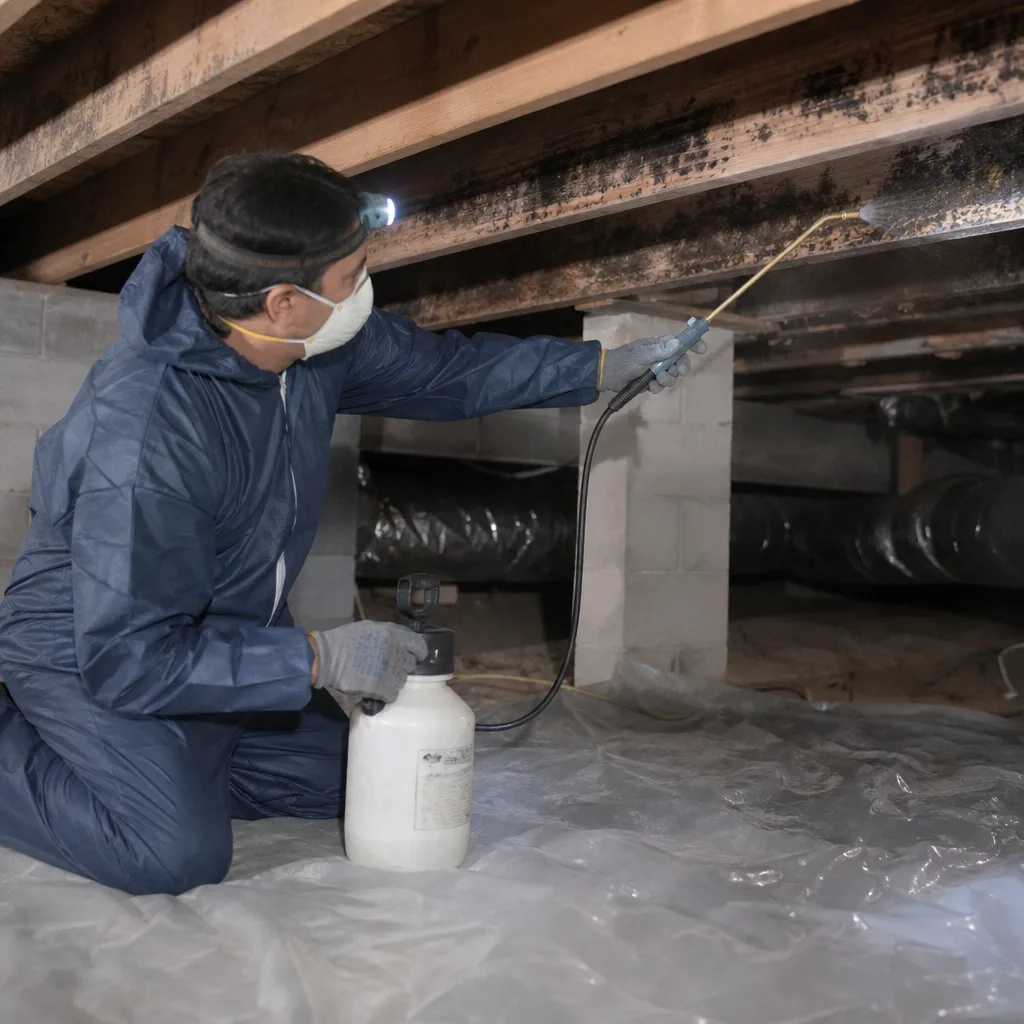
Free visual inspection and a written scope of work before any mitigation begins - photos, moisture readings, and drying logs go in your claim file
The scope we write is the scope we bill. Anything new gets shown to you, in writing, before we touch it.

 Before
 After
After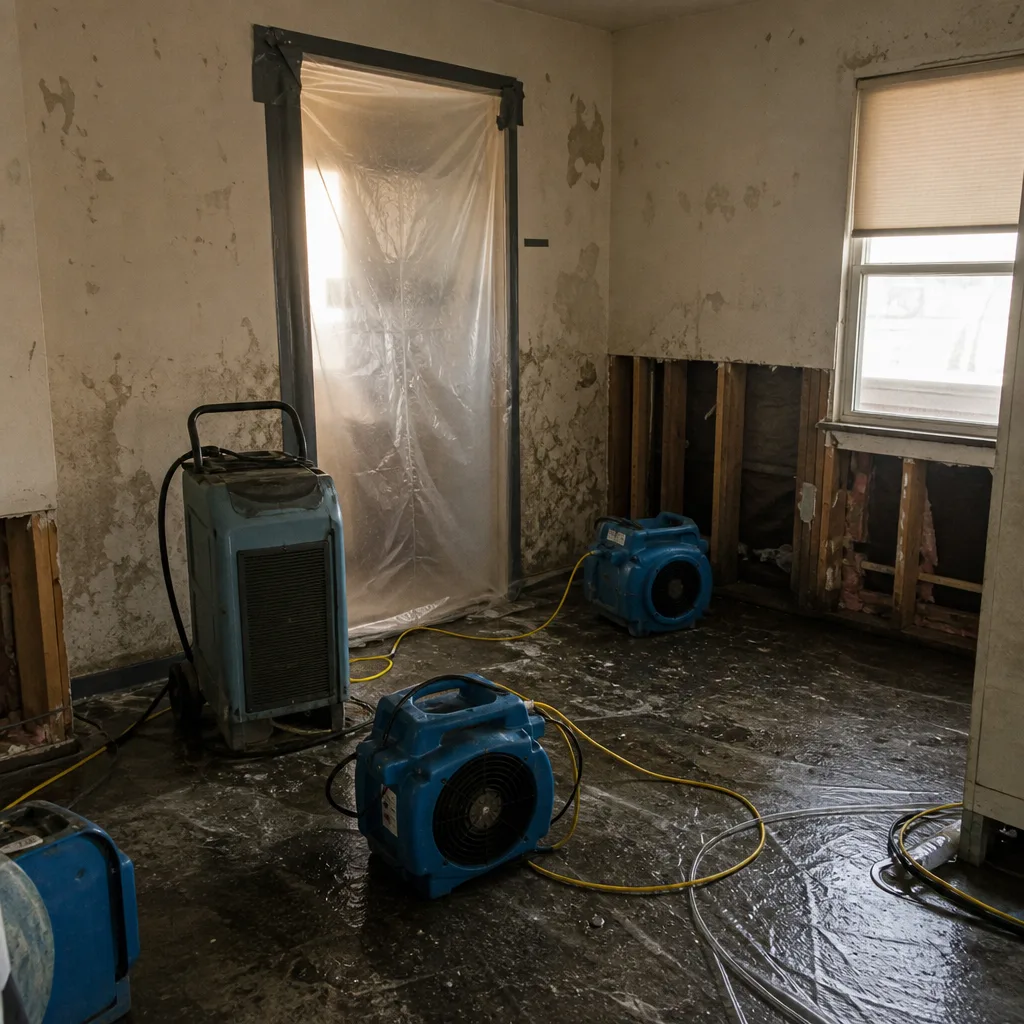 Before
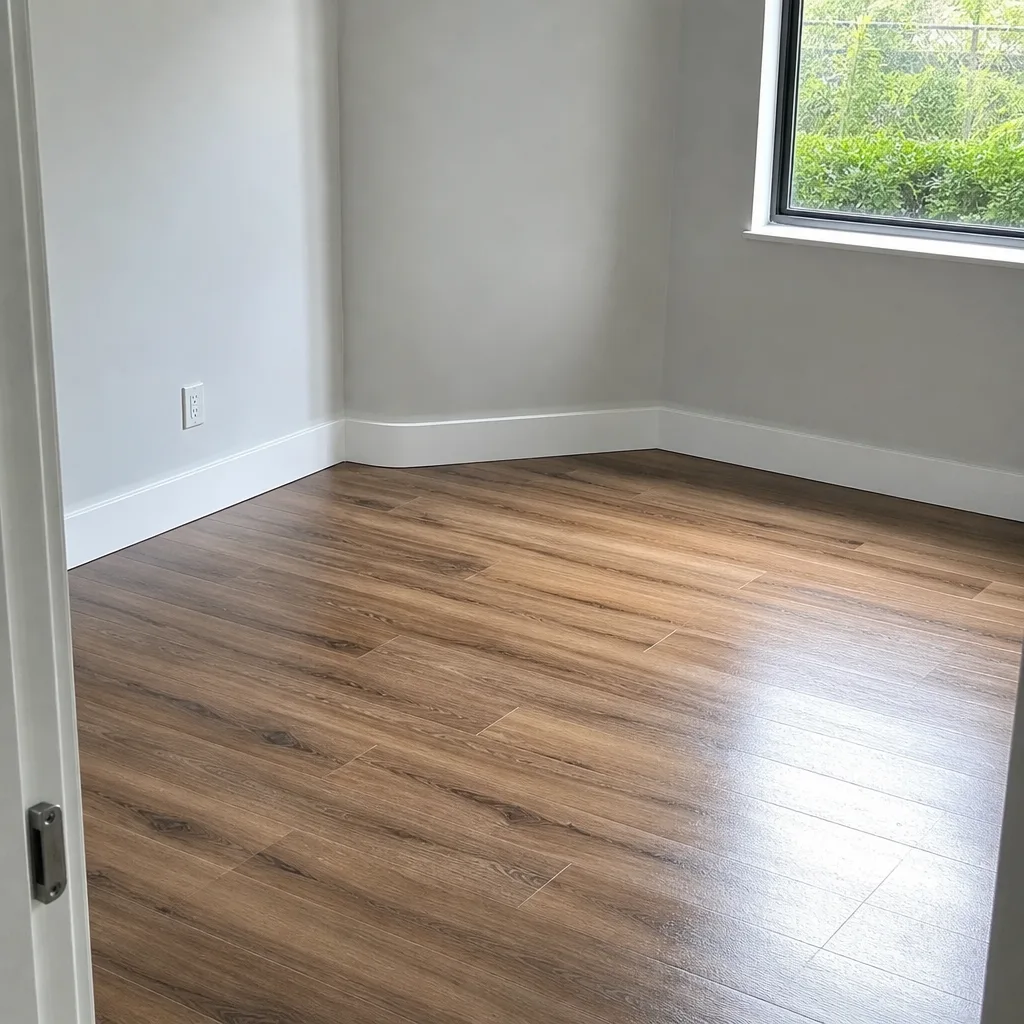 After
After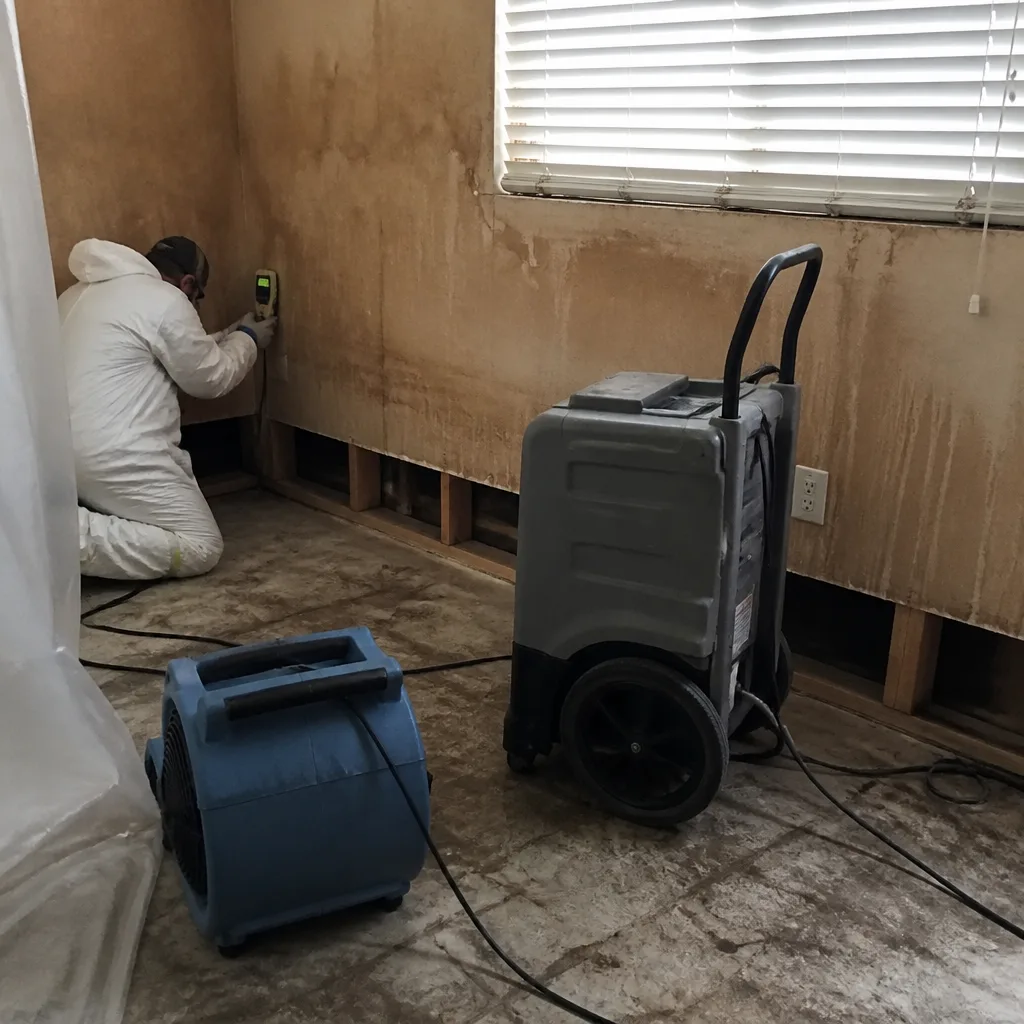 Before
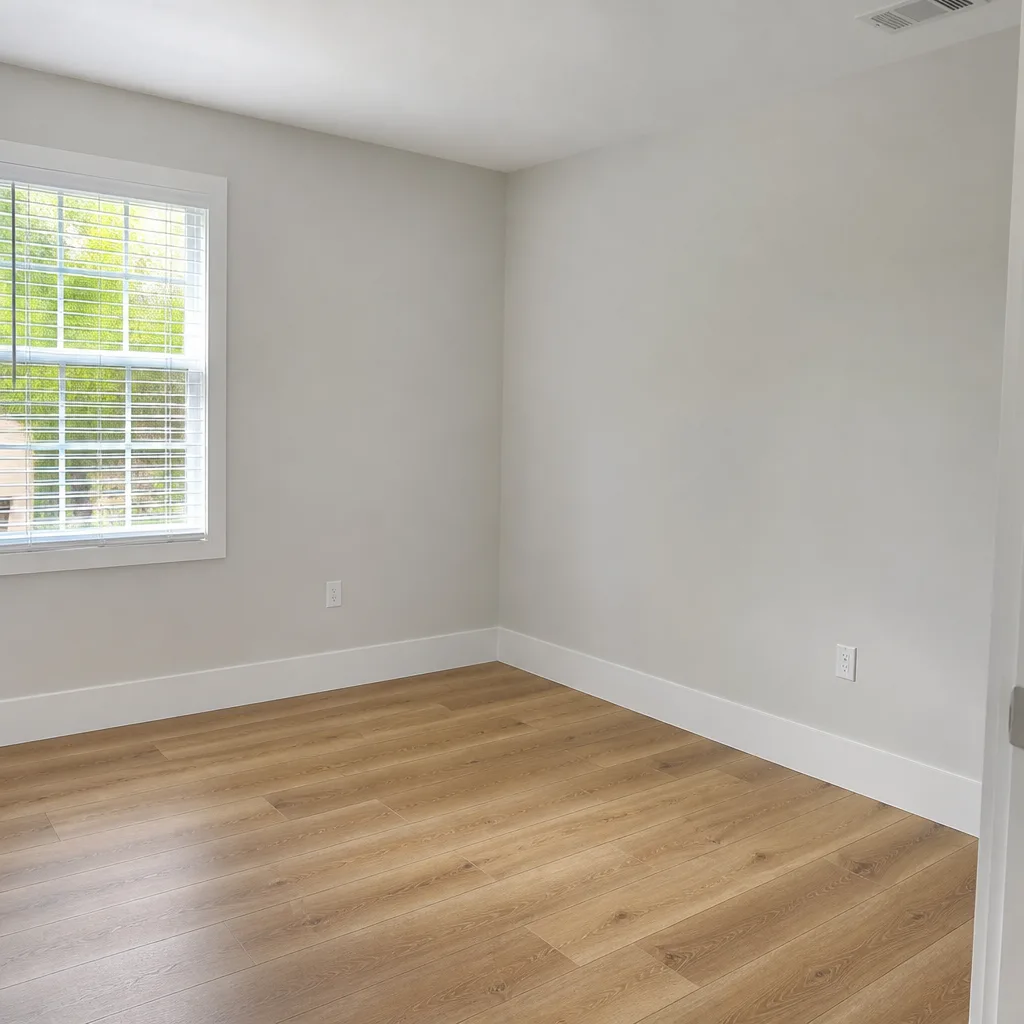 After
After24/7 Emergency Mold Remediation in Jupiter
Mold remediation in Jupiter typically costs $1,800-$6,500 depending on affected square footage, with containment and air-scrubbing jobs starting around $1,800 and whole-home remediation with reconstruction reaching $15,000 or more. Most Jupiter canal-front homes we see need same-day containment to stop colonization from spreading through the HVAC system. Call (561) 290-5060 now - a live person answers, no voicemail, and crews are dispatched from our South Florida coordination office to Jupiter within the hour.
The first hour matters because Jupiter’s persistent coastal humidity, regularly 75-80% relative humidity, means a single water-intrusion point can produce visible mold colonization in 24-48 hours. On CBS block homes with flat or low-slope concrete tile roofs, that moisture gets trapped behind stucco and interior drywall where surface checks miss it entirely. We provide a free visual inspection, document everything with photos, and deliver a written price before any work starts - Haven Standard, Clause 1.
Understanding Mold Remediation Severity in Jupiter Properties
Mold severity in restoration work breaks down by colonization extent, substrate material, and whether the underlying moisture source is resolved. Limited growth under 10 square feet on non-porous surfaces - think ceramic tile or sealed countertops - falls under Level I containment: single-layer polyethylene barrier, HEPA vacuum, and damp-wipe with EPA-registered antimicrobial. Level II, 10-30 square feet, requires full negative-air containment with an air scrubber exhausting to the exterior, plus sealed egress pathways for debris removal.
Jupiter’s housing stock pushes most jobs past Level I. The core residential inventory of CBS homes built from the 1970s through early 1990s on canal-front lots has a specific failure pattern: degraded roof underlayment after decades of UV exposure and tropical rainfall allows slow intrusion that homeowners miss until musty odor or visible spotting appears. By then, paper-faced drywall behind baseboards is often compromised, and the block wall cavity holds residual moisture that surface drying won’t reach. The Abacoa planned community, developed late 1990s into the 2000s, is now hitting its first full roof-lifecycle replacement window - we’re seeing concurrent water-intrusion claims across similarly aged homes where underlayment failure is only visible from the attic side.
Level III and IV remediation, 30-100 square feet and beyond, demands multi-chamber containment, continuous negative air pressure monitored by manometer, and post-remediation clearance testing by an independent third party. In Jupiter’s climate, we rarely recommend anything less than full containment on canal-front properties where the envelope has been breached; the humidity load is too high to risk cross-contamination.
Why Jupiter Property Owners Choose DryMark Restoration West Palm Beach
- 45-minute response commitment to Jupiter addresses from our South Florida dispatch - not a “same day” window, a measured arrival time.
- 24/7 live answer by a real person, never an automated system or voicemail tree; your call is logged with a timestamp and dispatched immediately.
- IICRC-certified crews holding WRT (Water Damage Restoration Technician), AMRT (Applied Microbial Remediation Technician), and FSRT (Fire & Smoke Restoration Technician) credentials - license numbers provided on request.
- Free visual inspection with moisture mapping and thermal imaging before any commitment; you receive the findings in writing.
- Direct insurance billing with photo-documented scopes that adjusters recognize and pay without dispute.
- One team from microbial remediation through reconstruction - no handoffs between contractors, no gaps in documentation.
 Before
 After
AfterOur Mold Remediation Process
1. Inspection & Assessment
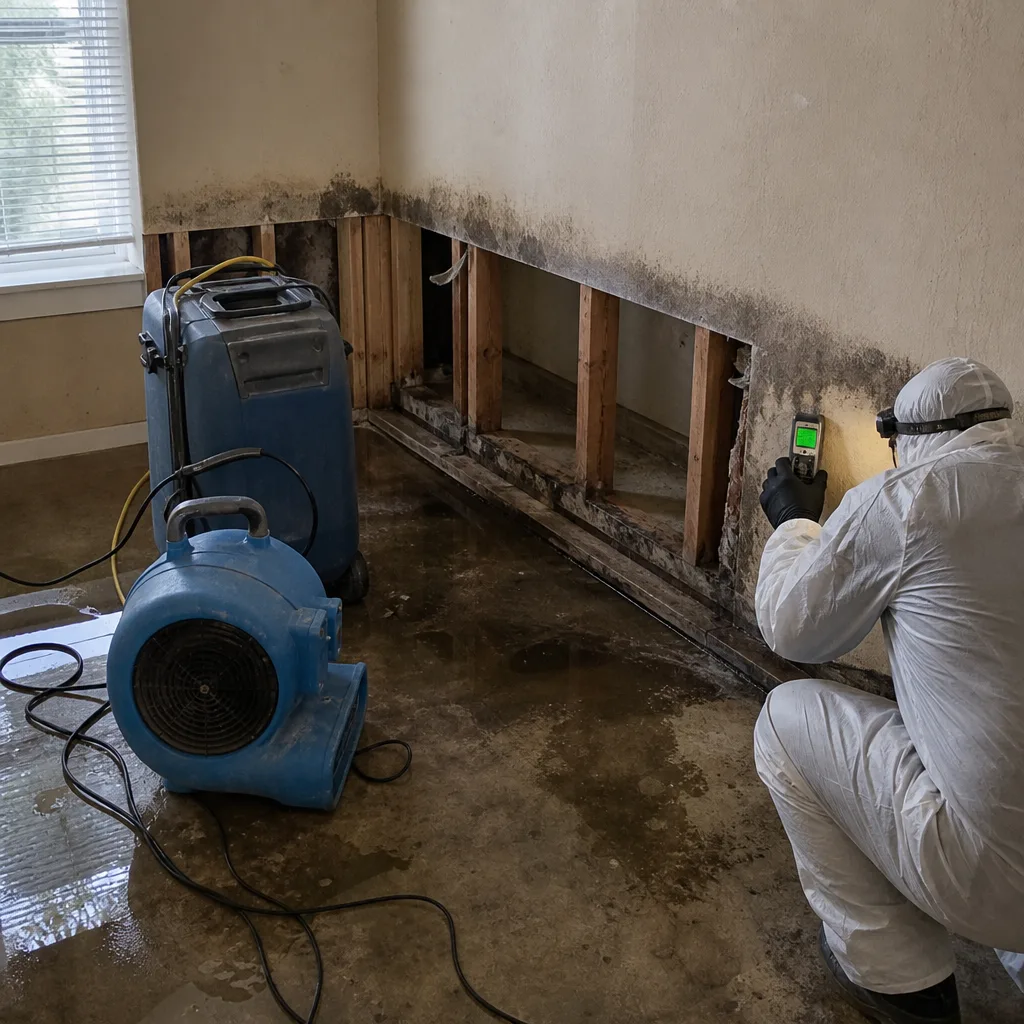
We map moisture across all affected and adjacent materials using thermal imaging, pin and non-invasive moisture meters, and psychrometric readings of temperature and relative humidity. In Jupiter’s CBS homes, we specifically probe block wall cavities and check attic-side underlayment condition - the hidden intrusion points that surface checks miss. Every reading is logged with a photo, time, and location stamp.
2. Containment & Air Filtration
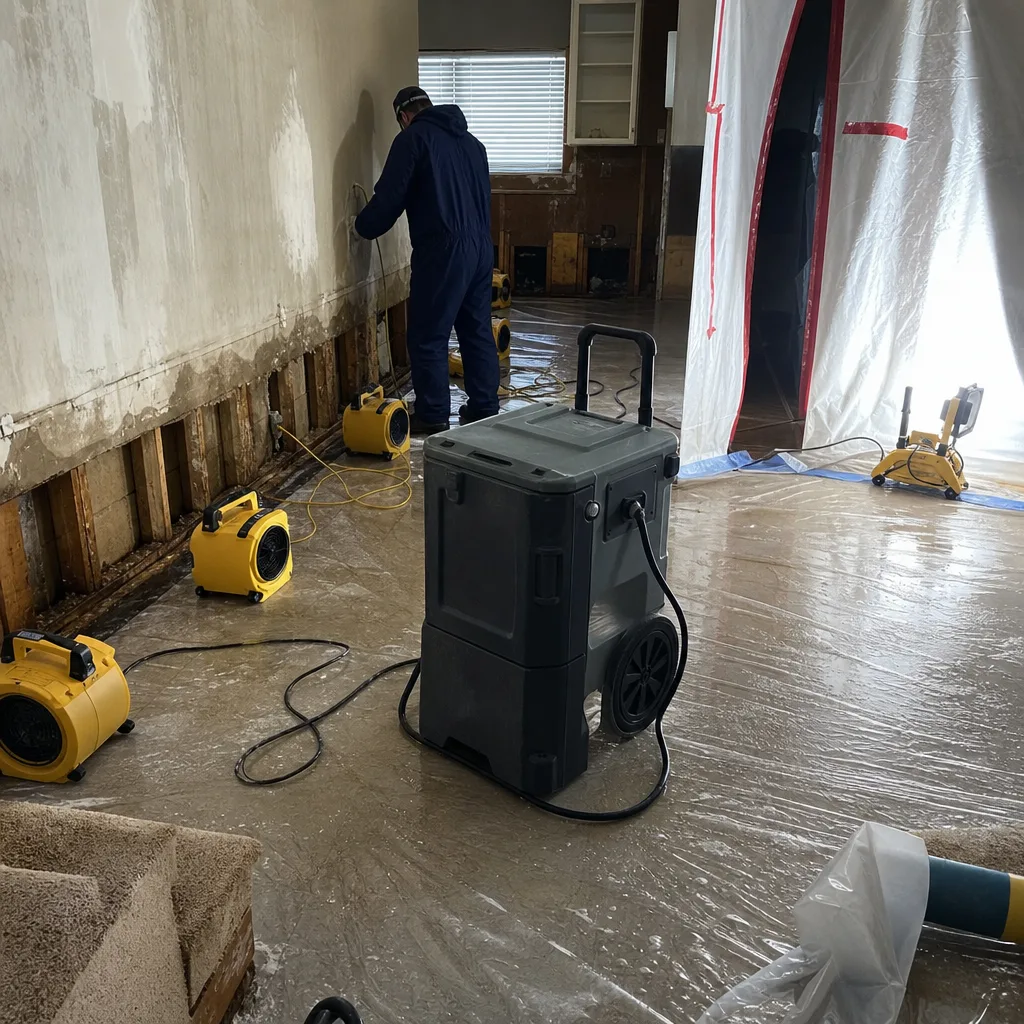
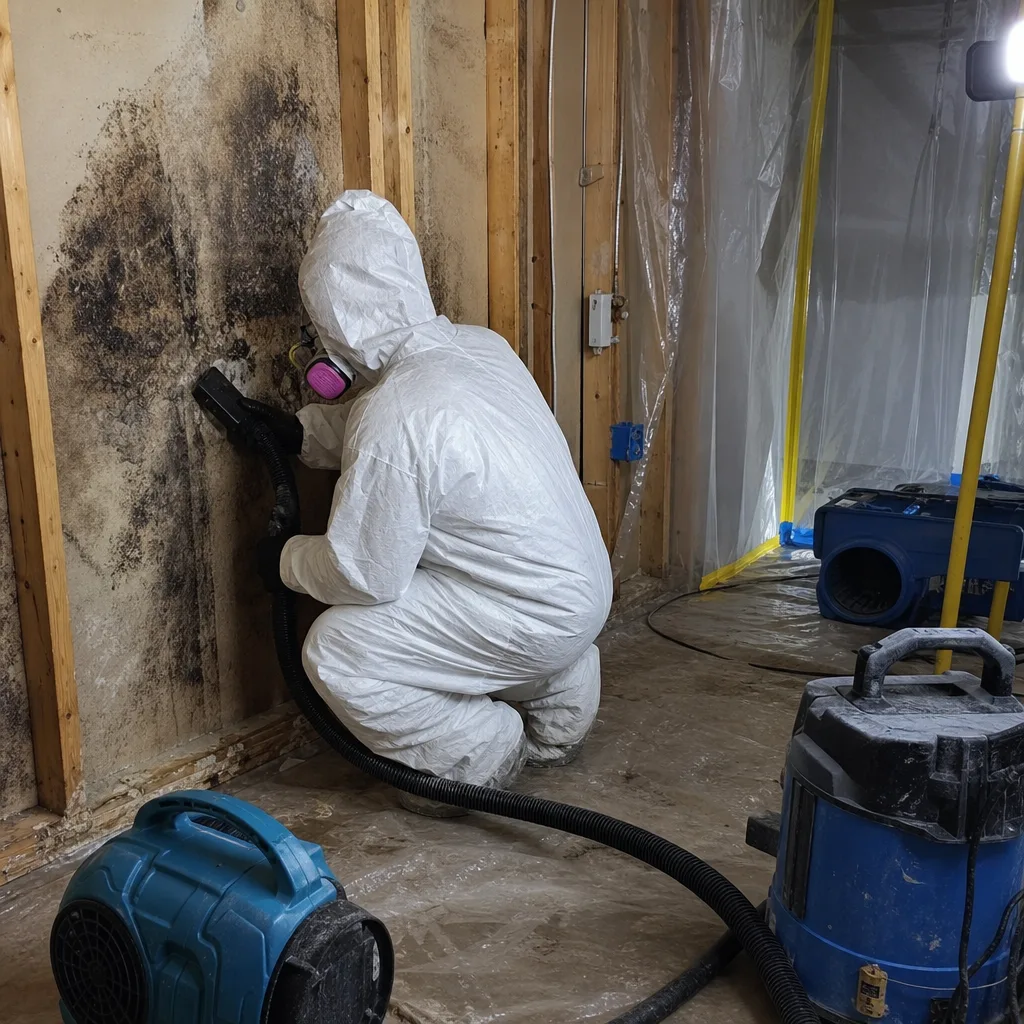
We establish negative-air containment with 6-mil polyethylene barriers sealed with duct tape at all seams, plus HEPA air scrubbers exhausting to the exterior at a rate that maintains 0.02 inches of water column negative pressure. This prevents cross-contamination through the HVAC system, which is critical in Jupiter’s tight, humidity-sealed homes where one colonized room can seed the whole house.
3. Moisture Source Elimination & Drying
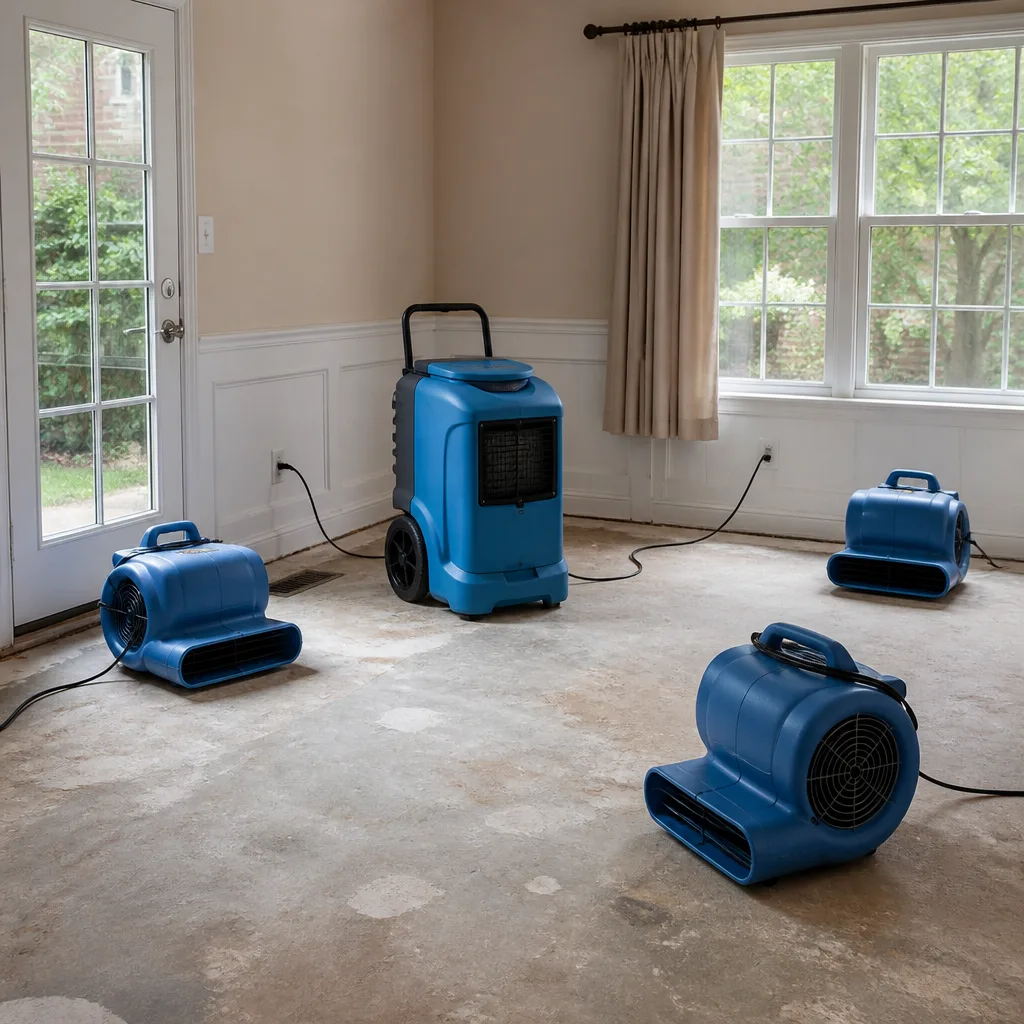
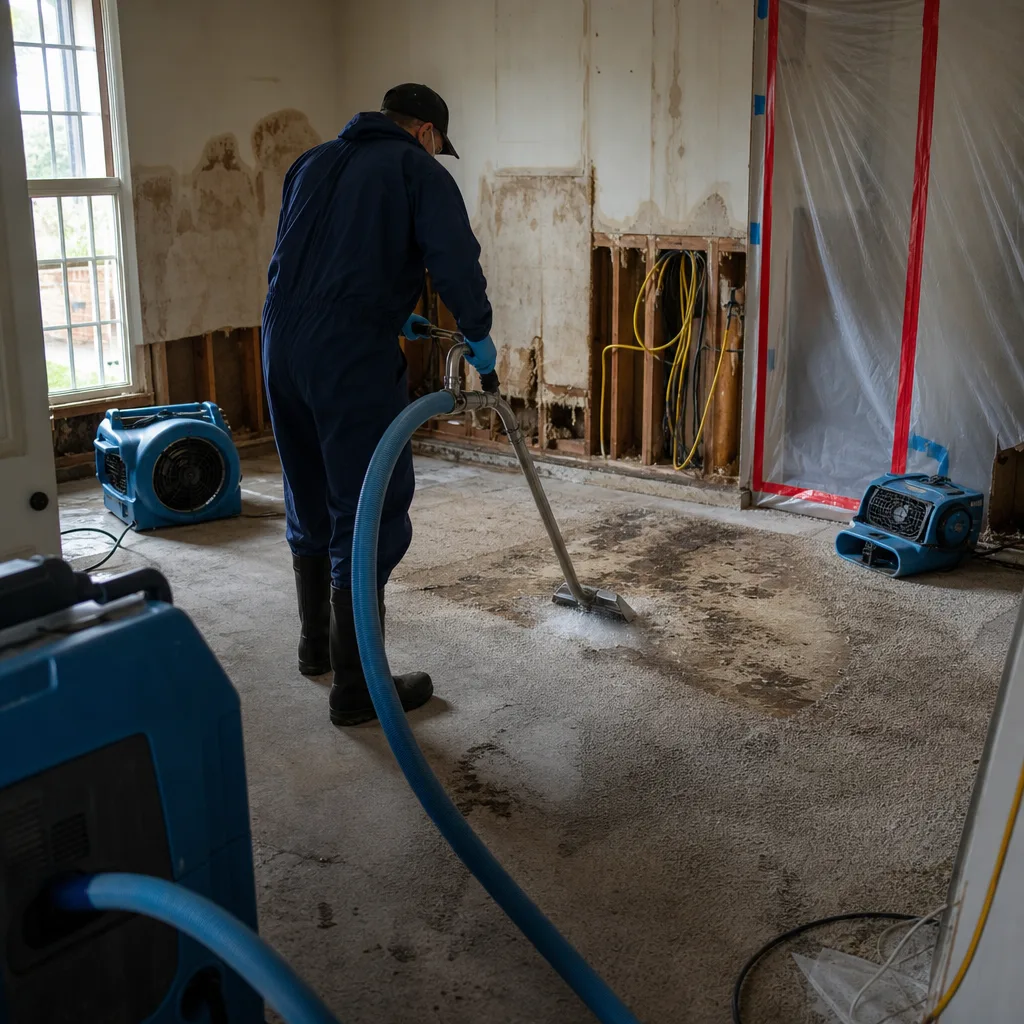
We deploy Dri-Eaz and Phoenix LGR dehumidifiers alongside B-Air axial air movers and Injectidry cavity-drying systems to pull moisture from behind block walls and inside ceiling plenums. Tertiary drying, the final phase where vapor pressure differentials are smallest, is where most contractors stop too early; we run daily moisture logs until substrates reach established dry standards documented to IICRC S520.
4. Removal of Contaminated Materials
Non-salvageable materials - water-stained drywall, degraded insulation, compromised carpet pad - are removed under containment and bagged for proper disposal. On Jupiter canal-front homes with saltwater intrusion history, we also flag corroded fasteners, rebar, and HVAC components for replacement rather than restoration; drying corroded metal is false economy.
5. HEPA Vacuuming & Antimicrobial Treatment
All surfaces within the containment receive sequential HEPA vacuuming and application of EPA-registered antimicrobial solution, followed by damp-wipe and second HEPA pass. Air scrubbers run continuously through this phase, with filter changeout logged by pressure-drop gauge. For Mold Remediation in Jupiter’s high-humidity environment, we extend air-scrubber runtime 24 hours beyond visual clearance to capture residual spore load.
6. Clearance Testing & Documentation
We recommend independent third-party clearance testing: air sampling and surface swabs analyzed by accredited laboratory, with results compared to outdoor baseline and pre-remediation levels. You receive the complete photo record, daily drying logs, material disposal manifests, lab report, and our 365-Day Done Right Promise under The Haven Standard - if it’s not done right, we make it right.
Need Emergency Mold Remediation in Jupiter Now?
Crews minutes away, answering live 24 hours a day. The sooner we start, the less it costs.
Working With Your Insurance Company
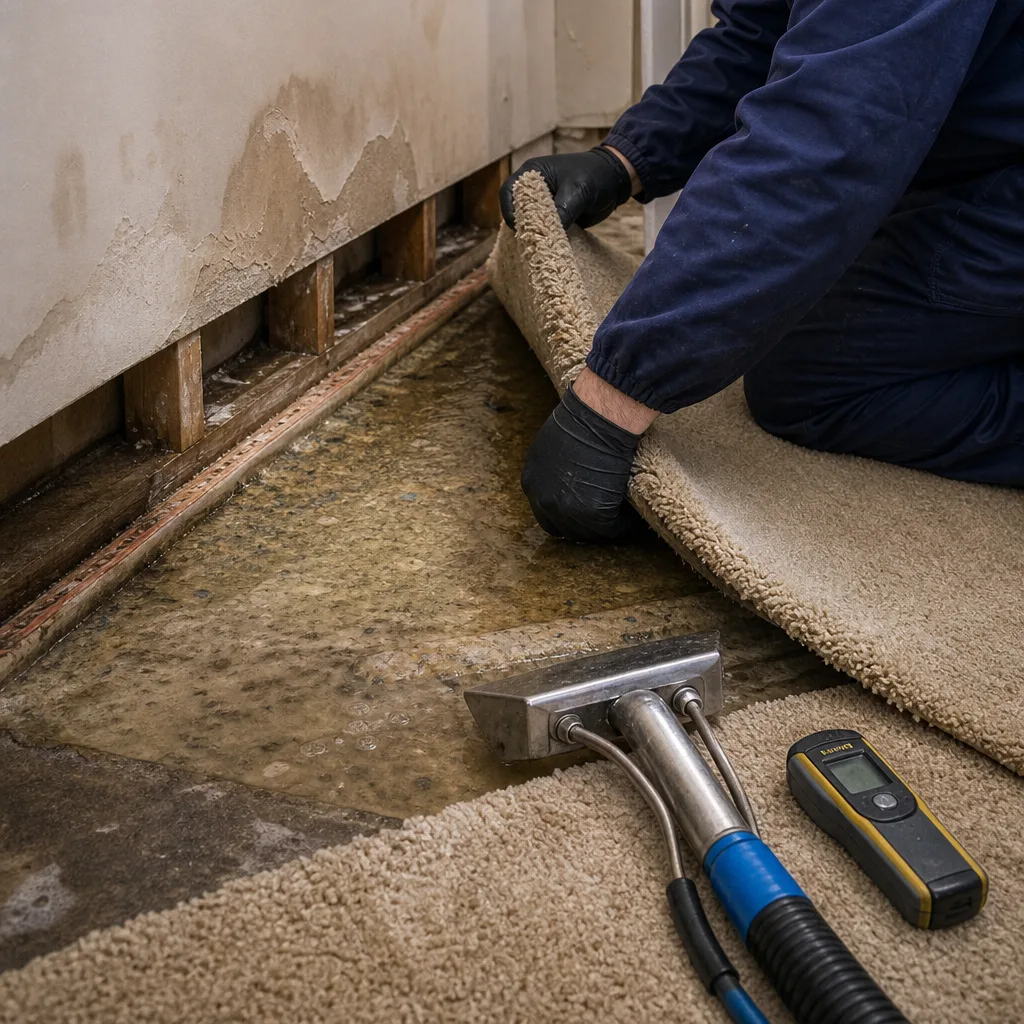
Insurance claims for mold damage fail when documentation is incomplete or when the scope of work is written in language adjusters can’t verify against policy language. We solve this from the first hour. Our technician photographs every room, records moisture readings with make, model, and calibration date of the meter, and begins a drying log that continues until the structure is verified dry. This produces an industry-standard estimate in Xactimate or Symbility format that your adjuster recognizes and can process without back-and-forth.
We coordinate directly with your carrier’s adjuster, providing the documentation package they need to approve coverage. For Jupiter homeowners, this matters because saltwater-driven mold losses on canal-front properties often trigger additional coverage questions - was the initial intrusion flood (typically excluded) or wind-driven rain (typically covered)? Our photo record, with timestamps and meteorological data, helps establish the loss sequence your policy requires.
What We Provide Your Insurer
- Thorough documentation of the loss
- Photos of all damage, room by room
- Moisture readings and drying logs
- A detailed, line-item scope of work
- Direct coordination with your carrier
Built for Jupiter’s Loss Calendar
Jupiter’s mold season runs inverse to what northern markets expect. June through October brings 62-plus inches of annual rainfall concentrated into tropical systems and daily thunderstorms. Hurricane-season wind drives rain through degraded roof underlayment on CBS homes built before 1992, and storm surge pushes brackish water up the Loxahatchee River and through Jupiter’s canal network. November through May, the “dry” season, still holds 70% relative humidity - enough to sustain hidden colonization that started months earlier.
January and February bring cold fronts that stress aging HVAC systems in 1970s-1990s homes; condensate drain pan overflows and duct sweating are common moisture sources we trace back to equipment at end of life. March through May is roof-leak season on the Abacoa community’s first-generation roof replacements, where contractor workmanship errors create new intrusion points. We schedule preventive moisture mapping for Jupiter homeowners during these windows - catching the slow leak before it becomes a remediation job.
Mold Remediation Across Jupiter’s Neighborhoods
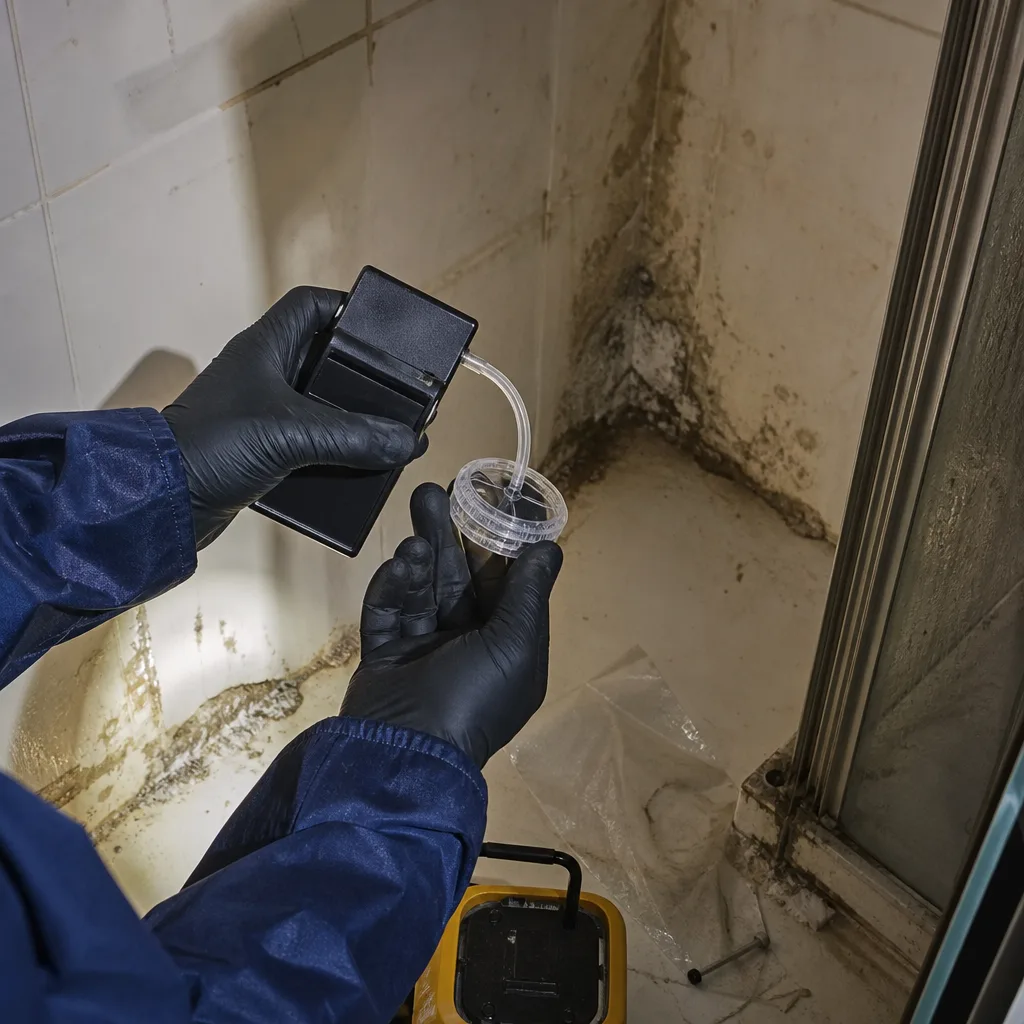
Canal-front properties along the Loxahatchee River and Jupiter Inlet, from Center Street north to Jupiter Island, present our most complex jobs. Saltwater intrusion history means we treat every fastener and metal component as potentially compromised. The field vignette: on a canal-front CBS home off Center Street near the Jupiter Inlet, a unit that had sat closed after a late-season surge showed visible mold on the baseboard drywall within about 36 hours of the envelope breach. Our tech ran moisture mapping across the block walls and used a Dri-Eaz and Phoenix air-mover/dehumidifier setup with Injectidry cavity drying to pull the walls down dry, then documented the corroded fasteners we flagged for the homeowner’s scope of work.
Abacoa’s planned community, with its mix of townhomes, single-family, and commercial, demands tight-containment expertise - shared walls and common HVAC mean one unit’s mold event can become a homeowners-association liability. We coordinate with property managers and document common-area exposure separately from unit-specific work.
Jupiter Farms, the acreage-residential zone west of Interstate 95, adds a variable almost absent in neighboring Palm Beach Gardens: private septic systems. Heavy tropical rainfall saturates drain fields and causes sewage to back up into living spaces, turning what dispatches as standard water damage into Category 3 biohazard remediation requiring full PPE protocols and EPA-registered disinfection. We carry the AMRT and trauma-scene credentials for this crossover work.
Along Indiantown Road and the commercial corridors, we handle mold in retail and office buildouts where business interruption drives the timeline. Containment here runs overnight and weekends to maintain operations in adjacent spaces.
Specialized Mold Remediation Services We Offer in Jupiter
Mold Inspection & Testing
Our inspections combine visual assessment, moisture mapping, and air-quality sampling with laboratory analysis. In Jupiter’s high-humidity environment, we find that surface-visible mold often indicates 3-5 times the colonized area hidden in cavities. Testing establishes baseline spore counts and identifies species - critical for medical-sensitive occupants and for documenting pre-existing conditions versus new growth for insurance purposes.
Mold Removal
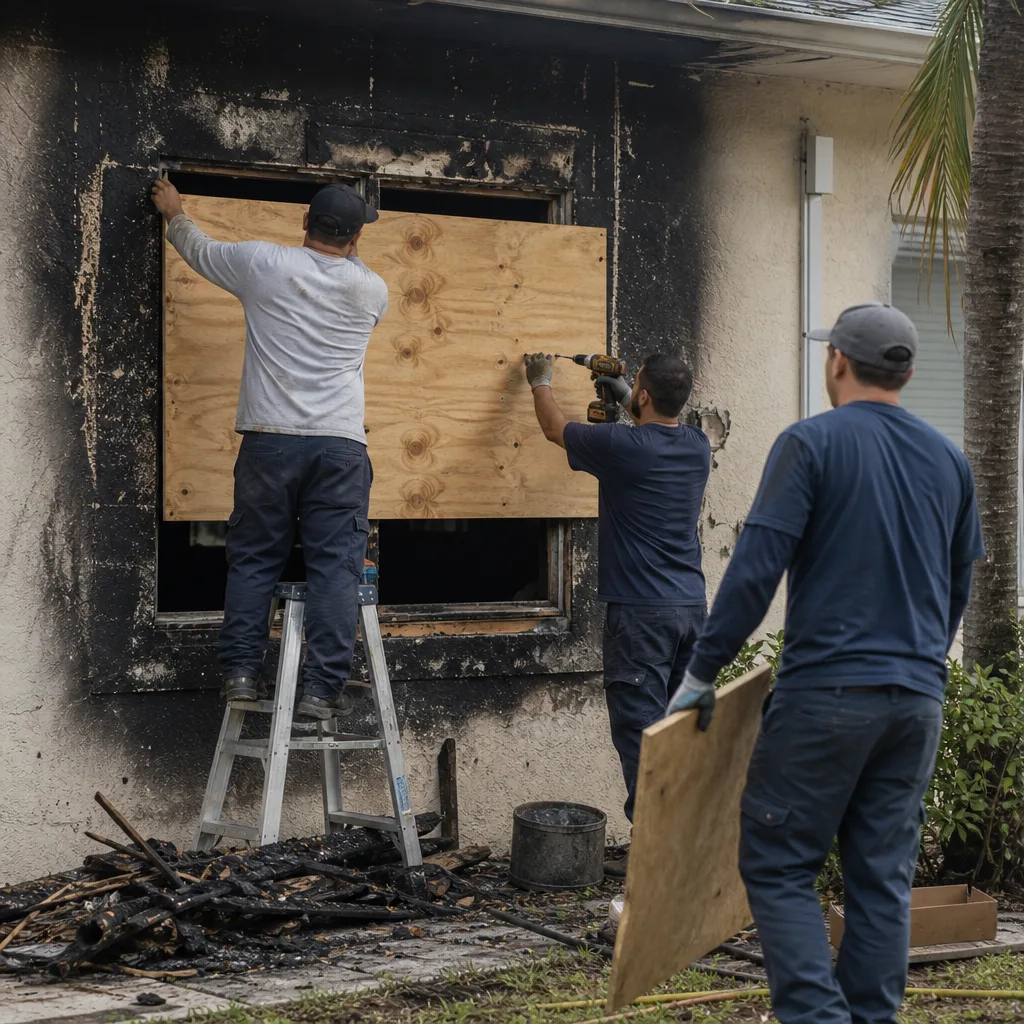
Removal is not demolition for its own sake. We remove only non-salvageable materials, preserving original construction where moisture readings confirm dryness and antimicrobial treatment can restore habitability. On Jupiter’s CBS homes, this distinction saves thousands: block walls and concrete slabs rarely need removal; paper-faced drywall, insulation, and compromised wood framing do. Our written scope specifies each material classification by trade name and location.
Black Mold Remediation
Stachybotrys chartarum and other toxigenic species require enhanced containment and extended air-scrubbing protocols. We implement full-face respirator and Tyvek suit PPE, double-bag debris removal, and 48-hour post-remediation air clearance before occupant re-entry. Jupiter’s persistent humidity means we never rush this phase; residual moisture plus residual spores equals recurrence.
Air Quality Restoration
Post-remediation, we restore breathable air quality through HVAC duct cleaning, filter replacement, and continuous HEPA filtration until independent testing confirms particulate and spore counts at or below outdoor baseline. For Jupiter homes with forced-air systems, this step prevents recontamination from spores that settled in ductwork during the active growth phase.
Crawl Space Treatment
Most Jupiter CBS homes lack traditional crawl spaces, but elevated homes on the barrier island and select Jupiter Farms properties have enclosed plenums that function similarly. We seal ground vapor barriers, install dedicated dehumidification, and treat floor joist systems - applying the same moisture-control principles to these hybrid spaces.
Moisture & Humidity Control
Remediation without humidity control fails in Jupiter’s climate. We specify and can install permanent dehumidification, improve ventilation design, and recommend envelope repairs - roof, flashing, sealant - that address the moisture source, not just the mold symptom. Our documentation includes the humidity readings that justify each recommendation.
What happens when you call
- 1
A real person answersNo phone trees - you reach a local pro.
- 2
You get an upfront price rangeHonest numbers before anyone is dispatched.
- 3
A background-checked tech heads outLicensed & insured, dispatched right away.
- 4
You approve before work beginsNothing starts until you say go.
Mold Remediation Costs in Jupiter, FL
A typical limited mold remediation in Jupiter - under 10 square feet, Level I containment, no material removal - runs $1,800-$2,800. Moderate remediation with containment, air scrubbing, and selective drywall removal on a standard canal-front room runs $3,500-$6,500. Whole-home remediation with HVAC treatment, reconstruction, and independent clearance testing ranges $10,000-$18,000, with complex jobs on large waterfront properties exceeding $25,000.
What moves the price: affected square footage, whether the HVAC system is contaminated, presence of Category 3 water (sewage or saltwater intrusion), need for independent clearance testing, and reconstruction scope. Saltwater-driven jobs in Jupiter’s canal-front homes often cost 20-30% more than freshwater equivalents because corroded fasteners, rebar, and metal components must be replaced rather than dried in place.
Insurance coverage varies by policy and loss cause. Sudden and accidental water damage that leads to mold is typically covered; long-term maintenance neglect is not. We review your policy language, document the loss sequence, and provide the written scope your adjuster needs - Haven Standard, Clause 1, free inspection, free second opinion on any competitor’s written estimate.
We Also Serve Cities Near Jupiter
Our crews respond throughout northern Palm Beach County: Palm Beach Gardens, with its golf-course communities and similar CBS housing stock; North Palm Beach, where canal-front homes share Jupiter’s saltwater exposure; West Palm Beach, from the urban core to the western suburbs; and Palm Beach, with its estate-scale properties and historic construction requiring specialized containment approaches.
Serving Jupiter, FL - Our Local Coverage Area
We’re based in the Jupiter area and know this community well. Use the map below to see our service coverage - if you’re nearby, we can almost certainly help.
Jupiter Mold Remediation Questions, Answered
Why does mold grow so fast after a water intrusion on a Jupiter canal-front home?
Jupiter’s coastal humidity, regularly 75-80% relative humidity, provides constant moisture vapor that accelerates colonization once liquid water breaches the envelope.
On CBS block homes, the thermal mass of concrete keeps wall cavities cool; when humid exterior air meets this cooler surface, condensation adds secondary moisture even after the initial leak is stopped. This means mold can become visible on baseboard drywall within 24-36 hours of intrusion, compared to 48-72 hours in drier inland climates. We respond with same-day moisture mapping and cavity drying to break this cycle. Call (561) 290-5060 for immediate dispatch.
If a storm pushes brackish water into our Jupiter home, is that different from a regular water leak?
Yes - brackish and saltwater intrusion creates corrosion on embedded rebar, metal fasteners, and HVAC components that freshwater does not.
On a canal-front CBS home, salt residue remains after visible water recedes, accelerating rust on structural steel and compromising electrical connections. Drying these components in place without inspection is false economy; we flag corroded elements for replacement in our written scope, documented with photos for your insurance claim. This corrosion-aware approach is standard on our Jupiter jobs but rarely needed inland. Call (561) 290-5060 for a free inspection and written price.
How do you handle mold in a CBS home with no crawl space?
CBS construction in Jupiter actually simplifies containment - the block walls themselves don’t harbor mold, but the paper-faced drywall, insulation, and wood framing attached to them do.
We use Injectidry cavity-drying systems to pull moisture from the air gap between block and interior finish, then remove only the compromised materials. The block is HEPA-vacuumed, antimicrobial-treated, and verified dry with pin-meter readings at multiple depths. This preserves the structural shell while eliminating the mold food source. Our daily drying logs document the progression for your records and insurance. Call (561) 290-5060 to schedule.
What should Jupiter Farms homeowners do when septic backup floods living space?
Evacuate the affected area immediately and call us - septic backup is Category 3 biohazard water containing pathogens, not standard water damage.
In Jupiter Farms, where nearly all homes rely on private septic systems, heavy rainfall routinely saturates drain fields and causes backup into living spaces. This requires full PPE, EPA-registered disinfection, and often microbial remediation beyond standard water-damage protocols. We carry AMRT and trauma-scene credentials for this exact scenario. Do not attempt cleanup yourself. Call (561) 290-5060 - we answer live 24/7 and dispatch with proper equipment.
Can we stay in the house during mold remediation?
For limited Level I containment under 10 square feet with no HVAC contamination, yes - with the work area sealed and exterior exhaust on the air scrubber.
For Level II and above, or any job with HVAC contamination, we recommend temporary relocation. Negative-air containment creates pressure differentials that can stress residential HVAC systems, and the noise of continuous air-scrubber operation is disruptive. We coordinate with your insurance on additional living expense documentation when coverage applies. Call (561) 290-5060 to discuss your specific situation.
How fast can you actually get to Jupiter?
Our 45-minute response commitment applies to Jupiter addresses from our South Florida coordination office.
A live person answers your call, logs the dispatch timestamp, and routes the nearest crew with AMRT-certified technicians. For active colonization with visible growth, we prioritize same-day containment to prevent HVAC cross-contamination. Call (561) 290-5060 now - no voicemail, no callback queue.
Will insurance cover mold remediation in Jupiter?
Coverage depends on the cause of the underlying moisture, not the mold itself.
Sudden and accidental water damage - burst pipe, wind-driven rain through storm damage - typically triggers mold coverage as secondary damage. Long-term maintenance neglect, slow leaks, or flood surge above base flood elevation usually does not. Our documentation package, with photo-recorded loss sequence and meteorological data, helps establish the covered cause for your adjuster. We provide direct carrier coordination and a free second opinion on any competitor’s written estimate. Call (561) 290-5060 to review your situation.
How long does mold remediation take in Jupiter’s humidity?
Most limited jobs complete in 3-5 days; moderate remediation with containment and air scrubbing runs 5-10 days; complex jobs with reconstruction extend to 2-4 weeks.
Jupiter’s humidity extends drying time compared to drier markets - we don’t rush tertiary drying just to hit a schedule. Our daily moisture logs continue until substrates reach IICRC S520 dry standards, documented with readings you can verify. Post-remediation clearance testing adds 2-3 days for lab turnaround. We provide a written timeline with the scope before work begins - Haven Standard, Clause 1. Call (561) 290-5060 for your specific estimate.
Written by Alicia Brennan, Owner at DryMark Restoration West Palm Beach, serving Jupiter since 2011 under The Haven Standard.
Mold Remediation in Nearby Areas